


Complications and failure-to-rescue after pancreatectomy and hospital participation in the targeted American College of Surgeons National Surgical Quality Improvement Program registry
- PMID: 37612210
- PMCID: PMC10592020
- DOI: 10.1016/j.surg.2023.07.023
Complications and failure-to-rescue after pancreatectomy and hospital participation in the targeted American College of Surgeons National Surgical Quality Improvement Program registry
Abstract
Background: More than 700 hospitals participate in the American College of Surgeons National Surgical Quality Improvement Program, but most pancreatectomies are performed in 165 centers participating in the pancreas procedure-targeted registry. We hypothesized that these hospitals ("targeted hospitals") might provide more specialized care than those not participating ("standard hospitals").
Methods: The 2014 to 2019 pancreas-targeted and standard American College of Surgeons National Surgical Quality Improvement Program registry were reviewed regarding patient demographics, comorbidities, and perioperative outcomes using standard univariate and multivariable logistic regression analyses. Primary outcomes included 30-day mortality and serious morbidity.
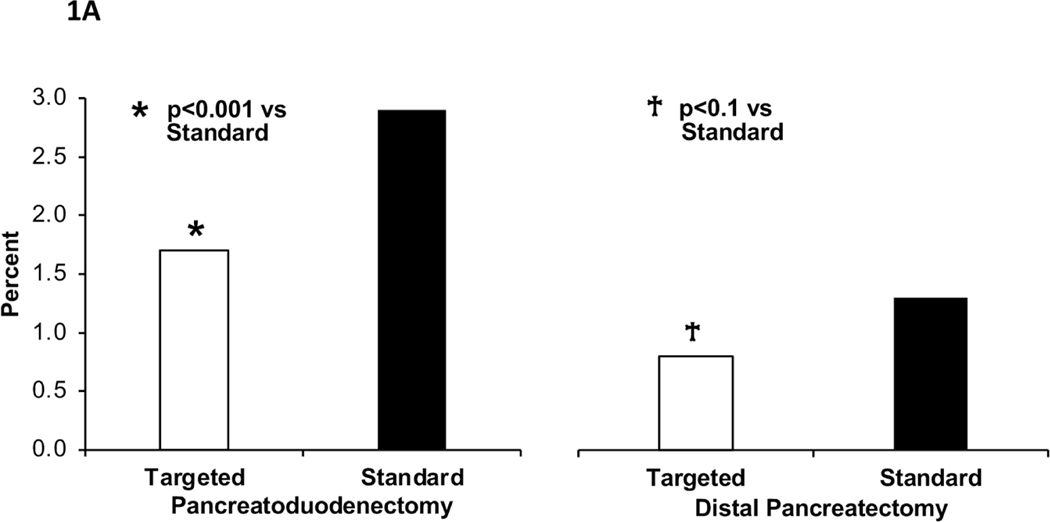
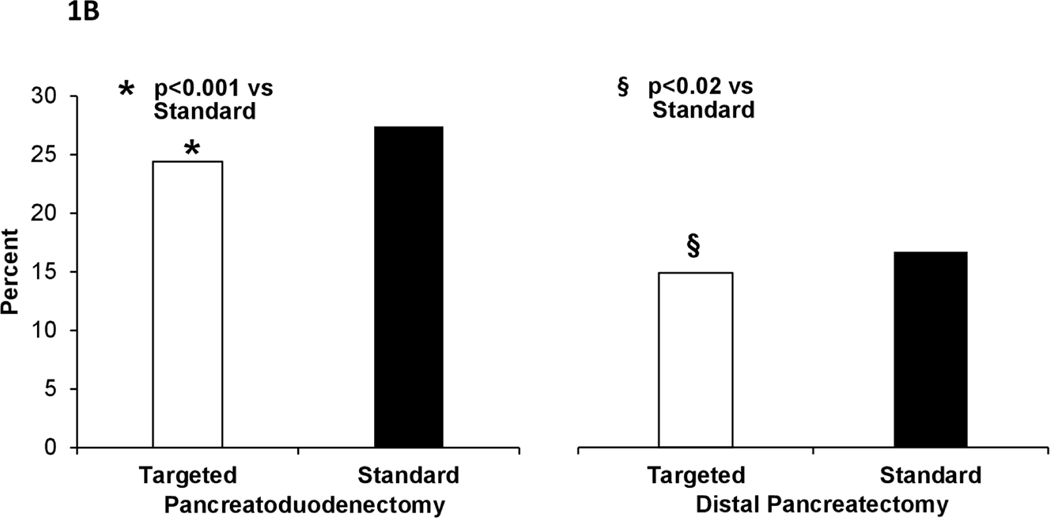
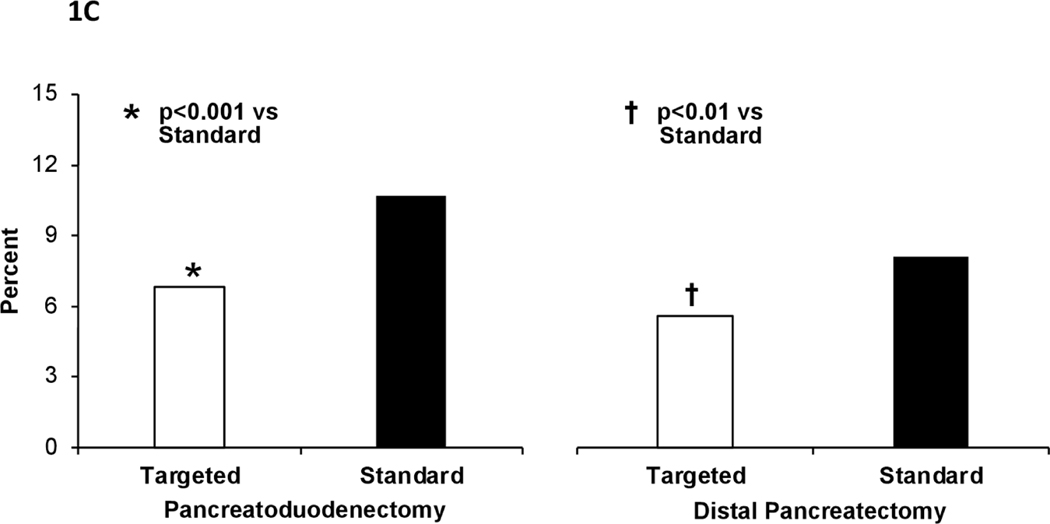
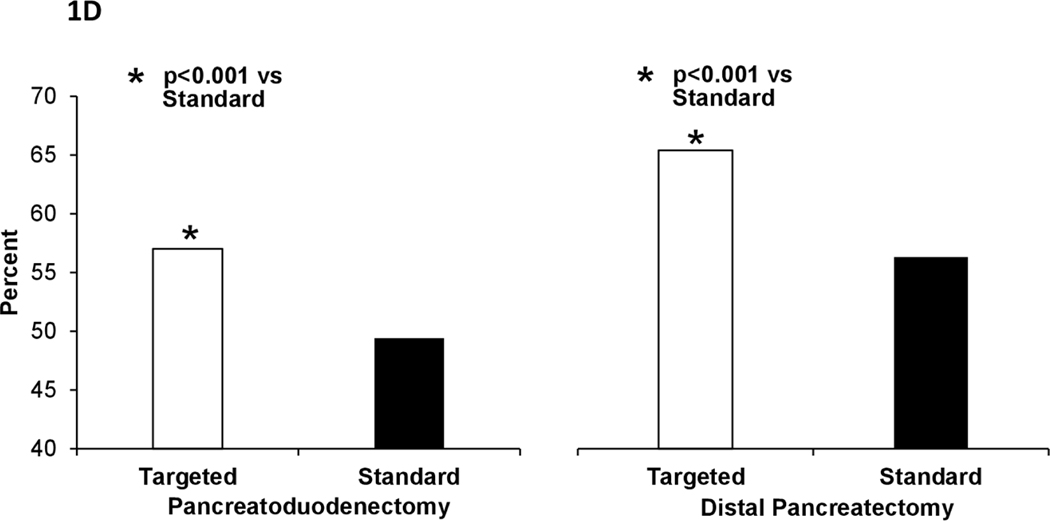
Results: The registry included 30,357 pancreatoduodenectomies (80% in targeted hospitals) and 14,800 distal pancreatectomies (76% in targeted hospitals). Preoperative and intraoperative characteristics of patients treated at targeted versus standard hospitals were comparable. On multivariable analysis, pancreatoduodenectomies performed at targeted hospitals were associated with a 39% decrease in 30-day mortality (odds ratio, 0.61; 95% confidence interval, 0.50-0.75), 17% decrease in serious morbidity (odds ratio, 0.83; 95% confidence interval, 0.77-0.89), and 41% decrease in failure-to-rescue (odds ratio, 0.59; 95% confidence interval, 0.47-0.74). These differences did not apply to distal pancreatectomies. Participation in the targeted registry was associated with higher rates of optimal surgery for both pancreatoduodenectomy (odds ratio, 1.33; 95% confidence interval, 1.25-1.41) and distal pancreatectomy (odds ratio, 1.17; 95% confidence interval, 1.06-1.30).
Conclusion: Mortality and failure-to-rescue rates after pancreatoduodenectomy in targeted hospitals were nearly half of rates in standard American College of Surgeons National Surgical Quality Improvement Program hospitals. Further research should delineate factors underlying this effect and highlight opportunities for improvement.
Copyright © 2023 Elsevier Inc. All rights reserved.
Conflict of interest statement
CONFLICT OF INTEREST/DISCLOSURE
The authors have no relevant financial disclosures.
Figures
References
-
- Soden PA, Zettervall SL, Ultee KH, et al. Patient selection and perioperative outcomes are similar between targeted and nontargeted hospitals (in the National Surgical Quality Improvement Program) for abdominal aortic aneurysm repair. J Vasc Surg. Feb 2017;65(2):362–371. doi: 10.1016/j.jvs.2016.04.066 - DOI - PMC - PubMed
Publication types
MeSH terms
Grants and funding
LinkOut - more resources
Full Text Sources
Medical
