


The association of adverse reactions and depression in cervical cancer patients treated with radiotherapy and/or chemotherapy: moderated mediation models
- PMID: 37614487
- PMCID: PMC10442555
- DOI: 10.3389/fpsyg.2023.1207265
The association of adverse reactions and depression in cervical cancer patients treated with radiotherapy and/or chemotherapy: moderated mediation models
Abstract
Objective: Several studies reported that adverse reactions to treatment, neuroticism, marital relations, and quality of life may impact the development of depression in cervical cancer patients treated with radiotherapy and/or chemotherapy, but the associations between them remained unclear. This study investigated the associations between these factors using moderated mediation models.
Methods: Data were extracted from a survey involving cervical cancer patients treated with radiotherapy and/or chemotherapy at five tertiary hospitals in Hubei Province, China, from June to December 2022. The SPSS-PROCESS program was used to develop a moderated mediation model to study the roles of neuroticism, quality of life, and marital relations in the association between adverse reactions and depression in the study population.
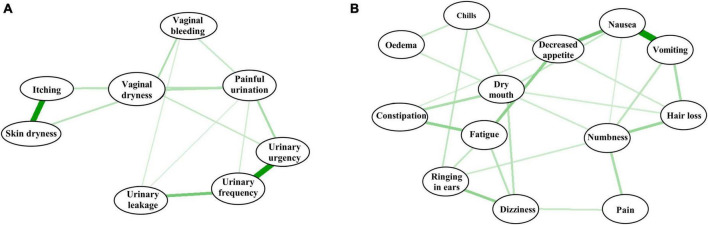
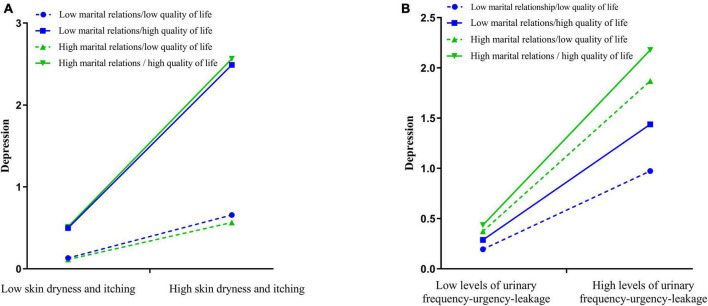
Results: A total of 802 cervical cancer patients treated with radiotherapy and/or chemotherapy (54.84 ± 9.68 years) were recruited. The prevalence of depression among these patients was 72.72%, with four symptom clusters of dizziness-ringing in the ears, digestive system-related symptoms, skin dryness and itching, and urinary frequency-urgency-leakage. Adverse reactions directly and positively affected the occurrence of depression, neuroticism mediated the association between adverse reactions and depression, while this association varied according to the quality of life and marital relations.
Conclusion: Our findings suggest that depression is common among cervical cancer patients receiving radiotherapy and/or chemotherapy. Intervention targets for depression in cervical cancer patients should be precisely selected and targeted according to the quality of life and marital relations differences in patients, taking into account the cost of the intervention and the benefit to the patient.
Keywords: adverse reactions; cervical cancer; depression; mediation; moderation; patient.
Copyright © 2023 Ding, Zhang, Wang, Huang, Liu, Han and Hu.
Conflict of interest statement
The authors declare that the research was conducted in the absence of any commercial or financial relationships that could be construed as a potential conflict of interest.
Figures
References
-
- Asada H., Takahashi Y., Ono Y., Kishi N., Matsuo Y., Mizowaki T., et al. (2022). Emotional experiences of skin markings among patients undergoing radiotherapy and related factors: A questionnaire-based cross-sectional study. Patient Prefer Adherence 16 1359–1369. 10.2147/ppa.s361916 - DOI - PMC - PubMed
-
- Cai H. L., Yuan W. G., Sun H. X. (2023). Prevalence and prevention strategies of cervical cancer in the world and China. Chin. Clin. Oncol. 28 90–93.
-
- Chen S. N., Luo D., Kong W. M., Zhang H. (2021). Investigation of radiation cystitis status after radiotherapy of cervical cancer and analysis of related factors. Med. Recapitulate 27 3107–3110. 10.3969/j.issn.1006-2084.2021.15.036 - DOI
LinkOut - more resources
Full Text Sources
