


Severe acute respiratory syndrome coronavirus 2 seroprevalence and longitudinal antibody response following natural infection in pregnancy: A prospective cohort study
- PMID: 37615311
- PMCID: PMC10467162
- DOI: 10.1177/17455057231190955
Severe acute respiratory syndrome coronavirus 2 seroprevalence and longitudinal antibody response following natural infection in pregnancy: A prospective cohort study
Abstract
Background: Antenatal care provides unique opportunities to assess severe acute respiratory syndrome coronavirus 2 seroprevalence and antibody response duration after natural infection detected during pregnancy; transplacental antibody transfer may inform peripartum and neonatal protection. We estimated seroprevalence and durability of antibodies from natural infection (anti-nucleocapsid immunoglobulin G) among pregnant people, and evaluated transplacental transfer efficiency.
Objective and design: We conducted a cross-sectional study to measure severe acute respiratory syndrome coronavirus 2 seroprevalence, and a prospective cohort study to longitudinally measure anti-nucleocapsid immunoglobulin G responses and transplacental transfer of maternally derived anti-nucleocapsid antibodies.
Methods: We screened pregnant people for the seroprevalence study between 9 December 2020 and 19 June 2021 for anti-nucleocapsid immunoglobulin G in Seattle, Washington. We enrolled anti-nucleocapsid immunoglobulin G positive people from the seroprevalence study or identified through medical records with positive reverse transcription polymerase chain reaction or antigen positive results in a prospective cohort between 9 December 2020 and 9 August 2022.
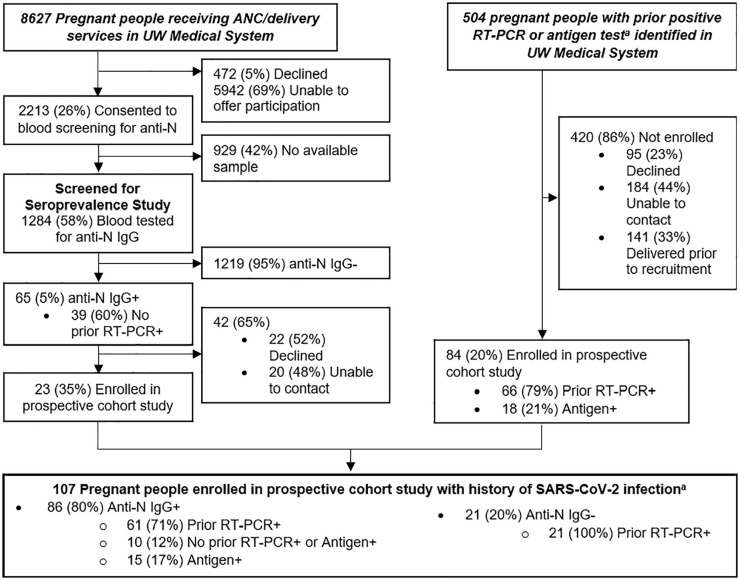
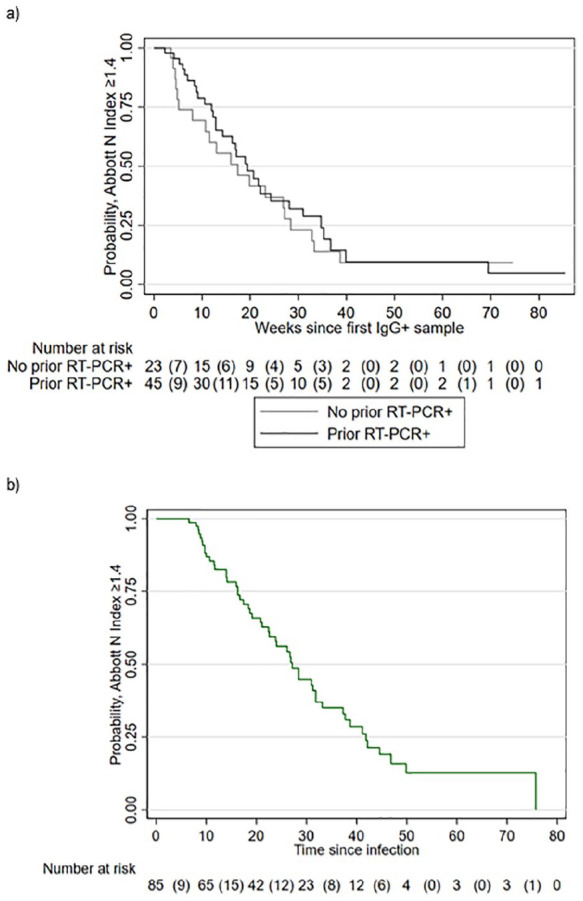
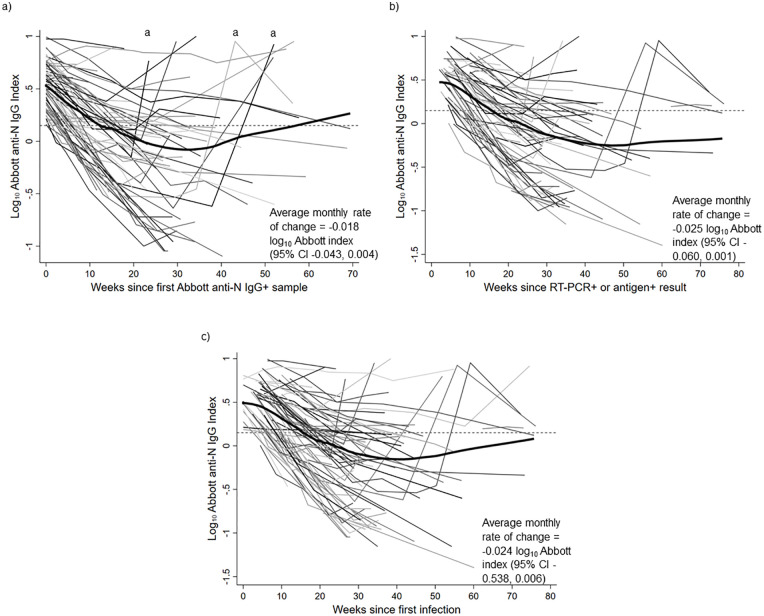
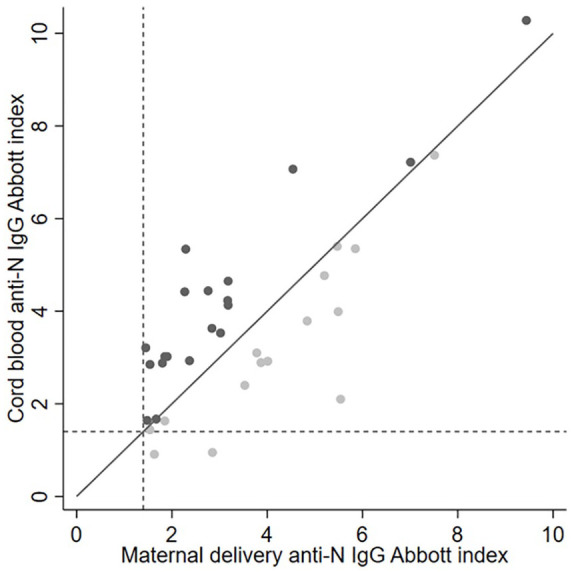
Results: In the cross-sectional study (N = 1284), 5% (N = 65) tested severe acute respiratory syndrome coronavirus 2 anti-nucleocapsid immunoglobulin G positive, including 39 (60%) without prior positive reverse transcription polymerase chain reaction results and 42 (65%) without symptoms. In the prospective cohort study (N = 107 total; N = 65 from the seroprevalence study), 86 (N = 80%) had anti-nucleocapsid immunoglobulin G positive results during pregnancy. Among 63 participants with delivery samples and prior anti-nucleocapsid positive results, 29 (46%) were anti-nucleocapsid immunoglobulin G negative by delivery. Of 34 remaining anti-nucleocapsid immunoglobulin G positive at delivery with paired cord blood, 19 (56%) had efficient transplacental anti-nucleocapsid immunoglobulin G antibody transfer. Median time from first anti-nucleocapsid immunoglobulin G positive to below positive antibody threshold was 19 weeks and did not differ by prior positive reverse transcription polymerase chain reaction status.
Conclusions: Maternally derived severe acute respiratory syndrome coronavirus 2 antibodies to natural infection may wane before delivery. Vaccines are recommended for pregnant persons to reduce severe illness and confer protection to infants.
Keywords: SARS-CoV-2; antibody; natural infection; pregnancy; seroprevalence; transplacental transfer.
Conflict of interest statement
The author(s) declared the following potential conflicts of interest with respect to the research, authorship, and/or publication of this article: JAE reports serving as a consultant for Sanofi Pasteur, AstraZeneca, Meissa Vaccines, Pfizer, and Moderna and has received grant support from Pfizer, GlaxoSmithKline, AstraZeneca, Moderna and Merck. ABK reports serving as an unpaid consultant for GlaxoSmith-Kline and as a consultant for Pfizer and has received grant support from Pfizer and Merck. ALD, JNE, MCA, EAW, BAR, ALG and SML received grant support from Merck.
Figures
References
-
- Centers for Disease Control and Prevention. COVID-19 vaccination for pregnant people to prevent serious illness, deaths, and adverse pregnancy outcomes from COVID-19. Health Alert Network (HAN), 2021, https://emergency.cdc.gov/han/2021/han00453.asp
-
- Centers for Disease Control and Prevention. COVID-19 vaccines while pregnant or breastfeeding, https://www.cdc.gov/coronavirus/2019-ncov/vaccines/recommendations/pregn... (accessed 13 June 2022). - PubMed
Publication types
MeSH terms
Substances
Grants and funding
LinkOut - more resources
Full Text Sources
Medical
Miscellaneous
