


Religious diversity and public health: Lessons from COVID-19
- PMID: 37619233
- PMCID: PMC10449469
- DOI: 10.1371/journal.pone.0290107
Religious diversity and public health: Lessons from COVID-19
Abstract
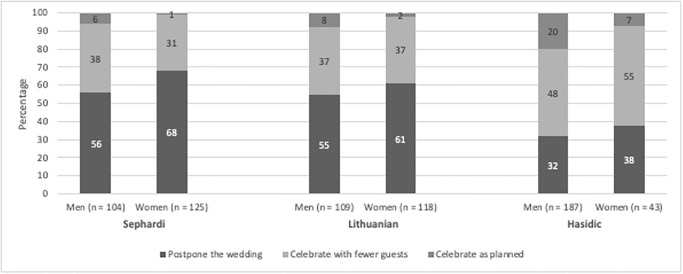
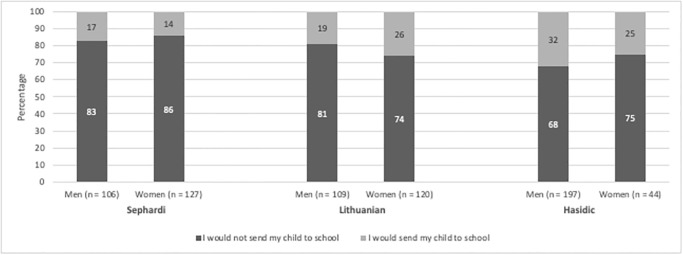
Scholars have identified a range of variables that predict public health compliance during COVID-19, including: psychological, institutional and situational variables as well as demographic characteristics, such as gender, location and age. In this paper, we argue that religious affiliation is also a clear predictor for compliance with public health guidelines. Based on a sample representative survey (N = 800) of Haredi Jews in Israel, we found that Haredi Jews mostly followed COVID-19 health regulations. Among the respondents who were non-compliant, however, we found large divergences which mostly reflected religious affiliation. While members of Lithuanian and Sephardi communities reported following guidelines, Hasidim, a more charismatic sub-group, were 12% and 14% more likely to flout public health guidelines than their Lithuanian and Sephardi counterparts, respectively. Despite this inner diversity, all Haredim were portrayed in Israeli media as one homogeneous group that was blamed for flouting public health guidelines and spreading COVID-19. Based on these findings, we argue for the importance of public health messaging that attends to diverse aspects of religious dogma, practice and observance by creating partnerships and sustainable relationships between different actors and stakeholders. In addition, we found that compliance was also shaped by knowledge about COVID-19 and public concern. Taking these findings together, health communication that acknowledges religious diversity while providing critical knowledge about the pandemic is key to developing and implementing community-focused interventions and public health programs. Practically, these insights help to improve pandemic governance as well as contributing theoretically to the study of public health relations and religion by highlighting how discourses around health vary and how differently positioned actors shape representations of responsiveness and health compliance.
Copyright: © 2023 Taragin-Zeller et al. This is an open access article distributed under the terms of the Creative Commons Attribution License, which permits unrestricted use, distribution, and reproduction in any medium, provided the original author and source are credited.
Conflict of interest statement
The authors have declared that no competing interests exist.
Figures
References
-
- Taylor S. The Psychology of Pandemics: Preparing for the Next Global Outbreak of Infectious Disease. Cambridge Scholars Publishing; 2019.
-
- Trinh D, McKinn S, Nguyen A, Fox G, Burnays S. Uneven stigma loads: Community interpretations of public health policies, ‘evidence’ and inequities in shaping Covid-19 stigma in Vietnam. SSM Popul Health. 2022. https://pubmed.ncbi.nlm.nih.gov/36267122/. doi: 10.1016/j.ssmph.2022.101270 - DOI - PMC - PubMed
Publication types
MeSH terms
LinkOut - more resources
Full Text Sources
Medical
