


Development of an initiatives package to increase children's vegetable intake in long day care centres using the Multiphase Optimisation Strategy (MOST) randomised factorial experiment
- PMID: 37620165
- PMCID: PMC10755408
- DOI: 10.1017/S136898002300174X
Development of an initiatives package to increase children's vegetable intake in long day care centres using the Multiphase Optimisation Strategy (MOST) randomised factorial experiment
Abstract
Objective: To inform a package of initiatives to increase children's vegetable intake while in long day care (LDC) by evaluating the independent and combined effects of three initiatives targeting food provision, the mealtime environment and the curriculum.
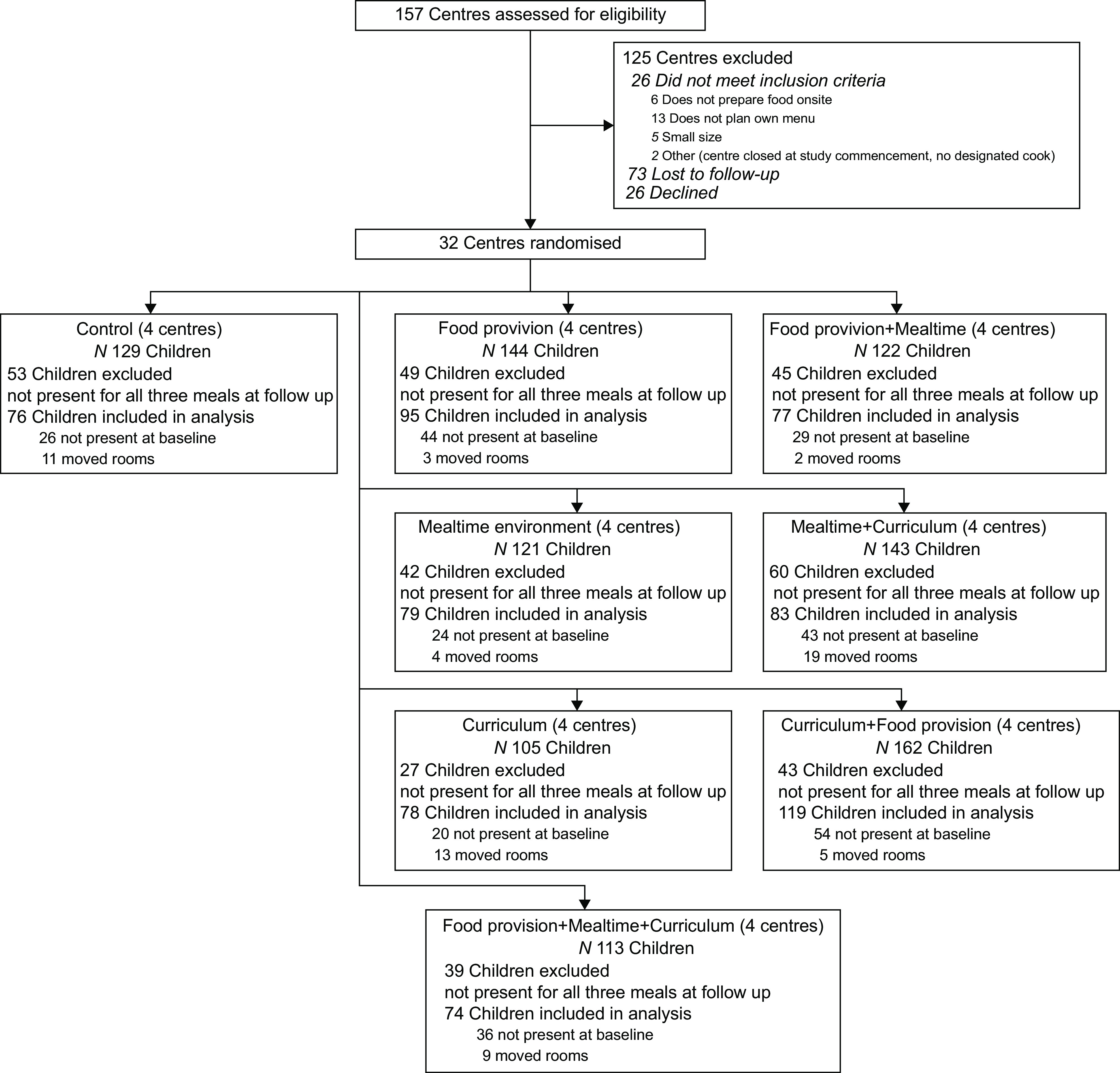
Design: Using the Multiphase Optimisation Strategy (MOST) framework, a 12-week, eight-condition (n 7 intervention, n 1 control) randomised factorial experiment was conducted. Children's dietary intake data were measured pre- and post-initiative implementation using the weighed plate waste method (1× meal and 2× between-meal snacks). Vegetable intake (g/d) was calculated from vegetable provision and waste. The optimal combination of initiatives was determined using a linear mixed-effects model comparing between-group vegetable intake at follow-up, while considering initiative fidelity and acceptability.
Setting: LDC centres in metropolitan Adelaide, South Australia.
Participants: 32 centres, 276 staff and 1039 children aged 2-5 years.
Results: There were no statistically significant differences between any of the intervention groups and the control group for vegetable intake (all P > 0·05). The curriculum with mealtime environment group consumed 26·7 g more vegetables/child/day than control (ratio of geometric mean 3·29 (95 % CI 0·96, 11·27), P = 0·06). Completion rates for the curriculum (> 93 %) and mealtime environment (61 %) initiatives were high, and acceptability was good (4/5 would recommend), compared with the food provision initiative (0-50 % completed the menu assessment, 3/5 would recommend).
Conclusion: A programme targeting the curriculum and mealtime environment in LDC may be useful to increase children's vegetable intake. Determining the effectiveness of this optimised package in a randomised controlled trial is required, as per the evaluation phase of the MOST framework.
Keywords: Children; Complex interventions; Long day care; Multiphase Optimisation Strategy; Vegetable intake.
Conflict of interest statement
There are no conflicts of interest.
Figures
References
-
- World Health Organization (WHO) (2019) Increasing Fruit and Vegetable Consumption to Reduce the Risk of Noncommunicable Diseases. Geneva, Switzerland: World Health Organization.
-
- Maynard M, Gunnell D, Ness AR et al. (2006) What influences diet in early old age? Prospective and cross-sectional analyses of the Boyd Orr cohort. Eur J Public Health 16, 315–323. - PubMed
-
- Bell LK, Gardner C, Tian EJ et al. (2021) Supporting strategies for enhancing vegetable liking in the early years of life: an umbrella review of systematic reviews. Am J Clin Nutr 113, 1282–1300. - PubMed
-
- Smithers LG, Golley RK, Brazionis L et al. (2011) Characterizing whole diets of young children from developed countries and the association between diet and health: a systematic review. Nutr Rev 69, 449–467. - PubMed
Publication types
MeSH terms
LinkOut - more resources
Full Text Sources
Miscellaneous
