


Spatial variation in the non-use of modern contraception and its predictors in Bangladesh
- PMID: 37620501
- PMCID: PMC10449799
- DOI: 10.1038/s41598-023-41049-w
Spatial variation in the non-use of modern contraception and its predictors in Bangladesh
Abstract
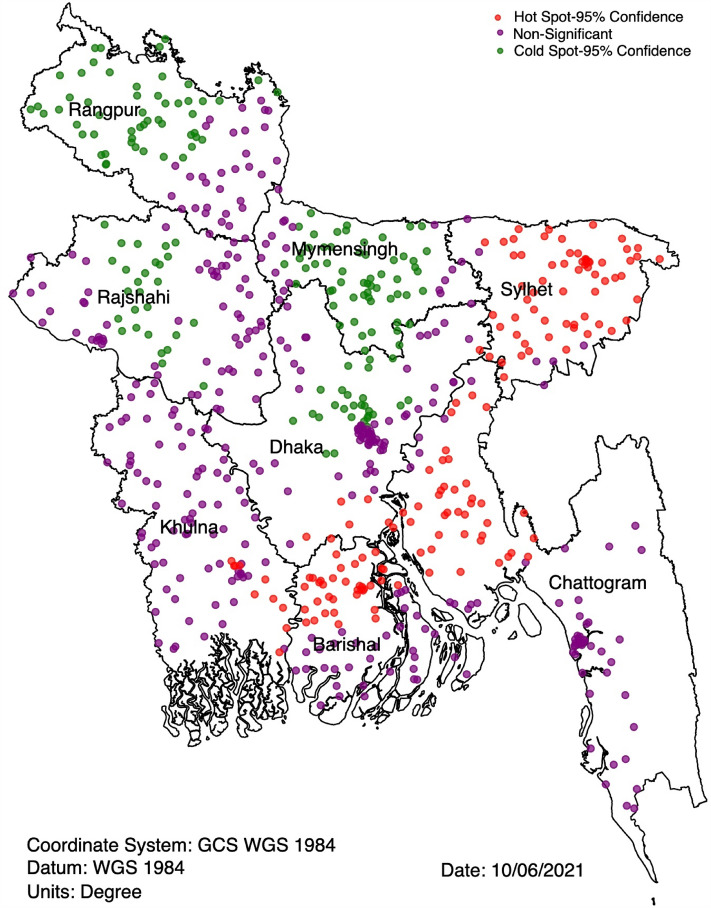
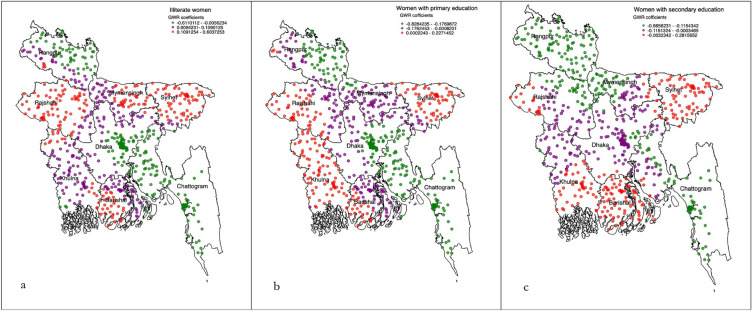
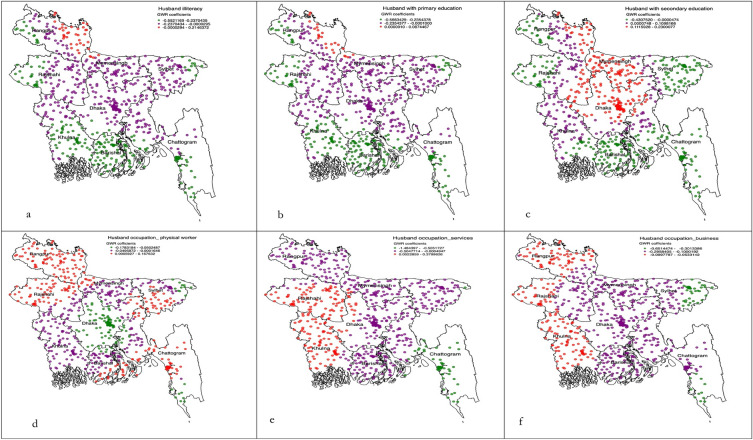
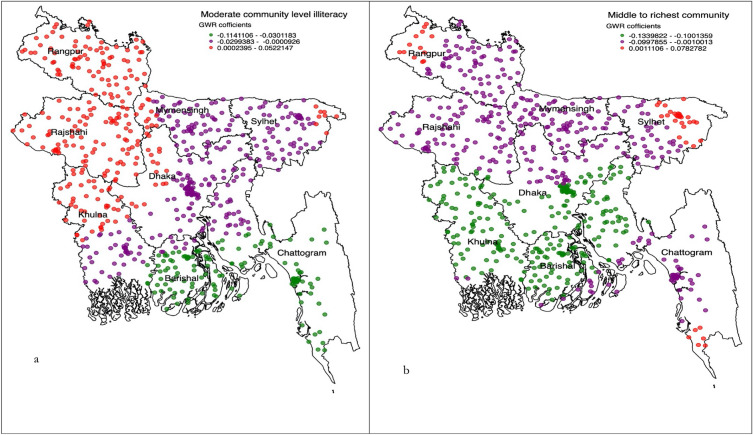
This study aimed to investigate spatial variations in the non-use of modern contraception in Bangladesh and identify associated individual, household, and community-level factors. The analysis utilized data from 16,135 women, extracted from the 2017/18 Bangladesh Demographic and Health Survey. The study's main outcome was the prevalence of non-use of modern contraception (yes or no), while the explanatory variables included factors at the individual, household, and community level. To assess geographical heterogeneity in non-use of modern contraception, Moran's I statistics were applied. Additionally, the Gettis-Ord Gi* was calculated to measure spatial autocorrelation differences across various study locations. The relationship between non-use of modern contraception and location was further explored using a geographically weighted regression model at the cluster level. The results indicated that 42.8% (95% CI 41.6-43.8) of respondents reported non-use of modern contraception in Bangladesh, with significant variation across geographical locations (p < 0.001). Hot spots of high non-use were predominantly identified in the Sylhet, Barishal, and some areas of the Chattogram divisions, while cold spots of low use were concentrated in the Rangpur, Mymensingh, and some areas Rajshahi divisions. Notably, the likelihood of non-use was highest among women and partners with low levels of education. The analysis of other risk factors, such as partner occupation, community-level illiteracy, and poverty, revealed varying effects on non-use of modern contraception across different locations (clusters) within the country. The study's findings underscore the importance of targeted, area-specific policies and programs aimed at promoting knowledge and uptake of modern contraception in Bangladesh.
© 2023. Springer Nature Limited.
Conflict of interest statement
The authors declare no competing interests.
Figures
References
-
- Assembly G. Sustainable development goals. In SDGs Transform Our World 2015 (2030).
-
- United Nations. World Family Planning. In: The Department of Economic and Social Affairs, New York, USA (2017).
-
- WHO. Family Planning/Contraception Methods. (WHO, 2020).
-
- Bearak J, Popinchalk A, Ganatra B, Moller A-B, Tunçalp Ö, Beavin C, Kwok L, Alkema L. Unintended pregnancy and abortion by income, region, and the legal status of abortion: estimates from a comprehensive model for 1990–2019. Lancet Glob. Health. 2020;8(9):e1152–e1161. doi: 10.1016/S2214-109X(20)30315-6. - DOI - PubMed
-
- National Institute of Population Research and Training (NIPORT) MaA, and ICF International. Bangladesh Demographic and Health Survey 2017/18. (NIPORT, Mitra and Associates, and ICF International, 2021).
Publication types
MeSH terms
LinkOut - more resources
Full Text Sources
Medical
