


Temporal trends in inequalities of the burden of cardiovascular disease across 186 countries and territories
- PMID: 37620895
- PMCID: PMC10463977
- DOI: 10.1186/s12939-023-01988-2
Temporal trends in inequalities of the burden of cardiovascular disease across 186 countries and territories
Abstract
Background: Cardiovascular disease (CVD) is a leading cause of morbidity and mortality globally. The extent to which CVD affects the population's health varies across countries. Moreover, quantitative estimates of the trend of inequalities in CVD burden remain unclear. The objective of our study was to assess the socioeconomic inequalities and temporal trends of CVD burden across 186 countries and territories from 2000 to 2019.
Methods: We extracted data from the Global Burden of Disease, Injuries, and Risk Factors Study (GBD) 2019, and conducted a cross-national time-series analysis. Age-standardized disability-adjusted life-year (DALY) rates were used to measure the burden of CVDs, and gross national income (GNI) per capita was used to approximate the socioeconomic development. Concentration curves and concentration indexes (CIs) were generated to evaluate the cross-national socioeconomic inequality of CVD burden. A joinpoint regression analysis was used to quantify the changes in trends in socioeconomic inequality of CVD burden from 2000 to 2019.
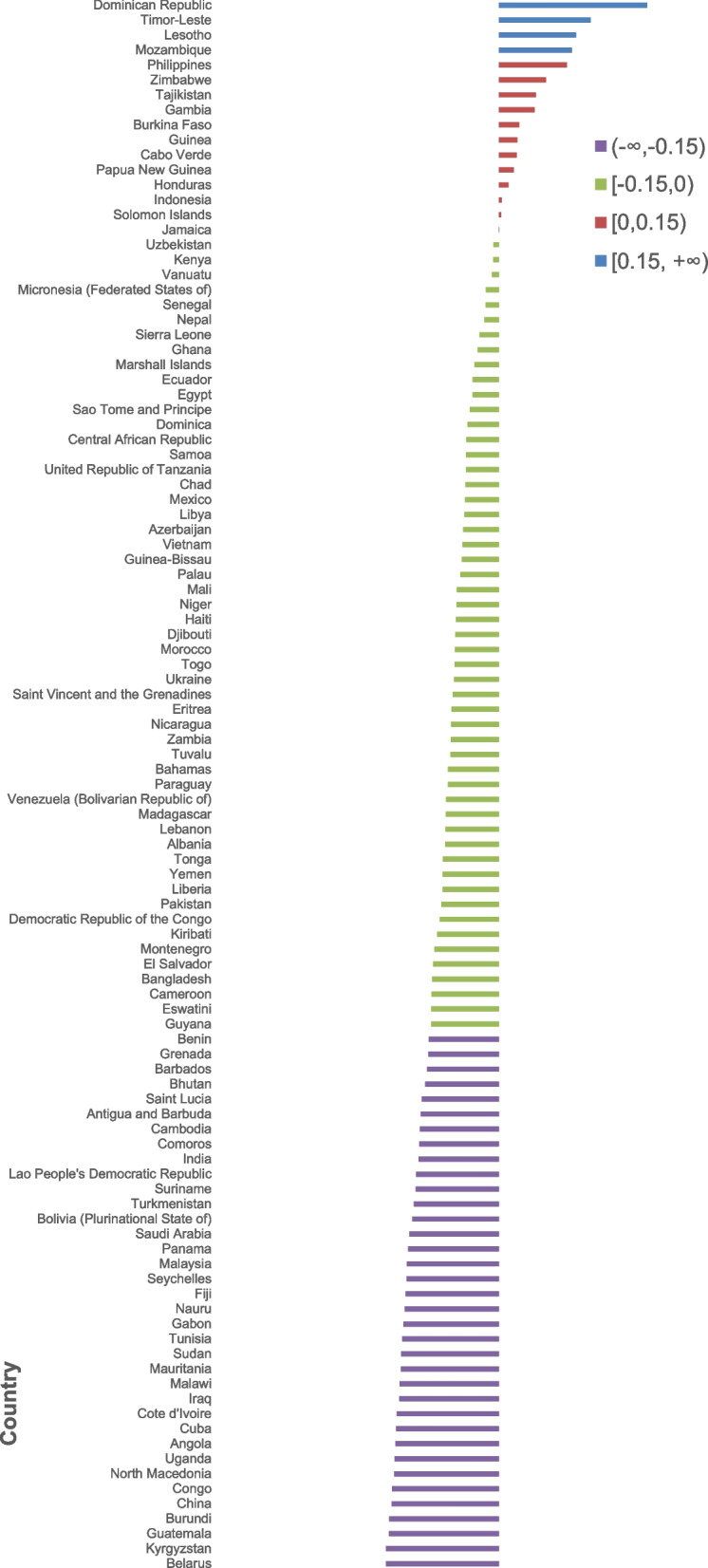
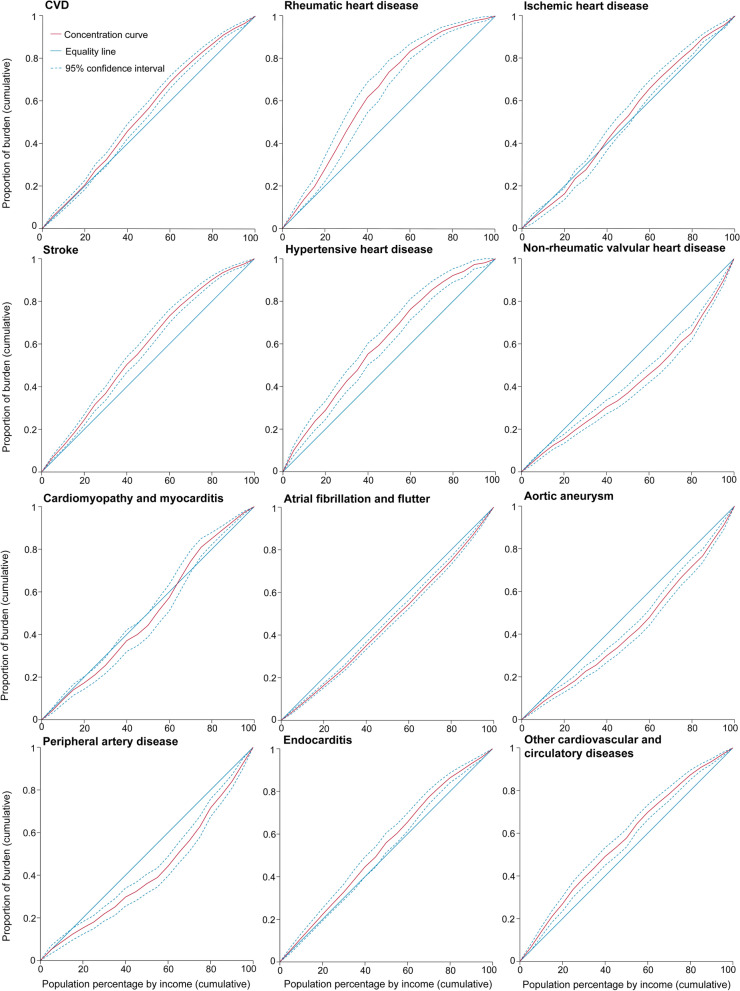
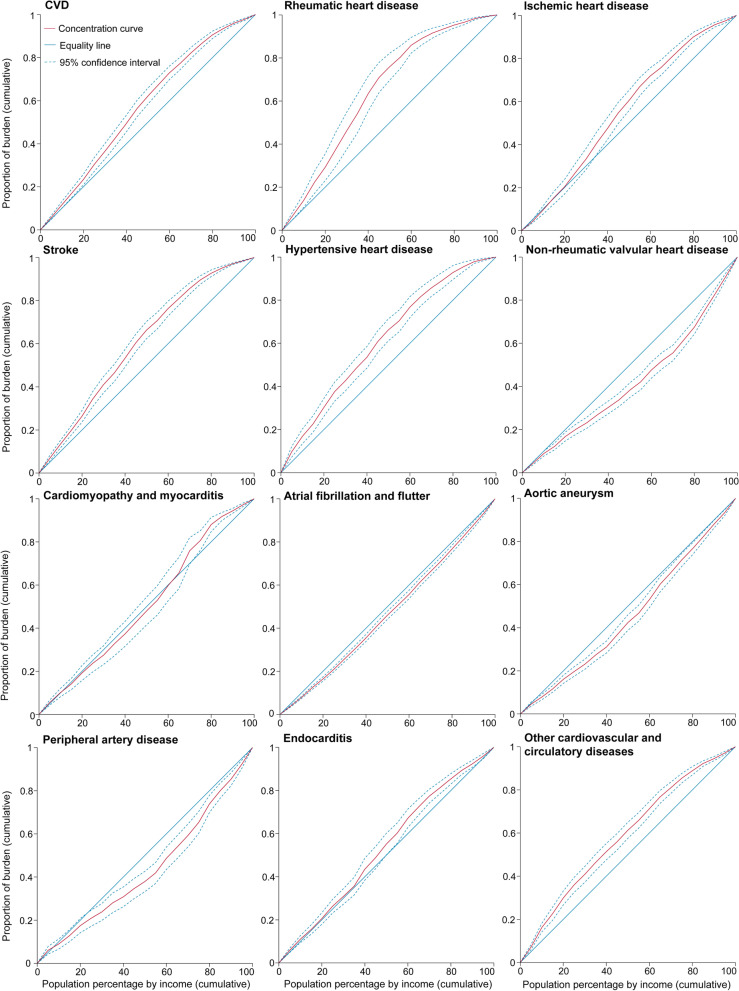
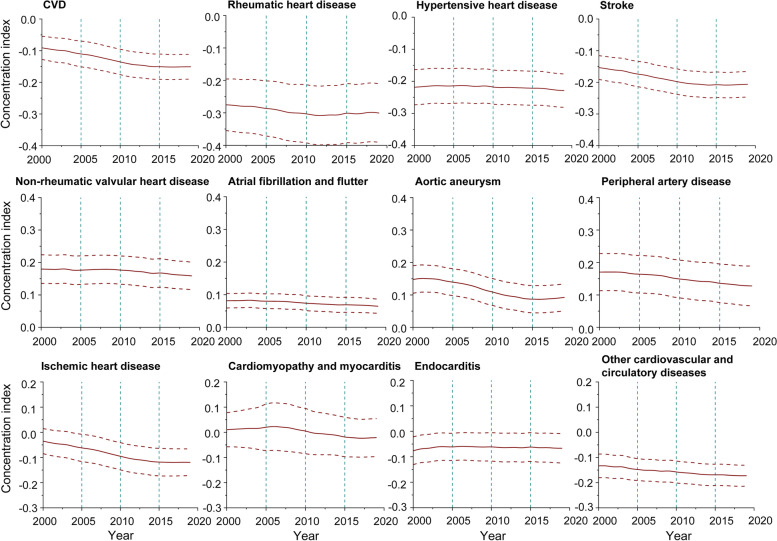
Results: The age-standardized DALY rates of CVDs decreased in 170 (91%) of 186 countries from 2000 to 2019. The concentration curves of the age-standardized DALY rates of CVDs were above the equality line from 2000 to 2019, indicating a disproportional distribution of CVD burden in low-income countries. The CIs declined from - 0.091 (95% CI: -0.128 to - 0.054) in 2000 to - 0.151 (95% CI: -0.190 to - 0.112) in 2019, indicating worsened pro-poor inequality distributions of CVD burden worldwide. A four-phase trend of changes in the CIs of age-standardized DALY rates for CVD was observed from 2000 to 2019, with an average annual percentage change (AAPC) of - 2.7% (95% CI: -3.0 to - 2.4). Decreasing trends in CIs were observed in all CVD subcategories but endocarditis, with AAPC ranging from - 6.6% (95% CI: -7.3 to - 5.9) for ischemic heart disease to - 0.2% (95% CI: -0.4 to - 0.1) for hypertensive heart disease.
Conclusions: Globally, the burden of CVD has decreased in more than 90% of countries over the past two decades, accompanied by an increasing trend of cross-country inequalities. Moreover, the overall burden of CVD continues to fall primarily on low-income countries.
Keywords: Cardiovascular disease; Concentration index; Disability adjusted life years; Global burden of disease; Socioeconomic inequalities.
© 2023. BioMed Central Ltd., part of Springer Nature.
Conflict of interest statement
The authors declare no competing interests.
Figures
References
-
- Joseph P, Leong D, McKee M, et al. Reducing the Global Burden of Cardiovascular Disease, Part 1: the epidemiology and risk factors. Circ Res. 2017;121(6):677–94. - PubMed
-
- Jan S, Laba TL, Essue BM, et al. Action to address the household economic burden of non-communicable diseases. Lancet. 2018;391(10134):2047–58. - PubMed
-
- World Health Organization. Global action plan for the prevention and control of NCDs 2013–2020. Geneva: WHO 2013. https://www.who.int/publications/i/item/9789241506236. Accessed 25 Oct 2022.
Publication types
MeSH terms
LinkOut - more resources
Full Text Sources
Medical
Miscellaneous
