


AMPK promotes lysosomal and mitochondrial biogenesis via folliculin:FNIP1
- PMID: 37621729
- PMCID: PMC10445941
- DOI: 10.1093/lifemeta/load027
AMPK promotes lysosomal and mitochondrial biogenesis via folliculin:FNIP1
Abstract
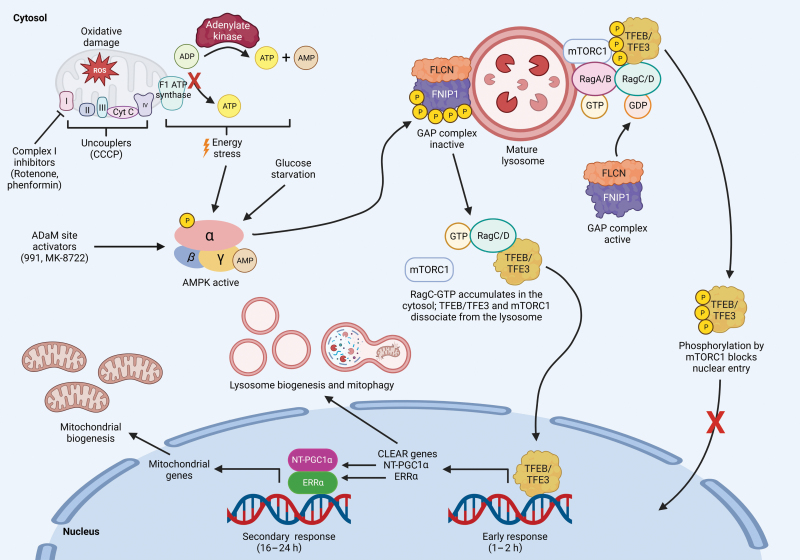
The AMP-activated protein kinase (AMPK) is known to maintain the integrity of cellular mitochondrial networks by (i) promoting fission, (ii) inhibiting fusion, (iii) promoting recycling of damaged components via mitophagy, (iv) enhancing lysosomal biogenesis to support mitophagy, and (v) promoting biogenesis of new mitochondrial components. While the AMPK targets underlying the first three of these effects are known, a recent paper suggests that direct phosphorylation of the folliculin-interacting protein 1 (FNIP1) by AMPK may be involved in the remaining two.
© The Author(s) 2023. Published by Oxford University Press on behalf of Higher Education Press.
Conflict of interest statement
D.G.H. holds the position of Editorial Board Member for Life Metabolism and is blinded from reviewing or making decisions for the manuscript. The other author declares that no conflict of interest exists.
Figures
References
-
- González A, Hall MN, Lin SCet al. . Cell Metab 2020;31:472–92. - PubMed
Grants and funding
LinkOut - more resources
Full Text Sources
Research Materials