


Iodine and plant-based diets: a narrative review and calculation of iodine content
- PMID: 37622183
- PMCID: PMC10751939
- DOI: 10.1017/S0007114523001873
Iodine and plant-based diets: a narrative review and calculation of iodine content
Abstract
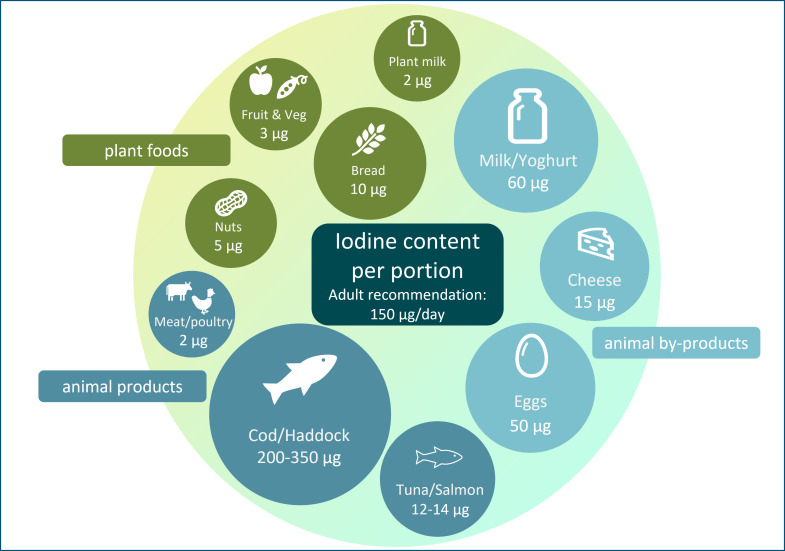
An increasing number of food-based recommendations promote a plant-based diet to address health concerns and environmental sustainability in global food systems. As the main sources of iodine in many countries are fish, eggs and dairy products, it is unclear whether plant-based diets, such as the EAT-Lancet reference diet, would provide sufficient iodine. This is important as iodine, through the thyroid hormones, is required for growth and brain development; adequate iodine intake is especially important before, and during, pregnancy. In this narrative review, we evaluated the current literature and estimated iodine provision from the EAT-Lancet reference diet. There is evidence that those following a strict plant-based diet, such as vegans, cannot reach the recommended iodine intake from food alone and are reliant on iodine supplements. Using the EAT-Lancet reference diet intake recommendations in combination with iodine values from UK food tables, we calculated that the diet would provide 128 μg/d (85 % of the adult recommendation of 150 μg/d and 51–64 % of the pregnancy recommendation of 200–250 μg/d). However, if milk is replaced with unfortified plant-based alternatives, total iodine provision would be just 54 μg/d (34 % and 22–27 % of the recommendations for adults and pregnancy, respectively). Plant-based dietary recommendations might place consumers at risk of iodine deficiency in countries without a fortification programme and where animal products provide the majority of iodine intake, such as the UK and Norway. It is essential that those following a predominantly plant-based diet are given appropriate dietary advice to ensure adequate iodine intake.
Keywords: Fish; Iodine; Milk; Plant-based; Pregnancy; Vegan.
References
-
- Alsaffar AA (2016) Sustainable diets: the interaction between food industry, nutrition, health and the environment. Food Sci Technol Int 22, 102–111. - PubMed
-
- GBD 2017 Risk Factor Collaborators (2018) Global, regional, and national comparative risk assessment of 84 behavioural, environmental and occupational, and metabolic risks or clusters of risks for 195 countries and territories, 1990–2017: a systematic analysis for the Global Burden of Disease Study 2017. Lancet 392, 1923–1994. - PMC - PubMed
-
- Muka T, Imo D, Jaspers L, et al. (2015) The global impact of non-communicable diseases on healthcare spending and national income: a systematic review. Eur J Epidemiol 30, 251–277. - PubMed
-
- United Nations: Department of Economic and Social Affairs Sustainable Development. (2015) Sustainable Development Goals. UN Department of Economic and Social Affairs. https://sdgs.un.org/goals (accessed May 2022).
-
- U.S. Department of Agriculture & U.S. Department of Health and Human Services (2020) Dietary Guidelines for Americans, 2020–2025. https://www.dietaryguidelines.gov/sites/default/files/2020–12/Dietary_Gu... (accessed May 2022).
Publication types
MeSH terms
Substances
LinkOut - more resources
Full Text Sources
Research Materials
