


From Threat to Opportunity: Harnessing the Invasive Carpobrotus edulis (L.) N.E.Br for Nutritional and Phytotherapeutic Valorization Amid Seasonal and Spatial Variability
- PMID: 37623717
- PMCID: PMC10456270
- DOI: 10.3390/md21080436
From Threat to Opportunity: Harnessing the Invasive Carpobrotus edulis (L.) N.E.Br for Nutritional and Phytotherapeutic Valorization Amid Seasonal and Spatial Variability
Abstract
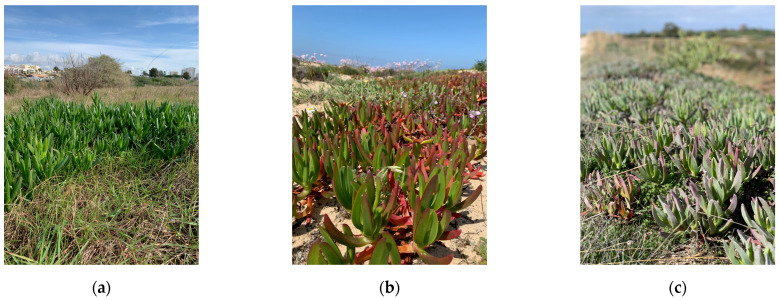
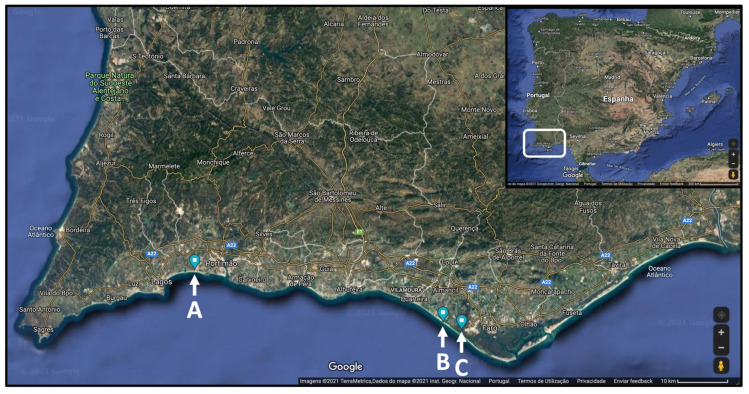
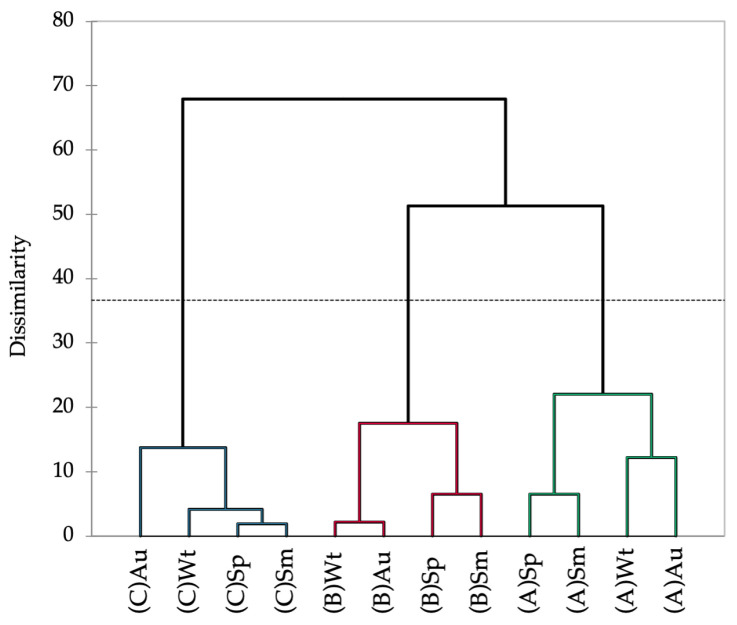
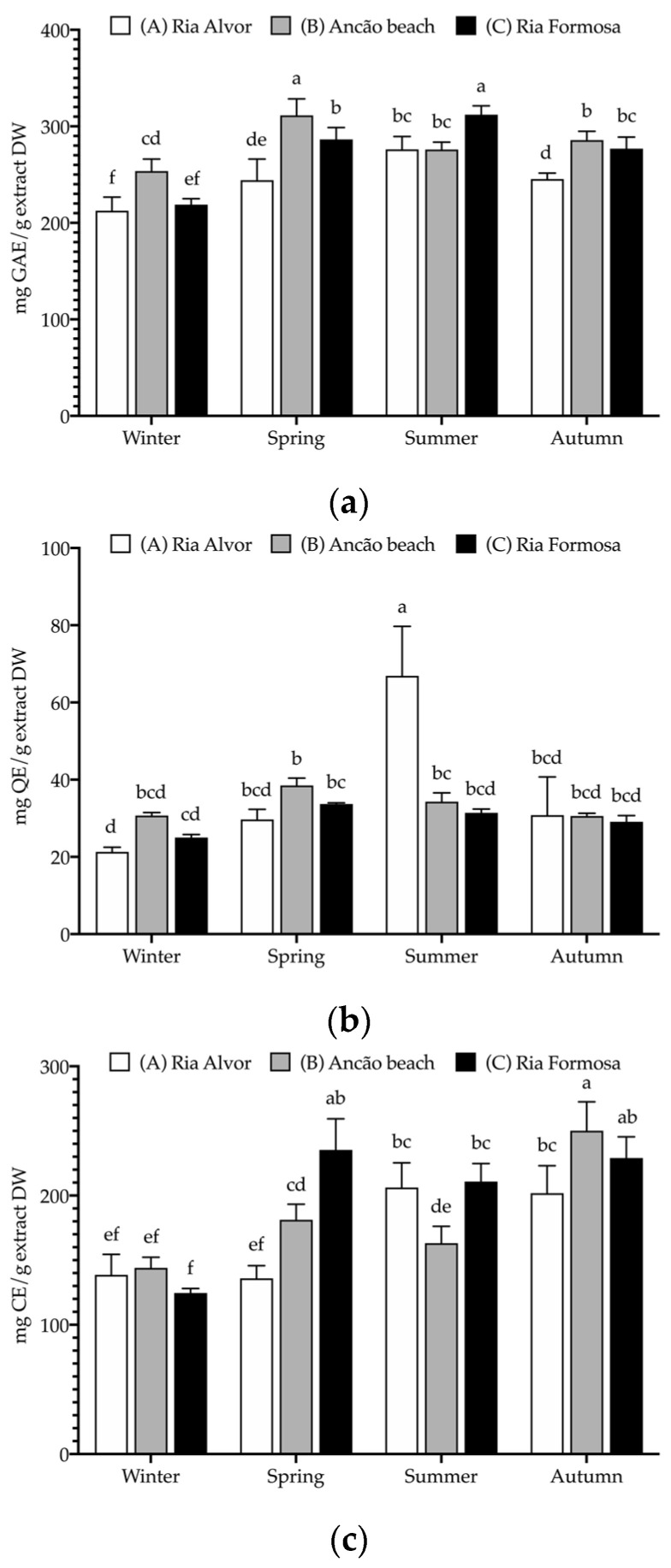
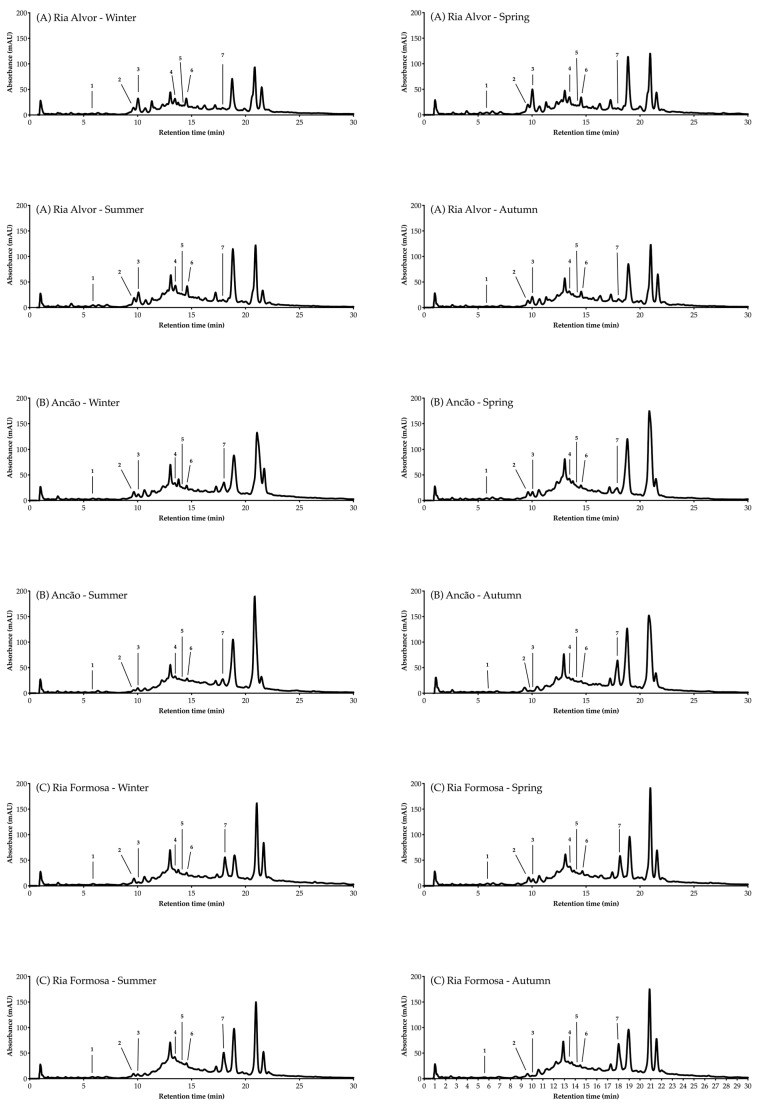
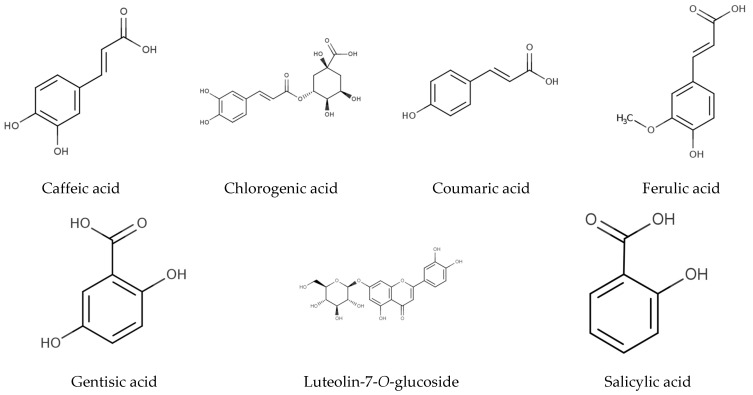
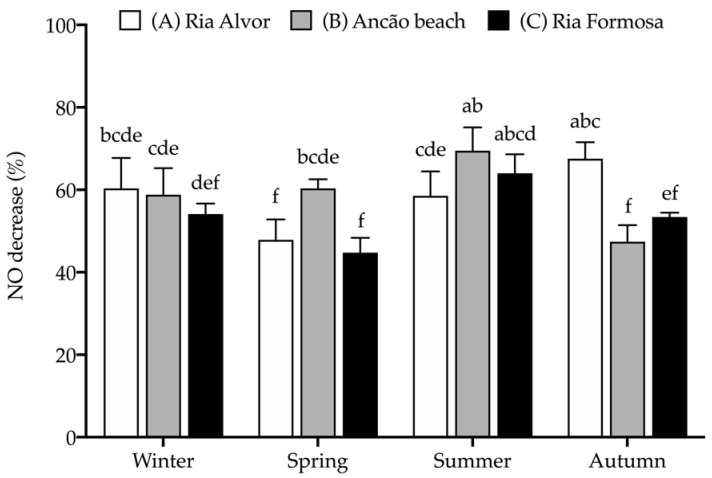
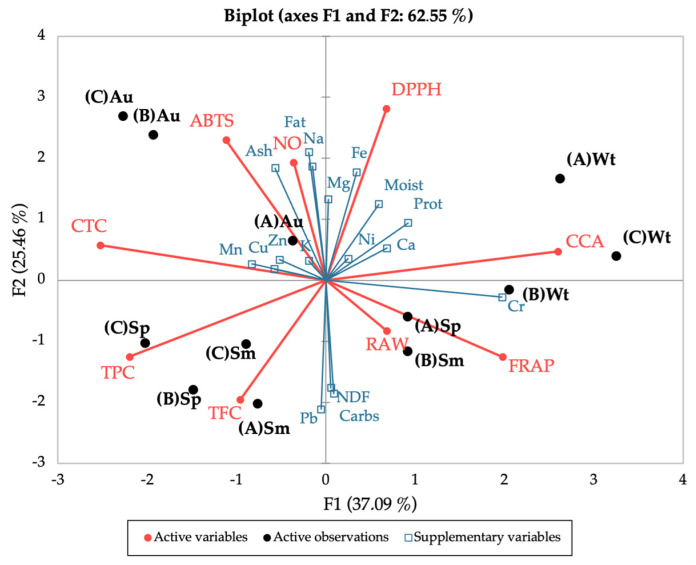
Carpobrotus edulis (L.) N.E.Br. (Hottentot-fig) is a problematic invasive species found in coastal areas worldwide. Mechanical removal is a common control method, leaving the removed biomass available as a possible source of natural phytochemicals with prospective commercial applications. While the Hottentot-fig's vegetative organs have been studied previously, this work establishes for the first time a seasonal and spatial comparative analysis of its nutritional, chemical, and bioactivity profiles (in three locations over four seasons). Proximate and mineral contents were assessed, along with its phenolic composition and in vitro antioxidant and anti-inflammatory properties. Hottentot-fig's biomass offered a good supply of nutrients, mainly carbohydrates, proteins, and minerals, with a tendency for higher concentrations of the most relevant minerals and proteins in autumn and winter, and in plants from sites A (Ria de Alvor lagoon) and B (Ancão beach). The extracts were rich in polyphenolics, with higher levels in spring and summer, especially for luteolin-7-O-glucoside and salicylic and coumaric acids. The extracts were also effective antioxidants, with stronger radical scavenging activities in spring and summer, along with anti-inflammatory properties. Our results suggest that the usually discarded plant material of this invasive halophyte could be valuable as a source of natural products with potential biotechnological applications in the food and nutraceutical industries.
Keywords: Hottentot-fig; anti-inflammatory; antioxidant; invasive plants; nutrients; phenolics.
Conflict of interest statement
The authors declare no conflict of interest.
Figures
References
-
- Millennium Ecosystem Assessment (MEA) Ecosystems and Human Well-Being: Synthesis. Island Press; Washington, DC, USA: 2005.
-
- McLachlan A., Defeo O. Human Impacts. In: McLachlan A., Brown A.C., editors. The Ecology of Sandy Shores. 3rd ed. Academic Press; London, UK: 2018. pp. 375–420.
-
- Haubrock P.J., Turbelin A.J., Cuthbert R.N., Novoa A., Taylor N.G., Angulo E., Ballesteros-Mejia L., Bodey T.W., Capinha C., Diagne C., et al. Economic costs of invasive alien species across Europe. NeoBiota. 2021;67:153–190. doi: 10.3897/neobiota.67.58196. - DOI
MeSH terms
Substances
Grants and funding
LinkOut - more resources
Full Text Sources
Medical
