


Faba Bean (Vicia faba L. minor) Bitterness: An Untargeted Metabolomic Approach to Highlight the Impact of the Non-Volatile Fraction
- PMID: 37623907
- PMCID: PMC10456379
- DOI: 10.3390/metabo13080964
Faba Bean (Vicia faba L. minor) Bitterness: An Untargeted Metabolomic Approach to Highlight the Impact of the Non-Volatile Fraction
Abstract
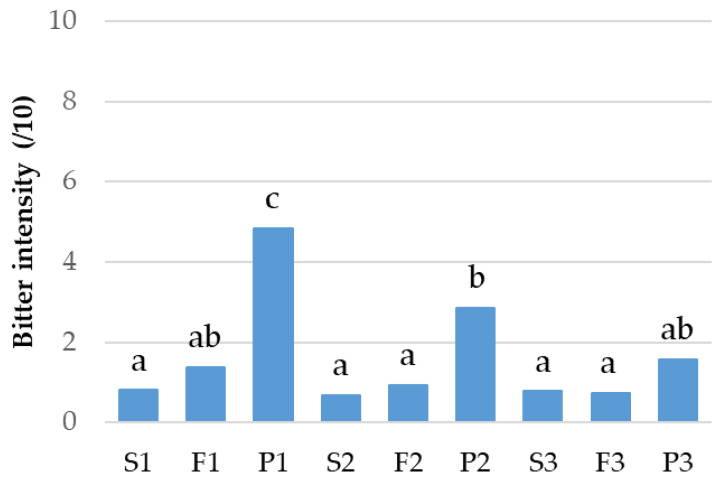
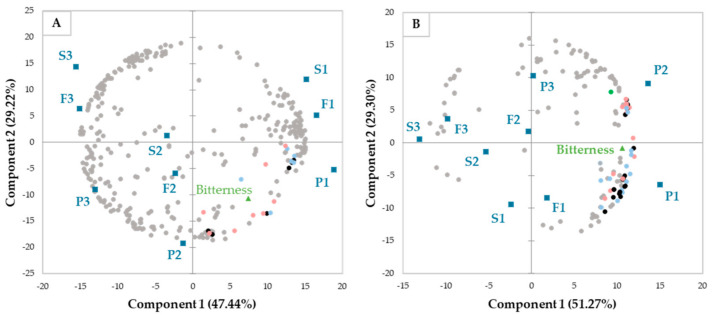
In the context of climate change, faba beans are an interesting alternative to animal proteins but are characterised by off-notes and bitterness that decrease consumer acceptability. However, research on pulse bitterness is often limited to soybeans and peas. This study aimed to highlight potential bitter non-volatile compounds in faba beans. First, the bitterness of flours and air-classified fractions (starch and protein) of three faba bean cultivars was evaluated by a trained panel. The fractions from the high-alkaloid cultivars and the protein fractions exhibited higher bitter intensity. Second, an untargeted metabolomic approach using ultra-high-performance liquid chromatography-diode array detector-tandem-high resolution mass spectrometry (UHPLC-DAD-HRMS) was correlated with the bitter perception of the fractions. Third, 42 tentatively identified non-volatile compounds were associated with faba bean bitterness by correlated sensory and metabolomic data. These compounds mainly belonged to different chemical classes such as alkaloids, amino acids, phenolic compounds, organic acids, and terpenoids. This research provided a better understanding of the molecules responsible for bitterness in faba beans and the impact of cultivar and air-classification on the bitter content. The bitter character of these highlighted compounds needs to be confirmed by sensory and/or cellular analyses to identify removal or masking strategies.
Keywords: UHPLC-HRMS; bitterness; faba beans; metabolomic approach; off-flavours; pulses; sensory analysis.
Conflict of interest statement
Adeline Karolkowski and Loïc Levavasseur are employees of Groupe Soufflet-Invivo. Emilie Bouzidi is employee of Vivien Paille (Groupe Avril). The paper reflects the views of the scientists, and not the companies.
Figures
References
-
- Willett W., Rockström J., Loken B., Springmann M., Lang T., Vermeulen S., Garnett T., Tilman D., DeClerck F., Wood A., et al. Food in the Anthropocene: The EAT–Lancet Commission on Healthy Diets from Sustainable Food Systems. Lancet. 2019;393:447–492. doi: 10.1016/S0140-6736(18)31788-4. - DOI - PubMed
-
- Sharan S., Zanghelini G., Zotzel J., Bonerz D., Aschoff J., Saint-Eve A., Maillard M.-N. Fava Bean (Vicia faba L.) for Food Applications: From Seed to Ingredient Processing and Its Effect on Functional Properties, Antinutritional Factors, Flavor, and Color. Compr. Rev. Food Sci. Food Saf. 2021;20:401–428. doi: 10.1111/1541-4337.12687. - DOI - PubMed
-
- Roland W.S.U., Pouvreau L., Curran J., van de Velde F., de Kok P.M.T. Flavor Aspects of Pulse Ingredients. Cereal Chem. 2017;94:58–65. doi: 10.1094/CCHEM-06-16-0161-FI. - DOI
-
- Amarowicz R., Troszyńska A., Baryłko-Pikielna N., Shahidi F. Polyphenolics Extracts from Legume Seeds: Correlations Between Total Antioxidant Activity, Total Phenolics Content, Tannins Content and Astringency. J. Food Lipids. 2004;11:278–286. doi: 10.1111/j.1745-4522.2004.01143.x. - DOI
Grants and funding
LinkOut - more resources
Full Text Sources
