


Modulation of Autophagy and Cell Death by Bacterial Outer-Membrane Vesicles
- PMID: 37624259
- PMCID: PMC10467092
- DOI: 10.3390/toxins15080502
Modulation of Autophagy and Cell Death by Bacterial Outer-Membrane Vesicles
Abstract
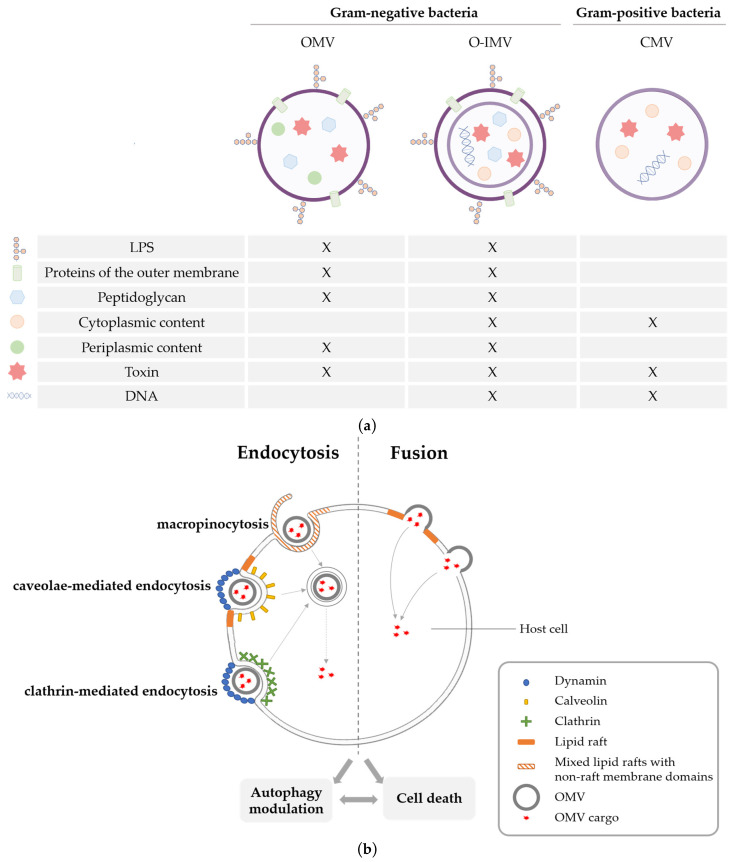
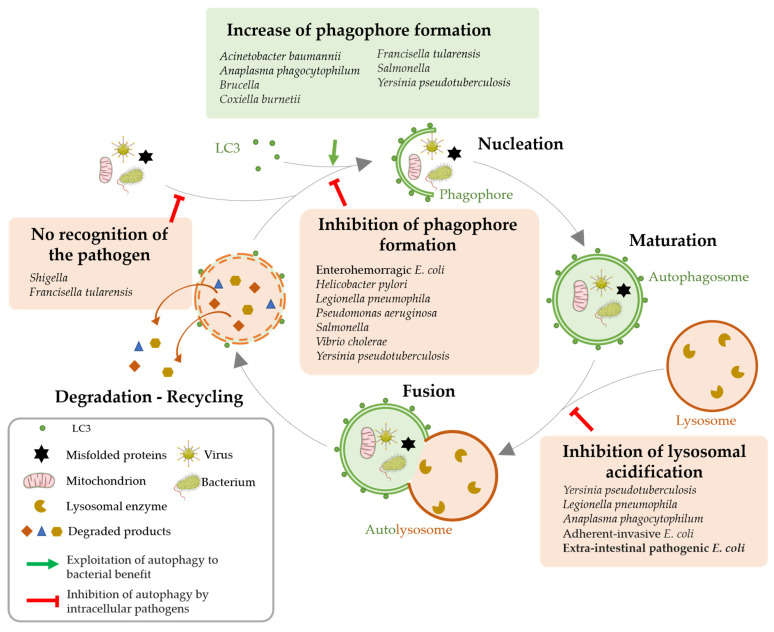
Bacteria, akin to eukaryotic cells, possess the ability to release extracellular vesicles, lipidic nanostructures that serve diverse functions in host-pathogen interactions during infections. In particular, Gram-negative bacteria produce specific vesicles with a single lipidic layer called OMVs (Outer Membrane Vesicles). These vesicles exhibit remarkable capabilities, such as disseminating throughout the entire organism, transporting toxins, and being internalized by eukaryotic cells. Notably, the cytosolic detection of lipopolysaccharides (LPSs) present at their surface initiates an immune response characterized by non-canonical inflammasome activation, resulting in pyroptotic cell death and the release of pro-inflammatory cytokines. However, the influence of these vesicles extends beyond their well-established roles, as they also profoundly impact host cell viability by directly interfering with essential cellular machinery. This comprehensive review highlights the disruptive effects of these vesicles, particularly on autophagy and associated cell death, and explores their implications for pathogen virulence during infections, as well as their potential in shaping novel therapeutic approaches.
Keywords: OMV; apoptosis; autophagy; cell death; infection; inflammation; pyroptosis; xenophagy.
Conflict of interest statement
The authors declare no conflict of interest.
Figures

References
-
- Pérez-Cruz C., Carriòn O., Delgado L., Martinez G., Lòpez-Iglesias C., Mercade E. New Type of Outer Membrane Vesicle Produced by the Gram-Negative Bacterium Shewanella Vesiculosa M7T: Implications for DNA Content. Appl. Environ. Microbiol. 2013;79:1874–1881. doi: 10.1128/AEM.03657-12. - DOI - PMC - PubMed
Publication types
MeSH terms
LinkOut - more resources
Full Text Sources
