


Role of Body Composition in the Prediction of Skeletal Fragility Induced by Hormone Deprivation Therapies in Cancer Patients
- PMID: 37624550
- PMCID: PMC10556180
- DOI: 10.1007/s11912-023-01447-9
Role of Body Composition in the Prediction of Skeletal Fragility Induced by Hormone Deprivation Therapies in Cancer Patients
Abstract
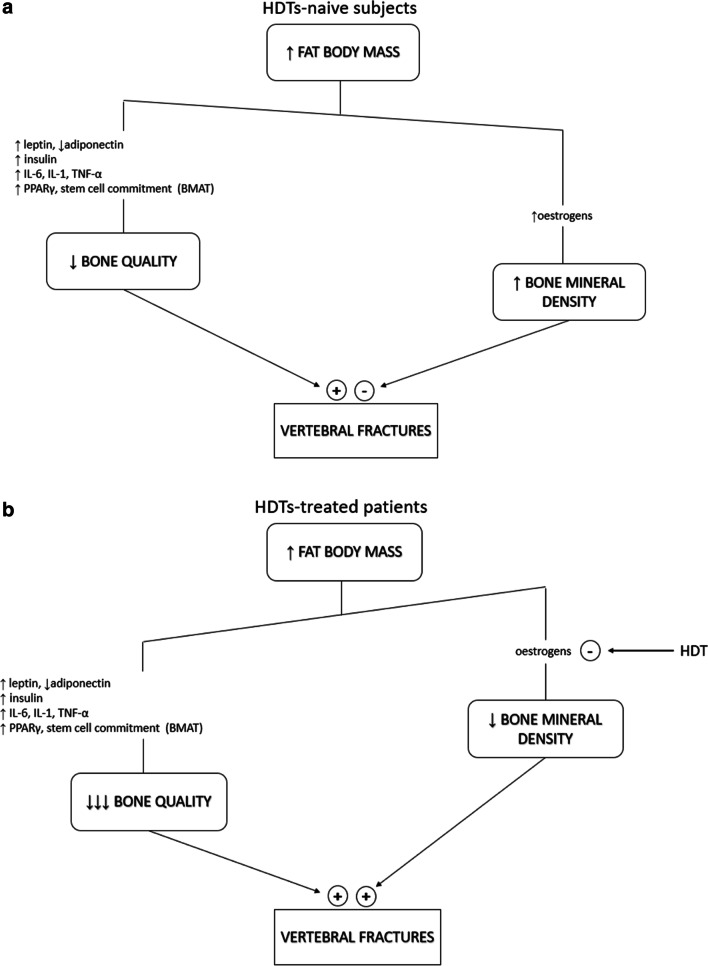
Purpose of review: This review paper is intended to show that changes in body composition are key in the pathogenesis of bone fragility amongst patients with breast and prostate cancer receiving hormone deprivation therapies (HDTs) and that the mechanism is based on the development of alterations in bone quality rather than in bone quantity.
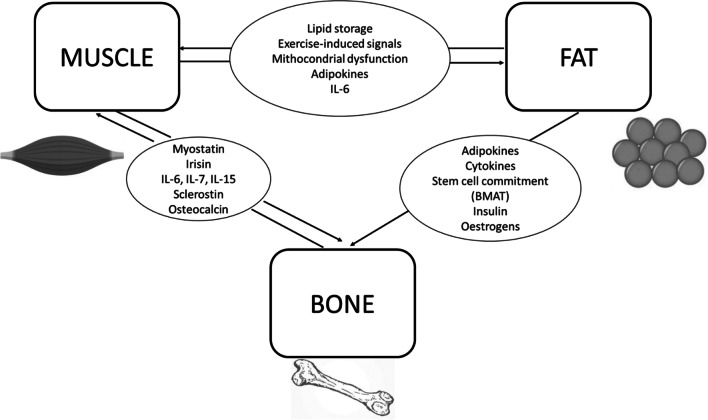
Recent findings: Preclinical and clinical data suggest a tight connection amongst bone, adipose and muscular tissues by means of several soluble mediators, potentially leading to (1) bone resorption and bone quality deterioration in sarcopenic obese subjects, (2) bone mineral deposition in healthy trained subjects. Cancer patients treated with HDTs frequently fall into the first condition, named osteosarcopenic obesity. Current clinical guidelines for the prevention of treatment-induced osteoporosis focus on bone mineral density (BMD) as a main predictive factor for fracture risk; however, the pathophysiology underlying HDT-induced bone fragility differs from that of primary and postmenopausal osteoporosis, suggesting a prevalent role for bone quality alterations. Focusing on available data from clinical trials, in our review we suggest osteosarcopenic obesity as a common target for the prevention and treatment of HDTs-related metabolic and skeletal complications, beyond a BMD-centred approach.
Keywords: Body composition; Bone health; Breast cancer; Hormonal deprivation; Prostate cancer; Sarcopenic obesity.
© 2023. The Author(s).
Conflict of interest statement
The authors declare no competing interests.
Figures

References
-
- Wallander M, Axelsson KF, Lundh D, Lorentzon M. Patients with prostate cancer and androgen deprivation therapy have increased risk of fractures—a study from the fractures and fall injuries in the elderly cohort (FRAILCO) Osteoporos Int. 2019;30(1):115–125. doi: 10.1007/s00198-018-4722-3. - DOI - PMC - PubMed
Publication types
MeSH terms
Substances
LinkOut - more resources
Full Text Sources
Medical
