Review
. 2023 Aug;28(8):3182-3193.
doi: 10.1038/s41380-023-02208-7. Epub 2023 Aug 25.

Novel epigenetic molecular therapies for imprinting disorders

Affiliations
Review

Novel epigenetic molecular therapies for imprinting disorders

Sung Eun Wang et al. Mol Psychiatry. 2023 Aug.

Abstract

Genomic imprinting disorders are caused by the disruption of genomic imprinting processes leading to a deficit or increase of an active allele. Their unique molecular mechanisms underlying imprinted genes offer an opportunity to investigate epigenetic-based therapy for reactivation of an inactive allele or reduction of an active allele. Current treatments are based on managing symptoms, not targeting the molecular mechanisms underlying imprinting disorders. Here, we highlight molecular approaches of therapeutic candidates in preclinical and clinical studies for individual imprinting disorders. These include the significant progress of discovery and testing of small molecules, antisense oligonucleotides, and CRISPR mediated genome editing approaches as new therapeutic strategies. We discuss the significant challenges of translating these promising therapies from the preclinical stage to the clinic, especially for genome editing based approaches.


Conflict of interest statement

YHJ is a cofounder for a new startup company of Couragene. However, Couragene did not have any direct role in this review. The other author declares no competing interests.

Figures
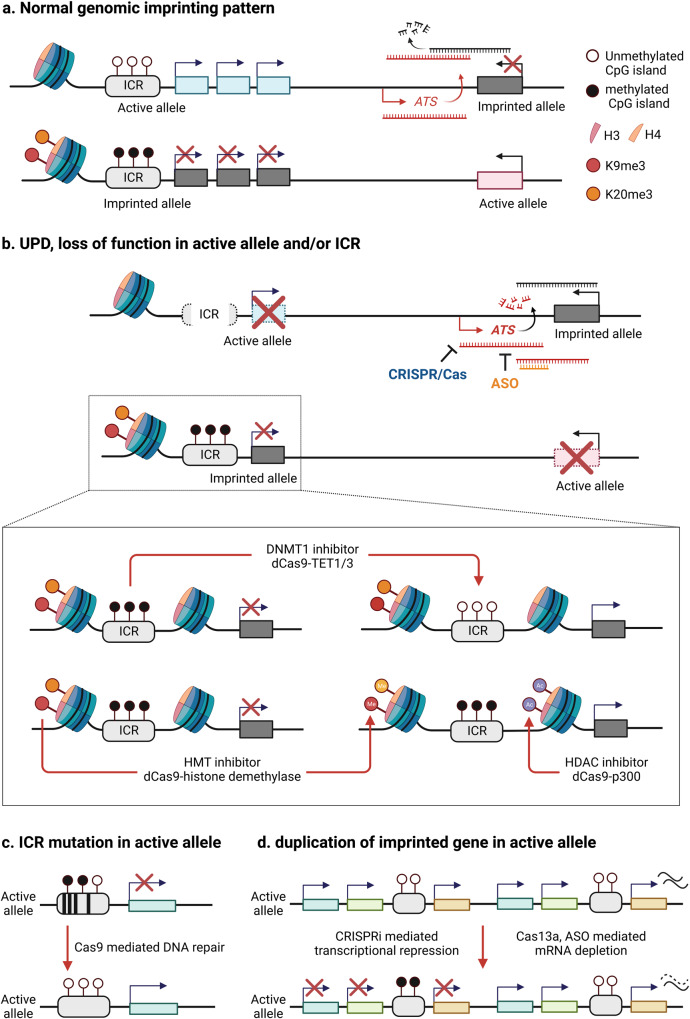
Fig. 1
Fig. 1. Epigenetic-based treatment strategies for imprinting disorders.
Schematic diagram describes epigenetic-based therapeutic targets including DNA methyltransferase and histone modifying enzymes for imprinting disorders. a Normal genomic imprinting pattern shows parental origin specific allele silencing. b Uniparental disomy (UPD), deletion or mutation of active allele/imprinting control region (ICR) causes deficiency of normal gene expression. CRISPR/dCas9 or small molecule-mediated reactivation of silenced (imprinted) genes is applicable to recover normal gene expression. c Allele specific CRISPR/Cas9-mediated genome editing can be a tool for correction of ICR mutation resulting in an imprinting defect or epimutation. Designing allele specific gRNA is required to do single nucleotide polymorphism (SNP) analysis to distinguish mat/pat chromosome. d Two copies of imprinted gene in active allele can be repressed by CRISPRi (ex. dCas9-KRAB, DNMT1), CRISPR/Cas13 and ASO mediated mRNA depletion (ASO antisense oligonucleotides, ATS antisense transcripts, DNMT1 DNA methyltransferase 1, HMT histone methyltransferase, HDAC Histone deacetylase). Created with BioRender.com.
Fig. 2
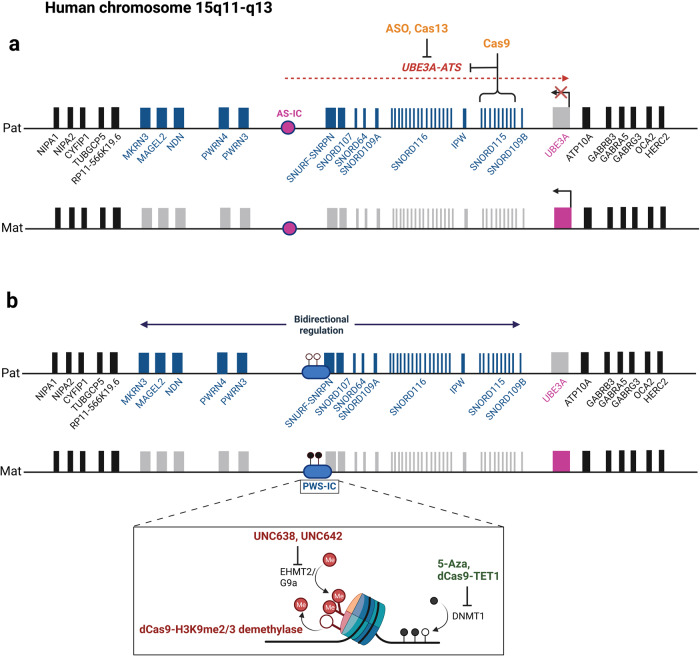
Fig. 2. Therapeutic strategies for AS and PWS.
Schematic shows the imprinting domain in human chromosome 15q11-q13 with potential epigenetic therapeutic candidates for (a) AS and (b) PWS. Genes in dark blue are exclusively expressed from the paternal chromosome while genes in purple are expressed from the maternal chromosome in neuronal cell type specific manner (gray bar, imprinted gene; biallelic expressed gene, black bar). In the case of AS, the loss of UBE3A expression in the maternal allele by different mechanisms is the cause. The principle of epigenetics-based therapy is to reactivate the paternal allele’s expression of UBE3A in neurons. The current approach is to inhibit the expression of antisense of UBE3A via small molecule, ASO, CRISPR/Cas9, or Cas13. In the case of PWS, where more than one paternally expressed gene is in the candidate region, the optimal approach is to manipulate the imprinting center region to reactivate the expression of silenced genes from the maternal chromosome. Current approaches include DNA methylation inhibitor, small molecule for histone modifications and others, CRISPR/dCas9 gene editing. Created with BioRender.com.

References

    1. Surani MA, Barton SC, Norris ML. Development of reconstituted mouse eggs suggests imprinting of the genome during gametogenesis. Nature. 1984;308:548–50. doi: 10.1038/308548a0. - DOI - PubMed
    1. McGrath J, Solter D. Completion of mouse embryogenesis requires both the maternal and paternal genomes. Cell. 1984;37:179–83. doi: 10.1016/0092-8674(84)90313-1. - DOI - PubMed
    1. Barlow DP, Stoger R, Herrmann BG, Saito K, Schweifer N. The mouse insulin-like growth factor type-2 receptor is imprinted and closely linked to the Tme locus. Nature. 1991;349:84–7. doi: 10.1038/349084a0. - DOI - PubMed
    1. Plasschaert RN, Bartolomei MS. Genomic imprinting in development, growth, behavior and stem cells. Development. 2014;141:1805–13. doi: 10.1242/dev.101428. - DOI - PMC - PubMed
    1. Perez JD, Rubinstein ND, Dulac C. New perspectives on genomic imprinting, an essential and multifaceted mode of epigenetic control in the developing and adult brain. Annu Rev Neurosci. 2016;39:347–84. doi: 10.1146/annurev-neuro-061010-113708. - DOI - PMC - PubMed

Publication types