Review
. 2023 Aug 25;20(1):191.
doi: 10.1186/s12985-023-02160-6.

A study on the effect of natural products against the transmission of B.1.1.529 Omicron

Affiliations
Review

A study on the effect of natural products against the transmission of B.1.1.529 Omicron

Samar Sami Alkafaas et al. Virol J. .

Abstract

Background: The recent outbreak of the Coronavirus pandemic resulted in a successful vaccination program launched by the World Health Organization. However, a large population is still unvaccinated, leading to the emergence of mutated strains like alpha, beta, delta, and B.1.1.529 (Omicron). Recent reports from the World Health Organization raised concerns about the Omicron variant, which emerged in South Africa during a surge in COVID-19 cases in November 2021. Vaccines are not proven completely effective or safe against Omicron, leading to clinical trials for combating infection by the mutated virus. The absence of suitable pharmaceuticals has led scientists and clinicians to search for alternative and supplementary therapies, including dietary patterns, to reduce the effect of mutated strains.

Main body: This review analyzed Coronavirus aetiology, epidemiology, and natural products for combating Omicron. Although the literature search did not include keywords related to in silico or computational research, in silico investigations were emphasized in this study. Molecular docking was implemented to compare the interaction between natural products and Chloroquine with the ACE2 receptor protein amino acid residues of Omicron. The global Omicron infection proceeding SARS-CoV-2 vaccination was also elucidated. The docking results suggest that DGCG may bind to the ACE2 receptor three times more effectively than standard chloroquine.

Conclusion: The emergence of the Omicron variant has highlighted the need for alternative therapies to reduce the impact of mutated strains. The current review suggests that natural products such as DGCG may be effective in binding to the ACE2 receptor and combating the Omicron variant, however, further research is required to validate the results of this study and explore the potential of natural products to mitigate COVID-19.

Keywords: COVID-19; In silico; Molecular docking; Natural product; Omicron; Vaccine.


Conflict of interest statement

The authors declare that they have no competing interests.

Figures
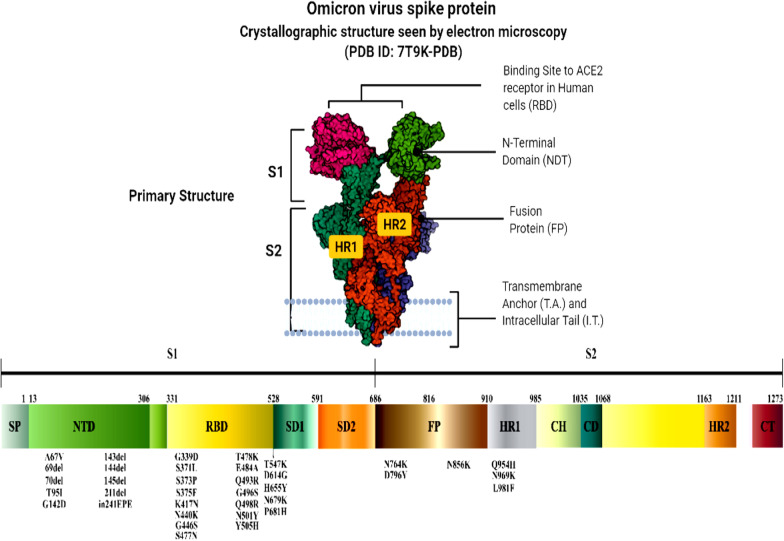
Fig. 1
Fig. 1
Genomic sequence of Omicron variant of PDB https://doi.org/10.2210/pdb7T9K/pdb
Fig. 2
Fig. 2
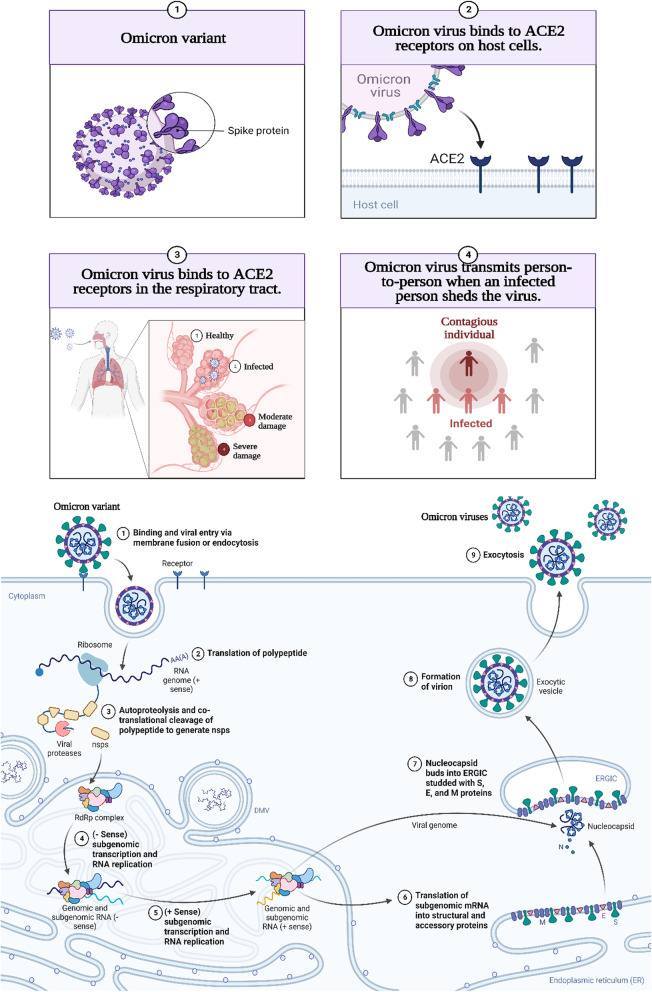
The mechanism of Omicron infectivity
Fig. 3
Fig. 3
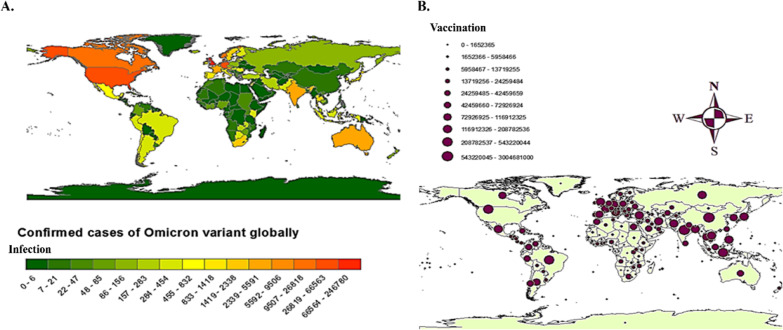
A Depicting the confirmed cases of Omicron variant globally. The rectangular bar chart indicates minimum (extreme left bar with dark green shade) and maximum (extreme right bar with dark red shade) infected cases with the range given against each of the bars. B Showing the number of vaccinated people worldwide with a range indicating the number of vaccinations from minimal (smallest circle) to maximum (largest circle). The maps have been created by using ARCGIS (https://www.esri.com/en-us/arcgis/products/arcgis-for-office/download)
Fig. 4
Fig. 4
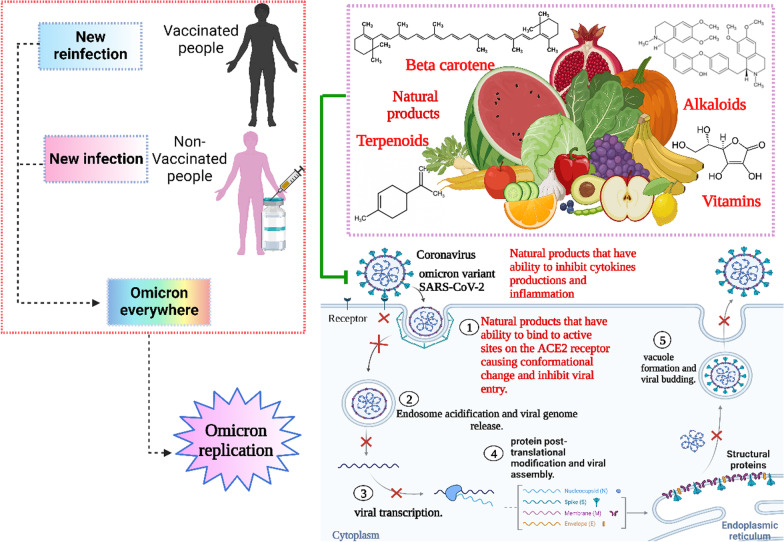
Effect of natural transmission of omicron virus between vaccinated and non-vaccinated person
Fig. 5
Fig. 5
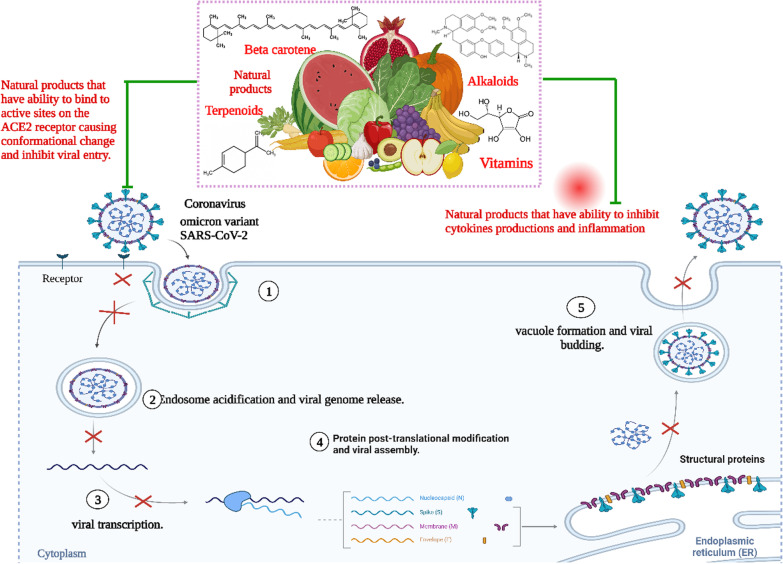
Natural products cause blocking of the ACE2 host cell, decrease inflammatory cytokines and inhibit omicron viral assembly
Fig. 6
Fig. 6
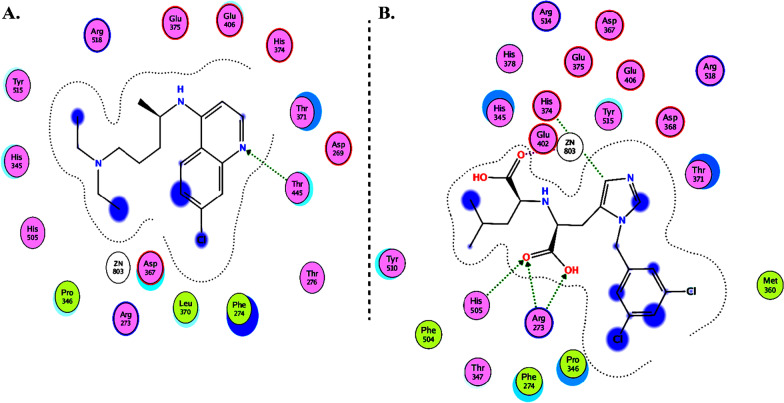
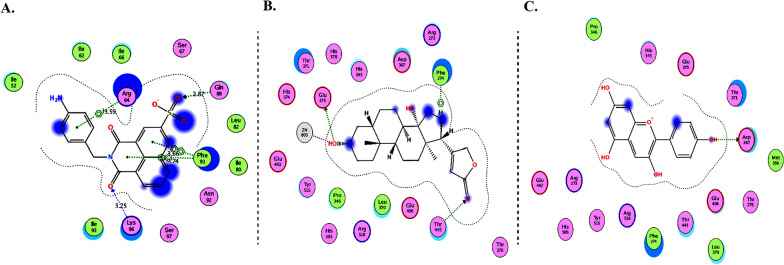
2D diagrams of A Chloroquine and B XX5 ligand showing their interaction with the ACE2 metallopeptidase domain active site
Fig. 7
Fig. 7
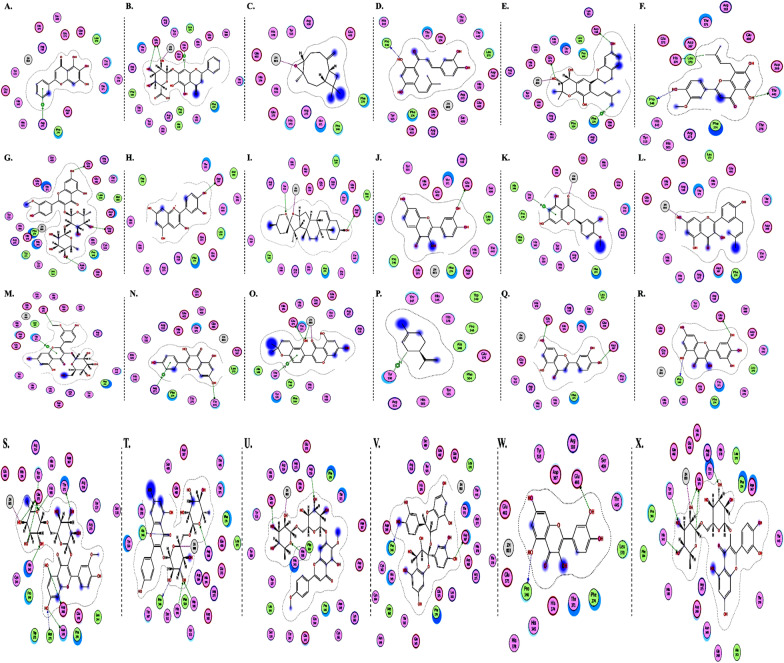
2D diagrams of A Baicalein, B Baicalin, C Carophyllene, D Broussochalcone A, E Broussoflavan A, F Caflanone, G Calendoflaside, H Cyanidin, I Diosgenin, J Fisetin, K Hesperetin, L Isolicoflavonol, M 1_Isorhamnetin-3-O-B-D-Glucoside (IRG), N Kaempferol, O Licoisoflavone B, P Limonene, Q Luteolin, R Myricetin, S Narcissoside, T Nicotiflorin, U Pectolinarin, V Procyanidin, W Quercetin and X Rutin showing their interactions with the ACE2 metallopeptidase domain active site
Fig. 8
Fig. 8
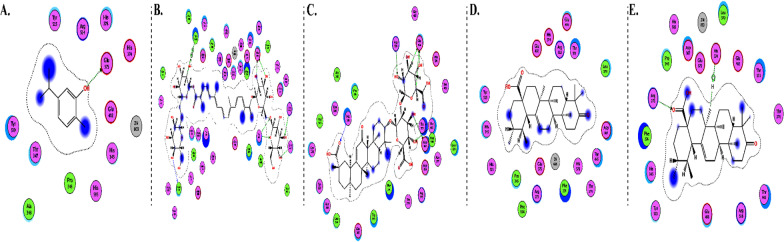
2D diagrams of A Carvacrol, B Crocin, C Glycyrrhizic Acid, D Sarsasapogenin and E Ursonic Acid, showing their interactions with the ACE2 metallopeptidase domain active site
Fig. 9
Fig. 9
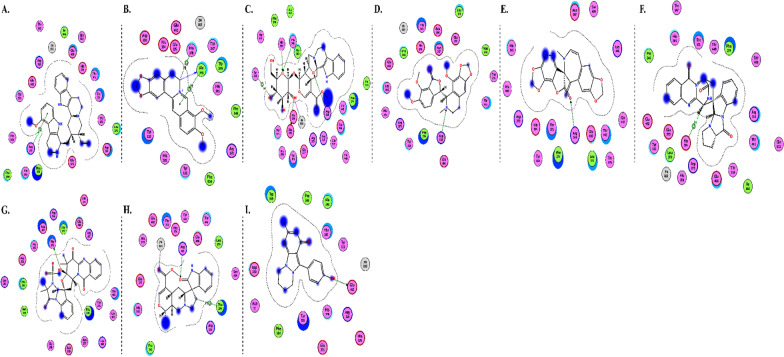
2D diagrams of A 3a,17a-Cinchophylline, B Berberine, C Cadambine, D Noscapine, E Oxoturkiyenine, F Quinadoline B, G Scedapin C, H Speciophylline and I Nigellidine, showing their interactions with the ACE2 metallopeptidase domain active site
Fig. 10
Fig. 10
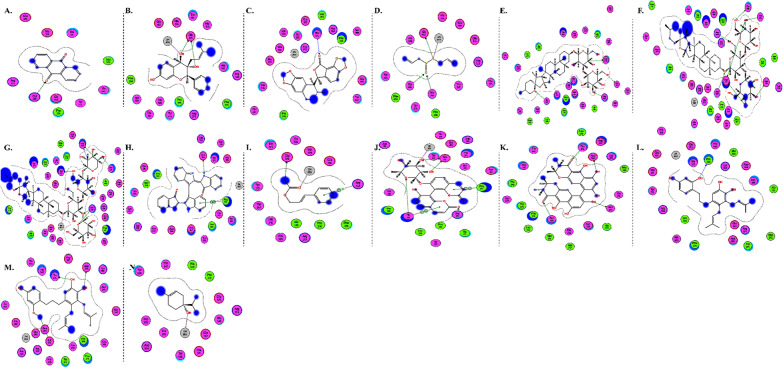
2D diagrams of A Delphinidin 3,3-Di-Glucoside-5-(6-P-Coumarylglucoside) (DGCG), B Digitoxigenin and C Pelargonidin, showing their interactions with the ACE2 metallopeptidase domain active site
Fig. 11
Fig. 11
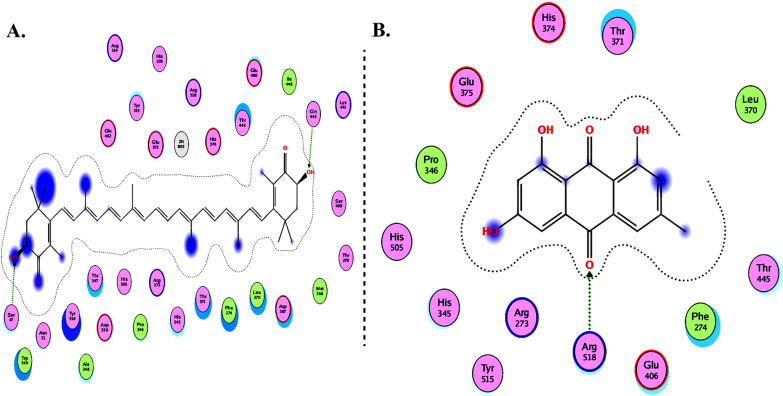
2D diagrams of A Astaxanthin and B Emodin, showing their interactions with the ACE2 metallopeptidase domain active site
Fig. 12
Fig. 12
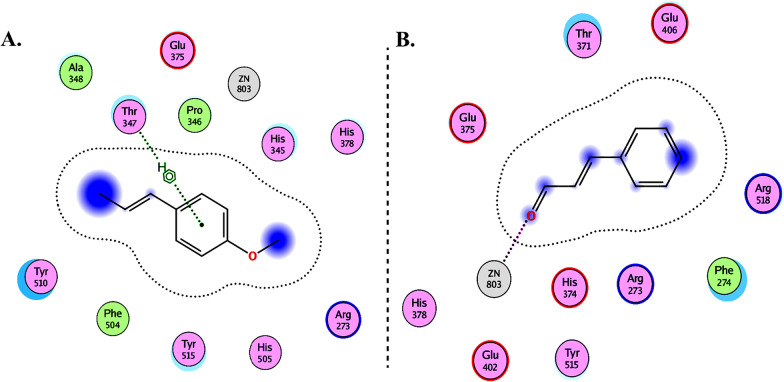
2D diagrams of A Anethole and B Cinnamaldehyde, showing their interactions with the ACE2 metallopeptidase domain active site
Fig. 13
Fig. 13
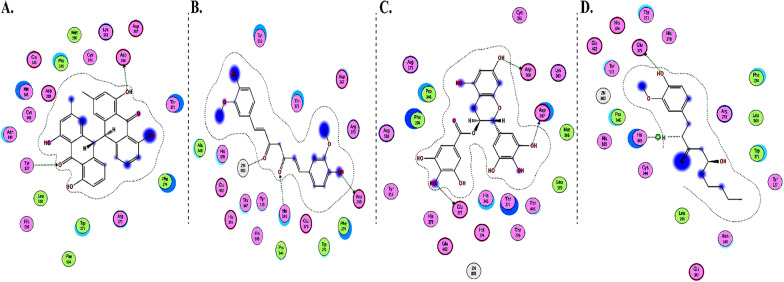
2D diagrams of A Ararobinol, B Curcumin, C Gallocatechin gallate and D Gingerol, showing their interactions with the ACE2 metallopeptidase domain active site
Fig. 14
Fig. 14
2D diagrams of A Anthraquinone, B 3-(3-Methylbut-2-enyl)-3,4,7-trihydroxyflavane (MTHF), C Adlumidine, D Allicin, E Asparagoside-C, F Asparagoside-D, G Asparagoside-F, H Bisindigotin, I Cinnamyl acetate, J Edgeworoside C, K Isochaetochromin D1, L Kazinol F, M Kazinol J and N L-4-terpineol, showing their interactions with the ACE2 metallopeptidase domain active site

References

    1. Ren S-Y, Wang W-B, Gao R-D, Zhou A-M. Omicron variant (B. 1.1. 529) of SARS-CoV-2: mutation, infectivity, transmission, and vaccine resistance. World J Clin Cases. 2022;10:1. - PMC - PubMed
    1. Organization WH. Enhancing response to Omicron SARS-CoV-2 variant: Technical brief and priority actions for Member States. World Health Organization Headquarters, Geneva, Switzerland Update 2022.
    1. Zhao H, Lu L, Peng Z, Chen L-L, Meng X, Zhang C, Ip JD, Chan W-M. Chu AW-H, Chan K-H: SARS-CoV-2 Omicron variant shows less efficient replication and fusion activity when compared with delta variant in TMPRSS2-expressed cells. Emerg Microbes Infect. 2022;11:277–283. - PMC - PubMed
    1. Meskini M, Rami MR, Maroofi P, Ghosh S, Siadat SD, Sheikhpour M. An overview on the epidemiology and immunology of COVID-19. J Infect Public Health. 2021;14:1284–1298. - PMC - PubMed
    1. Alkafaas SS, Abdallah AM, Ghosh S, Loutfy SA, Elkafas SS, Abdel Fattah NF, Hessien M. Insight into the role of clathrin‐mediated endocytosis inhibitors in SARS‐CoV‐2 infection. Rev Med Virol 2022;e2403. - PMC - PubMed

Publication types

Supplementary concepts