


Can Brain-Derived Neurotrophic Factor Be Considered a Biomarker for Bipolar Disorder? An Analysis of the Current Evidence
- PMID: 37626577
- PMCID: PMC10452328
- DOI: 10.3390/brainsci13081221
Can Brain-Derived Neurotrophic Factor Be Considered a Biomarker for Bipolar Disorder? An Analysis of the Current Evidence
Abstract
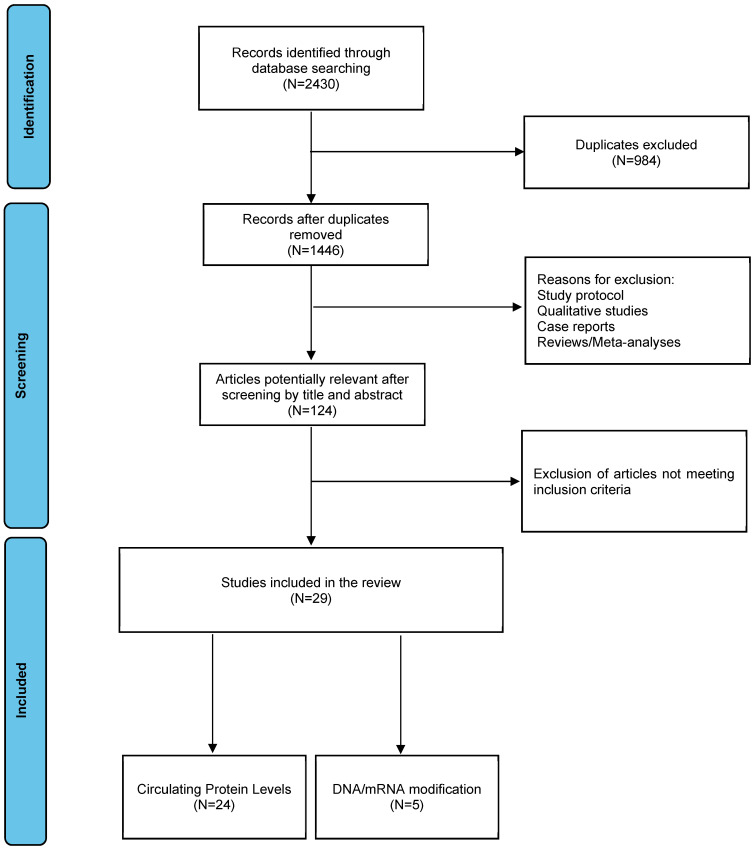
Brain-derived neurotrophic factor (BDNF) plays a key role in brain development, contributing to neuronal survival and neuroplasticity. Previous works have found that BDNF is involved in several neurological or psychiatric diseases. In this review, we aimed to collect all available data on BDNF and bipolar disorder (BD) and assess if BDNF could be considered a biomarker for BD. We searched the most relevant medical databases and included studies reporting original data on BDNF circulating levels or Val66Met polymorphism. Only articles including a direct comparison with healthy controls (HC) and patients diagnosed with BD according to international classification systems were included. Of the 2430 identified articles, 29 were included in the present review. Results of the present review show a reduction in BDNF circulating levels during acute phases of BD compared to HC, which increase after effective therapy of the disorders. The Val66Met polymorphism was related to features usually associated with worse outcomes. High heterogeneity has been observed regarding sample size, clinical differences of included patients, and data analysis approaches, reducing comparisons among studies. Although more studies are needed, BDNF seems to be a promising biomarker for BD.
Keywords: BDNF; bipolar disorder; brain-derived neurotrophic factor.
Conflict of interest statement
The authors declare no conflict of interest.
Figures
References
-
- Institute of Health Metrics and Evaluation Global Health Data Exchange (GHDx) [(accessed on 4 March 2023)]. Available online: https://vizhub.healthdata.org/gbd-results/
-
- Merikangas K.R., Jin R., He J.-P., Kessler R.C., Lee S., Sampson N.A., Viana M.C., Andrade L.H., Hu C., Karam E.G., et al. Prevalence and correlates of bipolar spectrum disorder in the world mental health survey initiative. Arch. Gen. Psychiatry. 2011;68:241–251. doi: 10.1001/archgenpsychiatry.2011.12. - DOI - PMC - PubMed
-
- McIntyre R.S., Alda M., Baldessarini R.J., Bauer M., Berk M., Correll C.U., Fagiolini A., Fountoulakis K., Frye M.A., Grunze H., et al. The clinical characterization of the adult patient with bipolar disorder aimed at personalization of management. World Psychiatry. 2022;21:364–387. doi: 10.1002/wps.20997. - DOI - PMC - PubMed
-
- Lång U., Ramsay H., Yates K., Veijola J., Gyllenberg D., Clarke M.C., Leacy F.P., Gissler M., Kelleher I. Potential for prediction of psychosis and bipolar disorder in Child and Adolescent Mental Health Services: A longitudinal register study of all people born in Finland in 1987. World Psychiatry. 2022;21:436–443. doi: 10.1002/wps.21009. - DOI - PMC - PubMed
Publication types
LinkOut - more resources
Full Text Sources
