


The Immunological Capacity of Thrombocytes
- PMID: 37629130
- PMCID: PMC10454457
- DOI: 10.3390/ijms241612950
The Immunological Capacity of Thrombocytes
Abstract
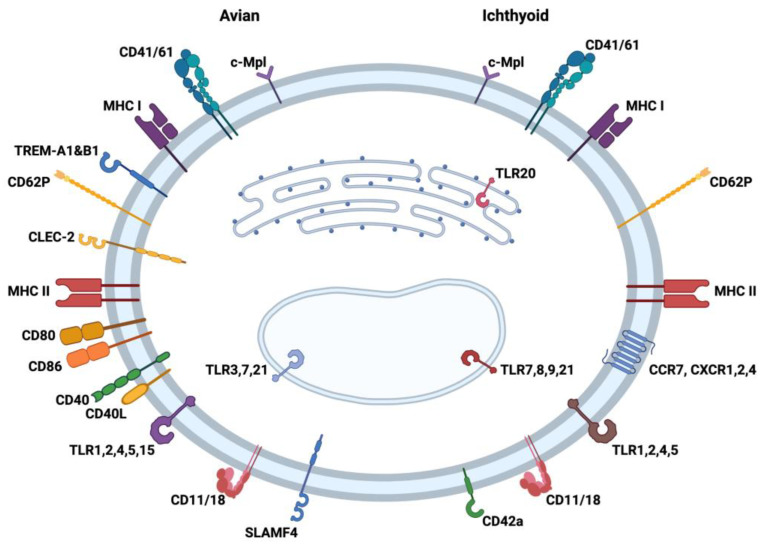
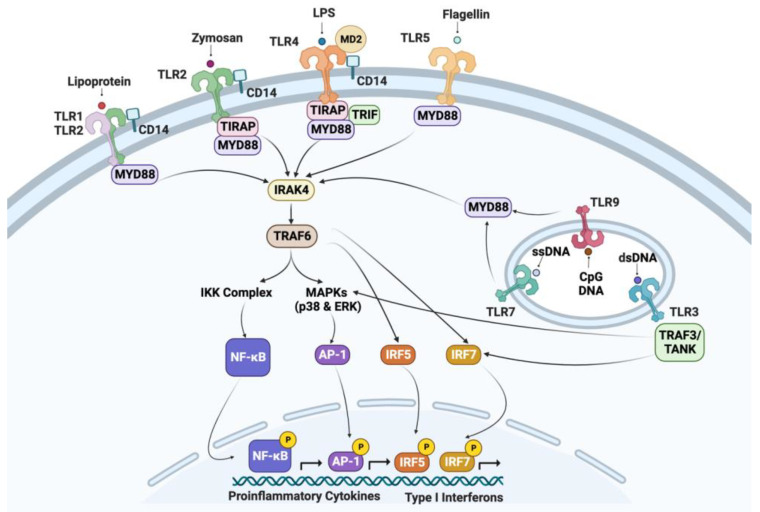
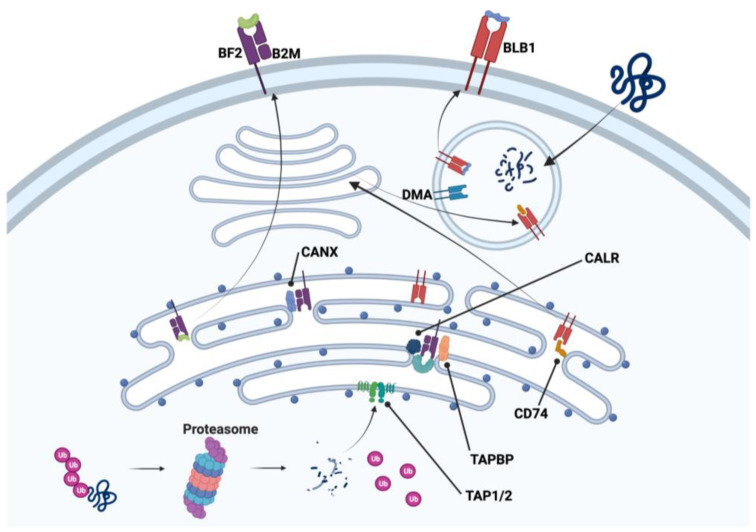
Thrombocytes are numerous in the blood of aves (birds) and ichthyoids (fish). The origin of this cell type is a common hematopoietic stem cell giving rise to a cell that is active in blood coagulation, inflammatory functions, and the immune response in general. It has been well documented that thrombocytes can phagocytize small particles and bacteria. While phagocytosis with an associated oxidative burst has been reported for chicken thrombocytes, some questions remain as to the degradation capacity of phagosomes in ichthyoids. As innate cells, thrombocytes can be stimulated by bacterial, viral, and fungal pathogens to express altered gene expression. Furthermore, there have been observations that led researchers to state that platelets/thrombocytes are capable of serving as "professional antigen presenting cells" expressing CD40, CD80/86, MHC I, and MHC II. This indeed may be the case or, more likely at this time, provide supporting evidence that these cells aid and assist in the role of professional antigen-presenting cells to initiate adaptive immune responses.
Keywords: adaptive immune responses; antigen-presenting cell; innate immune response; thrombocyte.
Conflict of interest statement
The authors declare no conflicts of interest.
Figures
References
-
- Lucas C. Agriculture Monograph. US Department of Agriculture; Washington, DC, USA: 1961. Atlas of avian hematology.
-
- Levin J. 1—The Evolution of Mammalian Platelets. In: Michelson A.D., editor. Platelets. 4th ed. Academic Press; Cambridge, MA, USA: 2019. pp. 1–23.
-
- Chang C.F., Hamilton P.B. The thrombocyte as the primary circulating phagocyte in chickens. J. Reticuloendothel. Soc. 1979;25:585–590. - PubMed
Publication types
MeSH terms
Substances
LinkOut - more resources
Full Text Sources
Research Materials
