


Whole-Body Cryotherapy Alters Circulating MicroRNA Profile in Postmenopausal Women
- PMID: 37629307
- PMCID: PMC10455963
- DOI: 10.3390/jcm12165265
Whole-Body Cryotherapy Alters Circulating MicroRNA Profile in Postmenopausal Women
Abstract
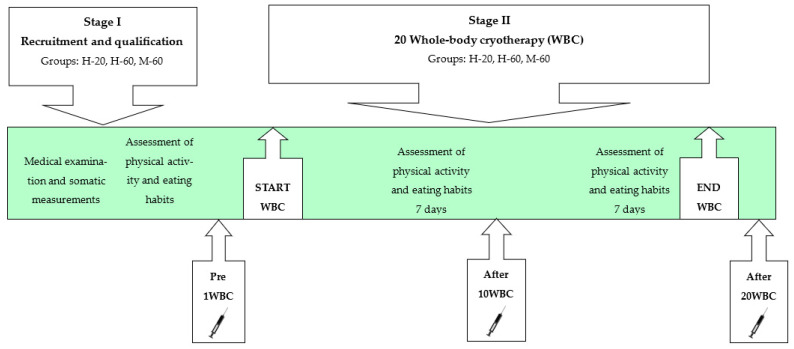
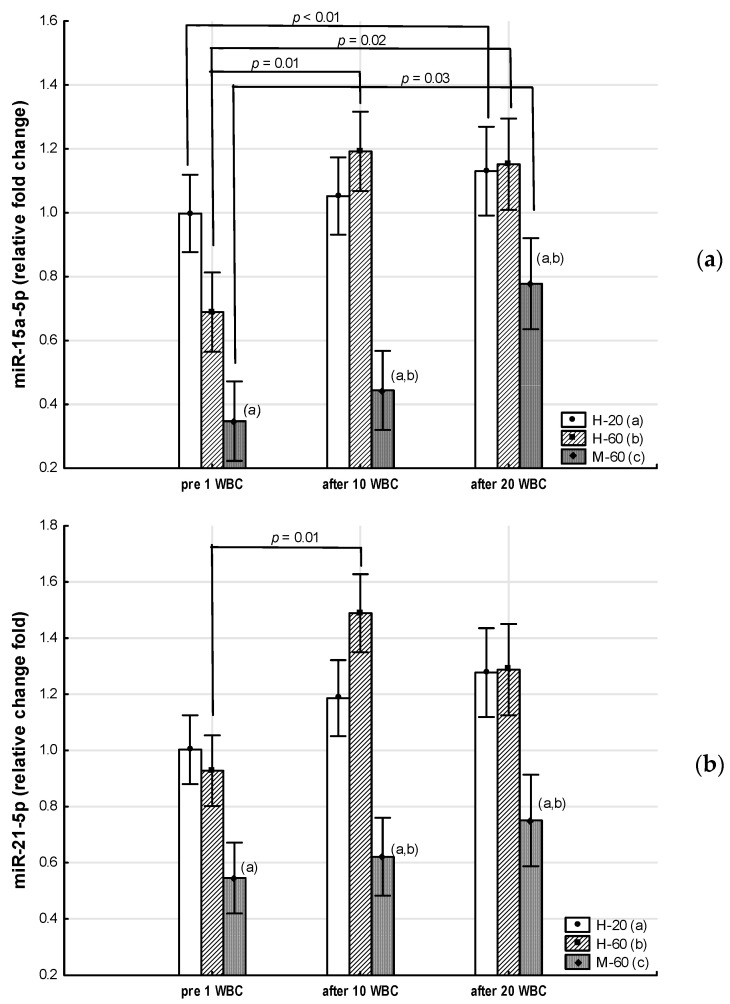
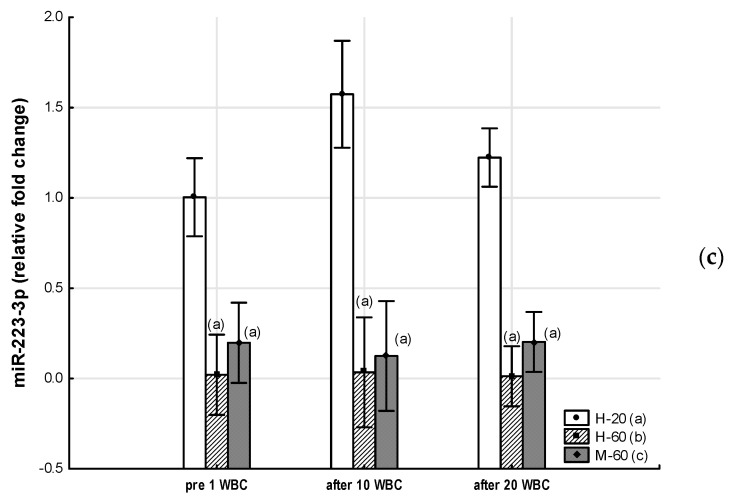
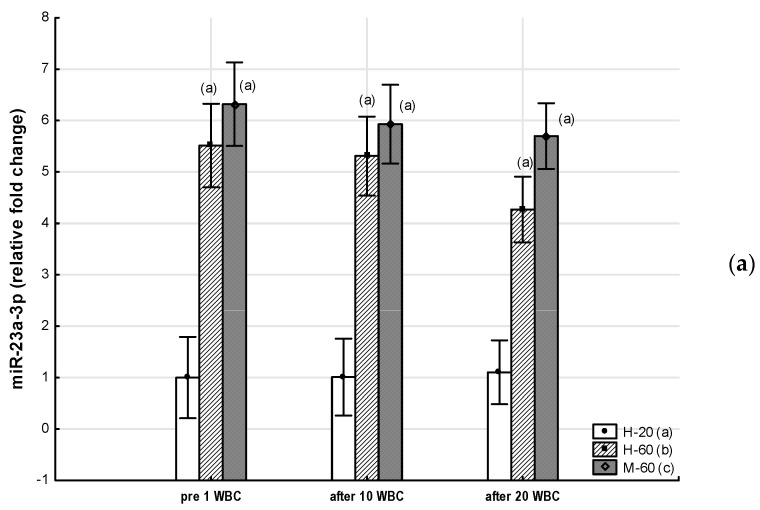
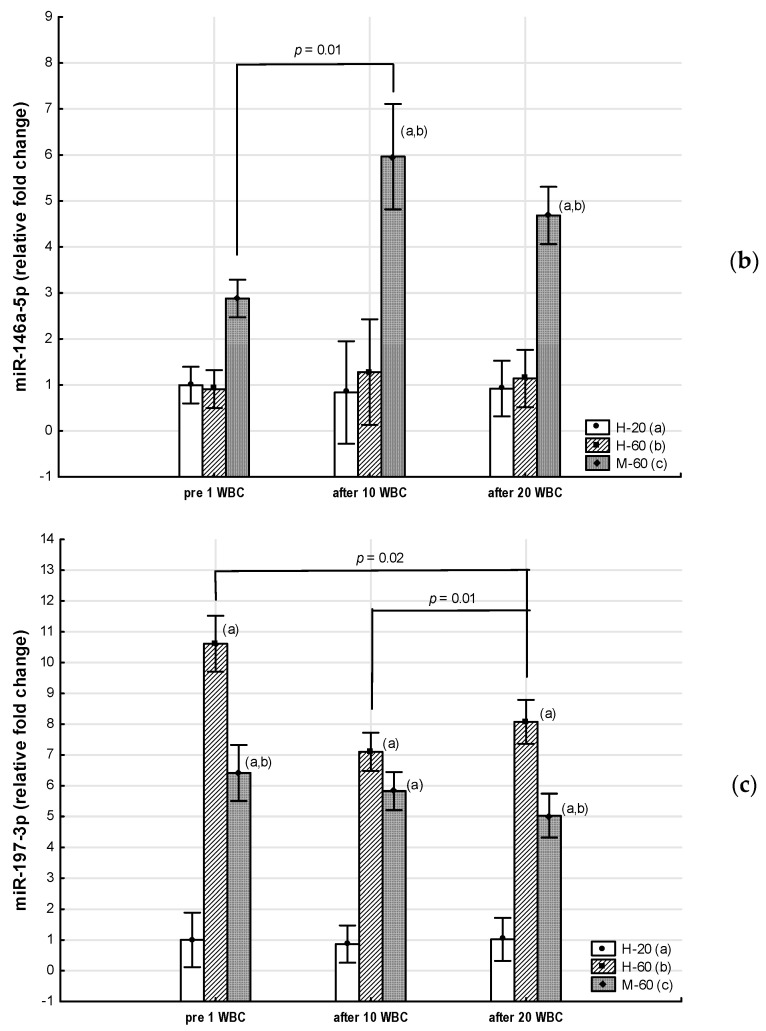
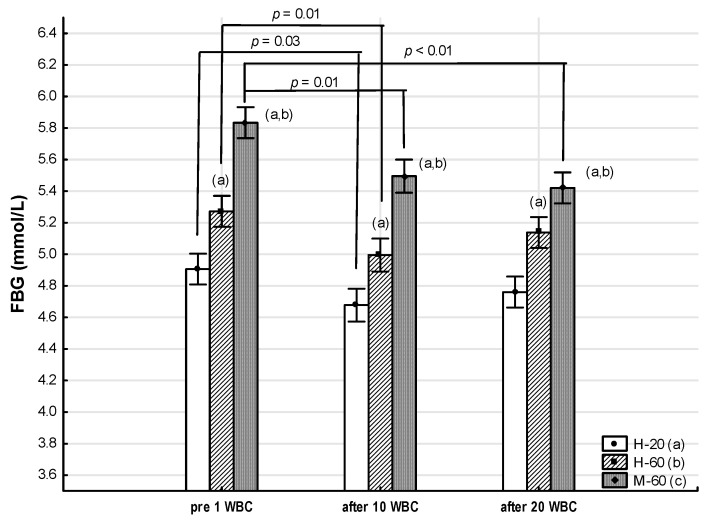
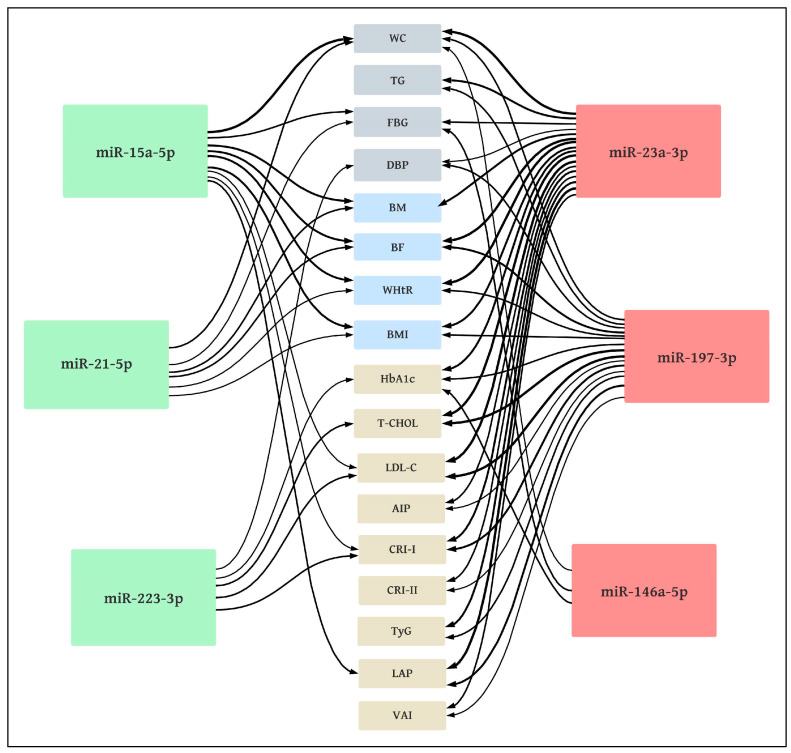
The incidence of metabolic syndrome (MetS) increases with age, especially in women. The role of microRNAs (miRs) in the regulation of metabolism is postulated. The aim of the study is to identify miRs that may be markers of MetS and to assess changes in miRs expression as a result of 10 and 20 whole-body cryotherapy treatments (WBC; 3 min, -120 °C) in postmenopausal women with MetS (M-60, BMI 30.56 ± 5.38 kg/m2), compared to healthy postmenopausal (H-60, BMI 25.57 ± 2.46 kg/m2) and healthy young women (H-20, BMI 22.90 ± 3.19 kg/m2). In a fasting state, before 1 WBC and after 10 WBCs, as well as 20 WBCs, the expression of miR-15a-5p, miR-21-5p, miR-23a-3p, miR-146a-5p, miR-197-3p, miR-223-3p, fasting blood glucose (FBG) and blood lipid profile were determined. miR-15a-5p and miR-21-5p were down-regulated in M-60, while miR-23a-3p and miR-197-3p were up-regulated, and miR-223-3p down-regulated in M-60 and H-60, compared to H-20. Significant positive correlations between up-regulated (mostly for miR-23-3p and miR-197-3p) and significant negative correlations between down-regulated (mostly for miR-15a-5p) miRs and markers of body composition as well as metabolic disorders were observed. After 20 WBCs, miR-15a-5p expression was up-regulated in all groups. In H-60, down-regulation of miR-197-3p expression occurred after 10 WBCs and 20 WBCs. Following 10 WBCs, FBG decreased in all groups, which intensified in M-60 post-20 WBCs. In our research, it has been shown that miR-23a-3p and miR-197-3p are accurate markers of MetS and MetS risk factors, while miR-15a-5p and miR-23a-3p are precise markers of body composition disorders. WBC is an effective treatment for up-regulating miR-15a-5p and lowering glucose levels in young and postmenopausal women and down-regulating miR-197-3p expression in postmenopausal women. It may be an adjunctive effective treatment method in MetS and hyperglycemia.
Keywords: metabolic syndrome; metabolism regulation; microRNAs expression; postmenopausal women; visceral obesity; whole-body cryotherapy.
Conflict of interest statement
The authors declare no conflict of interest.
Figures
References
-
- Vishram J.K.K., Borglykke A., Andreasen A.H., Jeppesen J., Ibsen H., Jørgensen T., Palmieri L., Giampaoli S., Donfrancesco C., Kee F., et al. Impact of Age and Gender on the Prevalence and Prognostic Importance of the Metabolic Syndrome and Its Components in Europeans. The MORGAM Prospective Cohort Project. PLoS ONE. 2014;9:e107294. doi: 10.1371/journal.pone.0107294. - DOI - PMC - PubMed
-
- Roth G.A., Abate D., Abate K.H., Abay S.M., Abbafati C., Abbasi N., Abbastabar H., Abd-Allah F., Abdela J., Abdelalim A., et al. Global, regional, and national age-sex-specific mortality for 282 causes of death in 195 countries and territories, 1980–2017: A systematic analysis for the Global Burden of Disease Study 2017. Lancet. 2018;392:1736–1788. doi: 10.1016/S0140-6736(18)32203-7. - DOI - PMC - PubMed
Grants and funding
LinkOut - more resources
Full Text Sources
