


The Effects of Creatine Monohydrate Loading on Exercise Recovery in Active Women throughout the Menstrual Cycle
- PMID: 37630756
- PMCID: PMC10459976
- DOI: 10.3390/nu15163567
The Effects of Creatine Monohydrate Loading on Exercise Recovery in Active Women throughout the Menstrual Cycle
Abstract
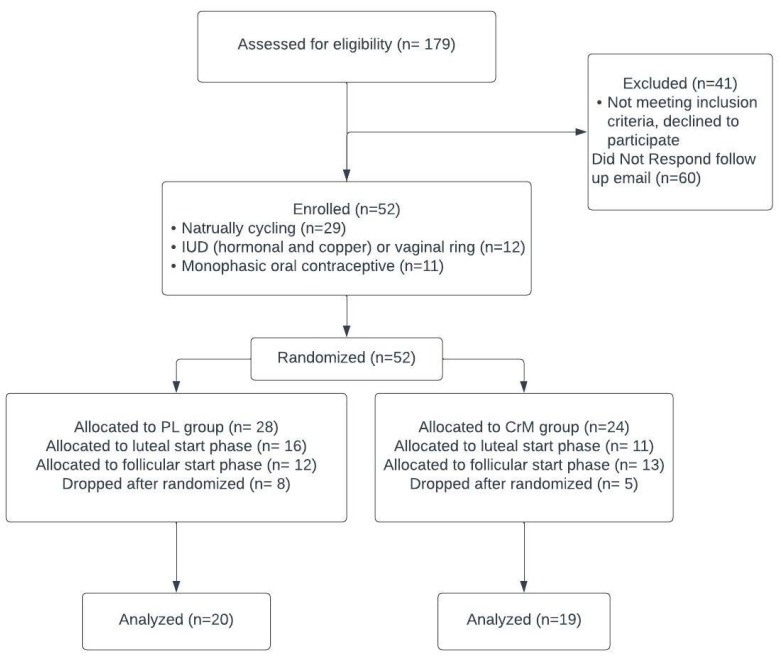
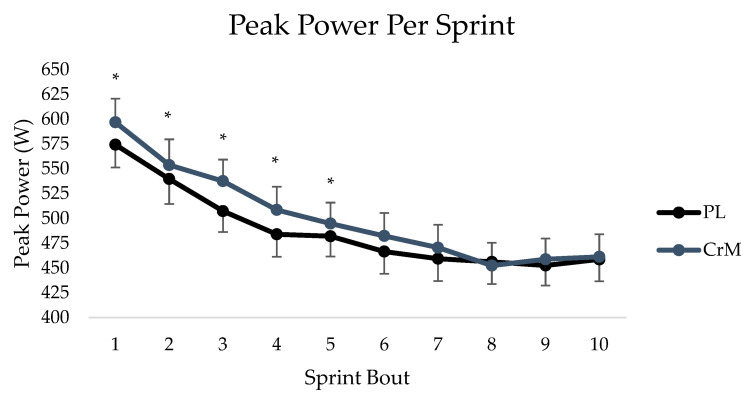
Creatine supplementation improves anaerobic performance and recovery; however, to date, these outcomes have not been well explored in females. This study evaluated the effect of creatine monohydrate loading on exercise recovery, measured by heart rate variability (HRV) and repeated sprint performance, in women across the menstrual cycle. In this randomized, double-blind, cross-over study, 39 women (mean ± standard deviation: age: 24.6 ± 5.9 years, height: 172.5 ± 42.3 cm, weight: 65.1 ± 8.1 kg, BF: 27.4 ± 5.8%) were randomized to a creatine monohydrate (n = 19; 20 g per day in 4 × 5 g doses) or non-caloric PL group (n = 20). HRV was measured at rest and after participants completed a repeated sprint cycling test (10 × 6 s maximal sprints). Measurements were conducted before and after supplementation in the follicular/low hormone and luteal/high hormone phases. Creatine monohydrate supplementation did not influence HRV values, as no significant differences were seen in HRV values at rest or postexercise. For repeated sprint outcomes, there was a significant phase × supplement interaction (p = 0.048) for fatigue index, with the greatest improvement seen in high hormone in the creatine monohydrate group (-5.8 ± 19.0%) compared to changes in the PL group (0.1 ± 8.1%). Sprint performance and recovery were reduced by the high hormone for both groups. Though not statistically significant, the data suggests that creatine monohydrate could help counteract performance decrements caused by the high hormone. This data can help inform creatine monohydrate loading strategies for females, demonstrating potential benefits in the high hormone phase.
Keywords: dietary supplement; female physiology; menstrual cycle.
Conflict of interest statement
A.E.S.-R. serves as a scientific advisor for AlzChem. All other authors have no conflict to disclose.
Figures
References
-
- Kreider R.B., Kalman D.S., Antonio J., Ziegenfuss T.N., Wildman R., Collins R., Candow D.G., Kleiner S.M., Almada A.L., Lopez H.L. International Society of Sports Nutrition position stand: Safety and efficacy of creatine supplementation in exercise, sport, and medicine. J. Int. Soc. Sports Nutr. 2017;14:18. doi: 10.1186/s12970-017-0173-z. - DOI - PMC - PubMed
Publication types
MeSH terms
Substances
Grants and funding
LinkOut - more resources
Full Text Sources
Miscellaneous
