Review
. 2023 Aug 11;15(8):2124.
doi: 10.3390/pharmaceutics15082124.

Photosensitizers-Loaded Nanocarriers for Enhancement of Photodynamic Therapy in Melanoma Treatment

Affiliations
Review

Photosensitizers-Loaded Nanocarriers for Enhancement of Photodynamic Therapy in Melanoma Treatment

Ana Maria Udrea et al. Pharmaceutics. .

Abstract

Malignant melanoma poses a significant global health burden. It is the most aggressive and lethal form of skin cancer, attributed to various risk factors such as UV radiation exposure, genetic modifications, chemical carcinogens, immunosuppression, and fair complexion. Photodynamic therapy is a promising minimally invasive treatment that uses light to activate a photosensitizer, resulting in the formation of reactive oxygen species, which ultimately promote cell death. When selecting photosensitizers for melanoma photodynamic therapy, the presence of melanin should be considered. Melanin absorbs visible radiation similar to most photosensitizers and has antioxidant properties, which undermines the reactive species generated in photodynamic therapy processes. These characteristics have led to further research for new photosensitizing platforms to ensure better treatment results. The development of photosensitizers has advanced with the use of nanotechnology, which plays a crucial role in enhancing solubility, optical absorption, and tumour targeting. This paper reviews the current approaches (that use the synergistic effect of different photosensitizers, nanocarriers, chemotherapeutic agents) in the photodynamic therapy of melanoma.

Keywords: melanoma; nanocarriers; non-porphyrin photosensitizers; photodynamic therapy; photosensitizer; porphyrins.


Conflict of interest statement

The authors declare no conflict of interest.

Figures
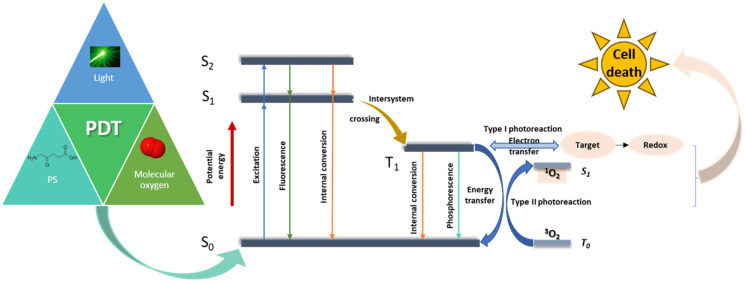
Figure 1
Figure 1
The Jablonski diagram illustrating PDT mechanism of action with the physical processes leading to Type I and Type II reactions, which may eventually result in oxidative cell damage. S0 is the ground state of the photosensitizer (PS); S1 and S2 are the first and, respectively, the second excited singlet states of PS; T1 is the first excited triplet state of PS; T0 is the ground state of triplet oxygen; 3O2, triplet oxygen; S1 is the excited state of singlet oxygen; 1O2, singlet oxygen.
Figure 2
Figure 2
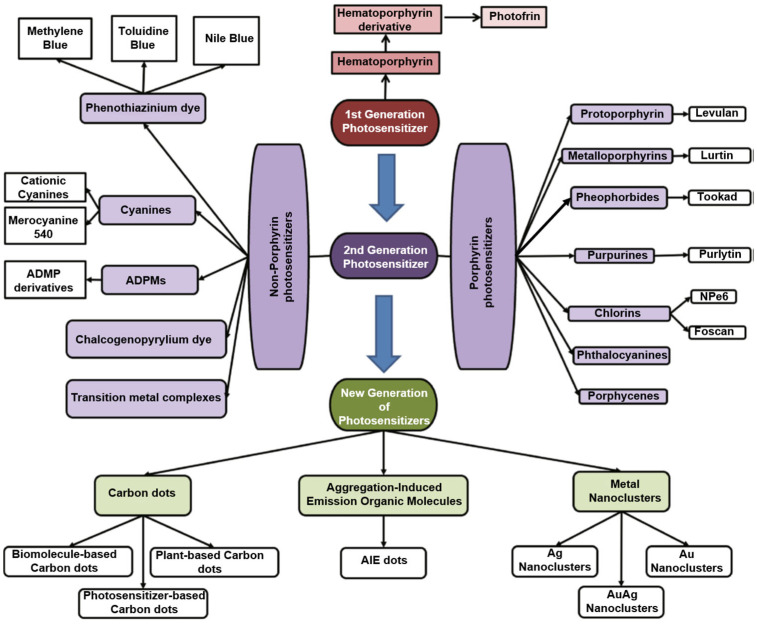
A schematic evolution of PSs reproduced from ref. [43], where ADPM represents Azadipyrromethene, NPe6 is mono-L-aspartyl chlorin e6, and AIE denotes Aggregation-Induced Emission.
Figure 3
Figure 3
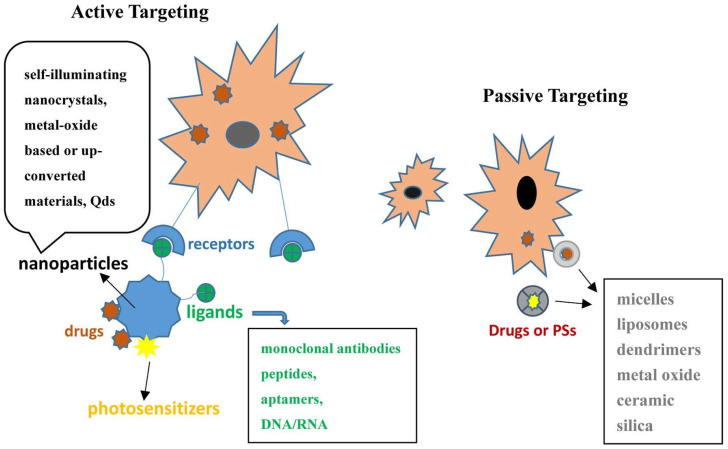
Active and passive forms of PSs or chemotherapeutics in combination with nanocarriers in melanoma PDT reproduced from ref. [36].
Figure 4
Figure 4
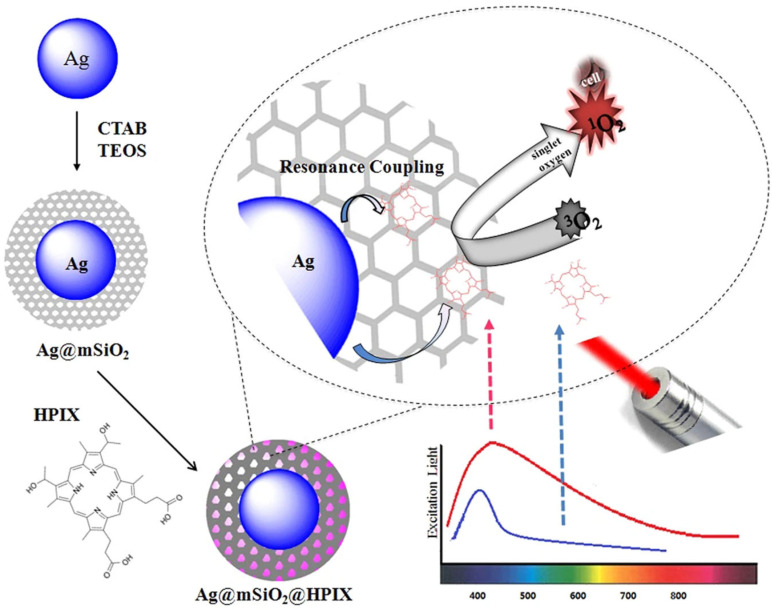
Schematic of the synthesis of Ag@mSiO2@HPIX hybrid and its PDT antitumoral action [101].
Figure 5
Figure 5
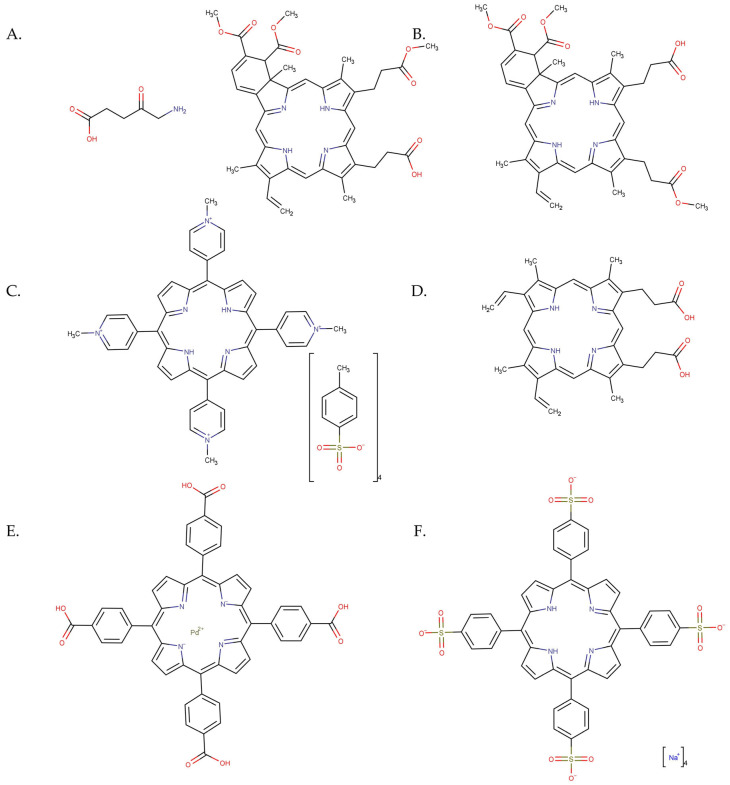
Two-dimensional structures of (A) 5-ALA; (B) verteporfin; (C) 5,10,15,20-(Tetra-N-methyl-4-pyridyl)porphyrin tetratosylate; (D) PpIX; (E) palladium-meso-tetra (4-carboxyphenyl) porphyrin; (F) (5,10,15,20-(Tetra-4-sulfonate phenyl) porphyrin tetraammonium.
Figure 6
Figure 6
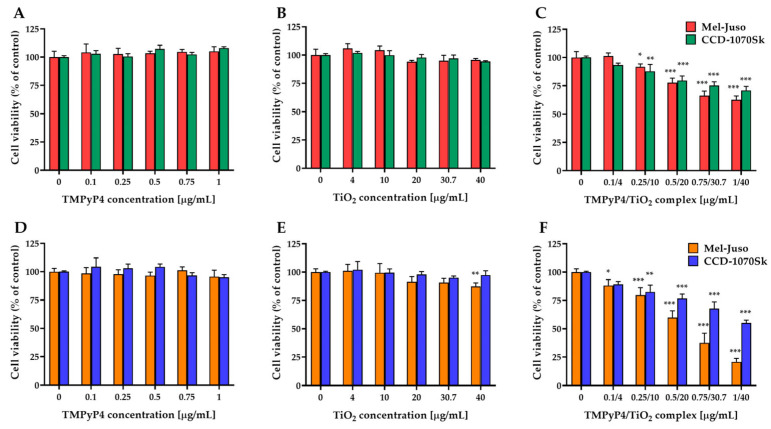
Effect of TMPyP4, TiO2 NPs, and TMPyP4/TiO2 complex on the metabolic activity/cell viability of cells. The graphs present the relative mitochondrial dehydrogenase activity of treated human Mel-Juso and CCD-1070Sk cells under dark (AC) and light-irradiation conditions (DF). Untreated cells (0 μg/mL) were used as control. Results (control vs. sample) were significant at p < 0.05 (*), p < 0.01 (**), and p < 0.001 (***). Error bars reflect the standard deviation. Reproduced from ref. [125].
Figure 7
Figure 7
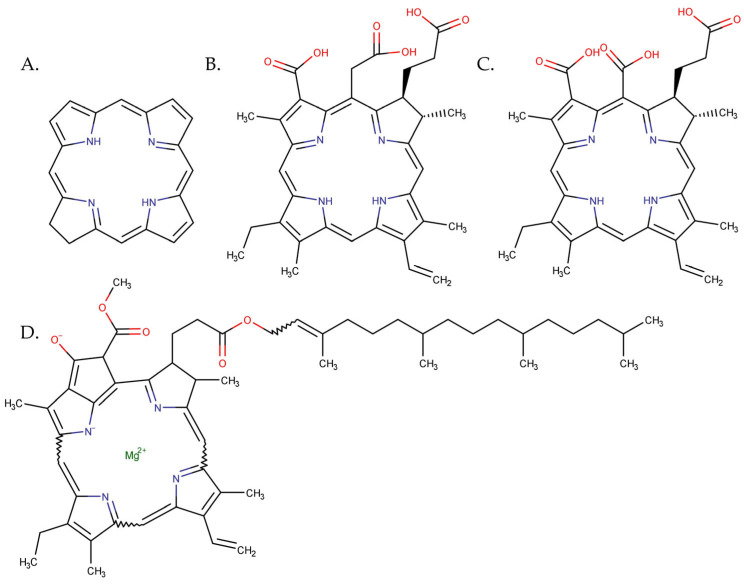
Two-dimensional structure of (A) chlorin; (B) chlorin e6; (C) chlorin p6; and (D) chlorophyll.
Figure 8
Figure 8
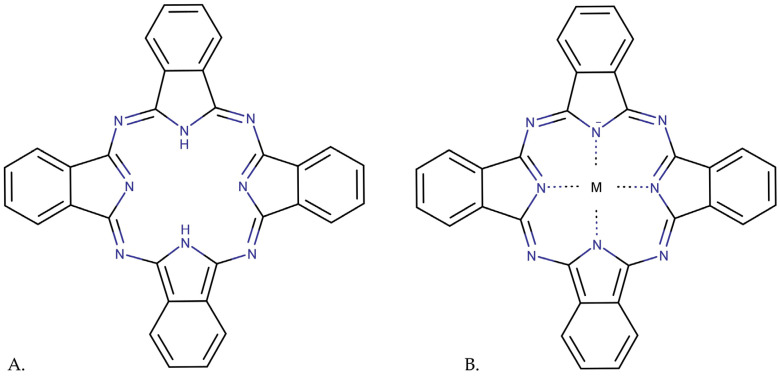
Structural formulae of (A) non-metallated and (B) metallated phthalocyanines. Adaptation from Staicu et al. [146].
Figure 9
Figure 9
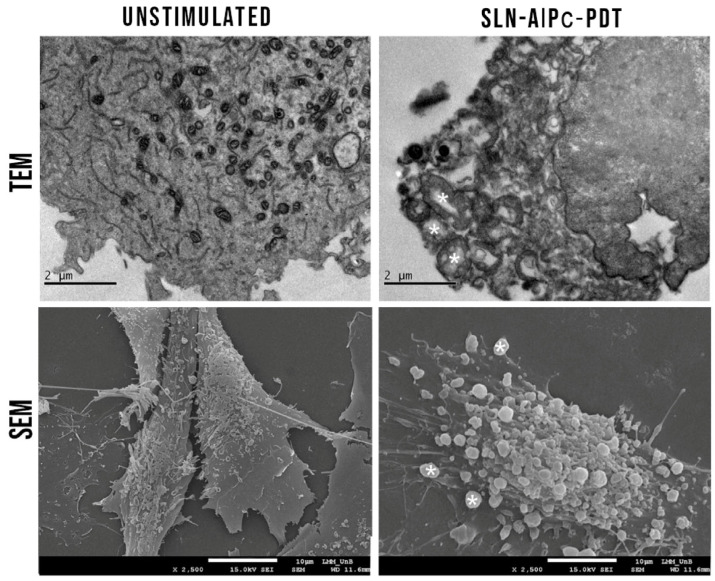
B16-F10 cells morphology in TEM and SEM after the PDT treatment with SLN-AlPc; it was also possible to observe formation of apoptotic bodies (*) and cytoplasmic bumps [153].
Figure 10
Figure 10
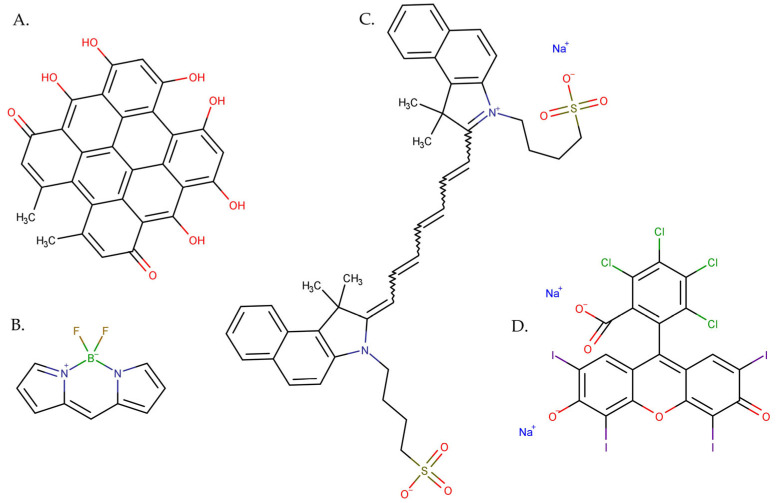
Two-dimensional structure of non-porphyrin photosensitizers: (A) hypericin, (B) BODIPY, (C) indocyanine green, and (D) Rose Bengal.
Figure 11
Figure 11
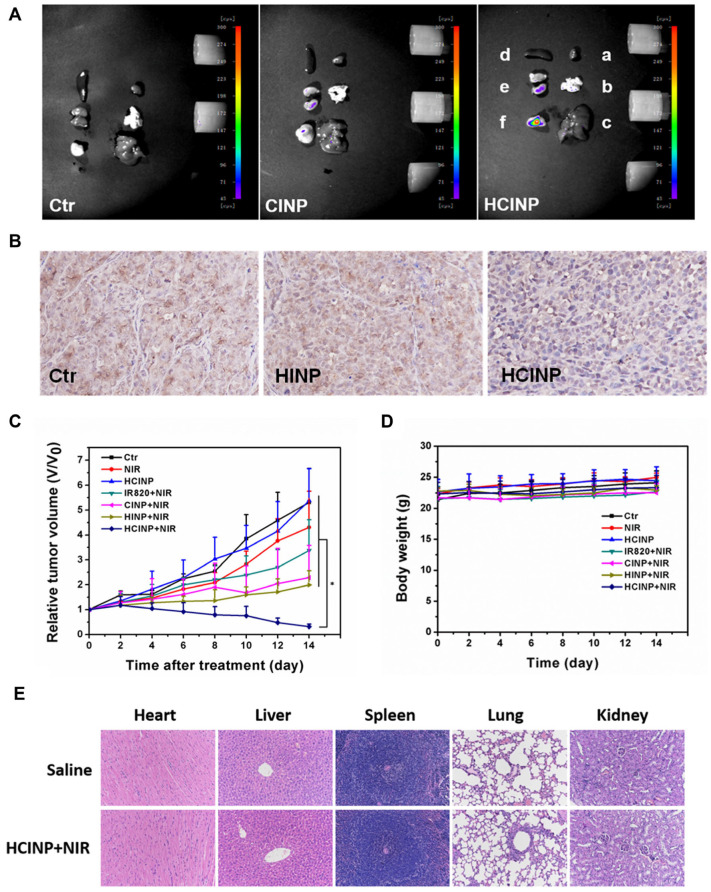
Enhanced antitumour effect of HCINPs. (A) Measurement of the in vivo targeting effect of HCINPs (a: heart, b: lung, c: liver, d: spleen, e: kidney, f: tumour). (B) Expression of HIF-1α in tumour tissues (200×). The mean positive area of the control group, HINP group, and HCINP group were 1522, 1503, and 1092, respectively. (C) Relative tumour volume curves of different groups of MV3 tumour-bearing mice. * p < 0.05, versus the HCINP group. (D) Body weights of mice measured during the 14 observation days in different groups. (E) HE-staining images of major organs collected from the saline (Normal) and HCINPs with NIR irradiation groups (200×). Reproduced from ref. [170].

References

    1. Arnold M., Singh D., Laversanne M., Vignat J., Vaccarella S., Meheus F., Cust A.E., De Vries E., Whiteman D.C., Bray F. Global Burden of Cutaneous Melanoma in 2020 and Projections to 2040. JAMA Dermatol. 2022;158:495. doi: 10.1001/jamadermatol.2022.0160. - DOI - PMC - PubMed
    1. Radiation: Ultraviolet (UV) Radiation and Skin Cancer. [(accessed on 25 May 2023)]. Available online: https://www.who.int/news-room/questions-and-answers/item/radiation-ultra....
    1. Zeng L., Gowda B.H.J., Ahmed M.G., Abourehab M.A.S., Chen Z.-S., Zhang C., Li J., Kesharwani P. Advancements in Nanoparticle-Based Treatment Approaches for Skin Cancer Therapy. Mol. Cancer. 2023;22:10. doi: 10.1186/s12943-022-01708-4. - DOI - PMC - PubMed
    1. Wagstaff W., Mwamba R.N., Grullon K., Armstrong M., Zhao P., Hendren-Santiago B., Qin K.H., Li A.J., Hu D.A., Youssef A., et al. Melanoma: Molecular Genetics, Metastasis, Targeted Therapies, Immunotherapies, and Therapeutic Resistance. Genes Dis. 2022;9:1608–1623. doi: 10.1016/j.gendis.2022.04.004. - DOI - PMC - PubMed
    1. Vicente A.L.S.A., Novoloaca A., Cahais V., Awada Z., Cuenin C., Spitz N., Carvalho A.L., Evangelista A.F., Crovador C.S., Reis R.M., et al. Cutaneous and Acral Melanoma Cross-OMICs Reveals Prognostic Cancer Drivers Associated with Pathobiology and Ultraviolet Exposure. Nat. Commun. 2022;13:4115. doi: 10.1038/s41467-022-31488-w. - DOI - PMC - PubMed

LinkOut - more resources