


Targeting EGFR/PI3K/AKT/mTOR Signaling in Hepatocellular Carcinoma
- PMID: 37631344
- PMCID: PMC10458925
- DOI: 10.3390/pharmaceutics15082130
Targeting EGFR/PI3K/AKT/mTOR Signaling in Hepatocellular Carcinoma
Abstract
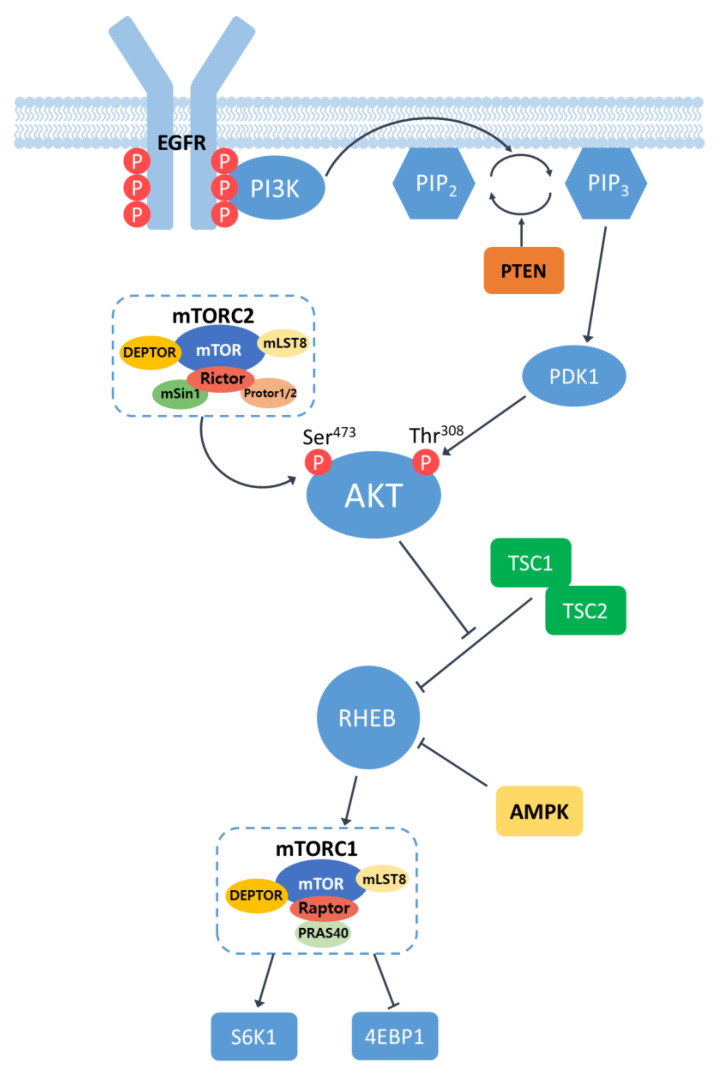
Hepatocellular carcinoma (HCC) poses a significant global health concern, with its incidence steadily increasing. The development of HCC is a multifaceted, multi-step process involving alterations in various signaling cascades. In recent years, significant progress has been made in understanding the molecular signaling pathways that play central roles in hepatocarcinogenesis. In particular, the EGFR/PI3K/AKT/mTOR signaling pathway in HCC has garnered renewed attention from both basic and clinical researchers. Preclinical studies in vitro and in vivo have shown the effectiveness of targeting the key components of this signaling pathway in human HCC cells. Thus, targeting these signaling pathways with small molecule inhibitors holds promise as a potential therapeutic option for patients with HCC. In this review, we explore recent advancements in understanding the role of the EGFR/PI3K/AKT/mTOR signaling pathway in HCC and assess the effectiveness of targeting this signaling cascade as a potential strategy for HCC therapy based on preclinical studies.
Keywords: EGFR/PI3K/AKT/mTOR signaling; animal models; hepatocellular carcinoma; targeted therapy.
Conflict of interest statement
The authors declare no conflict of interest.
Figures
References
-
- Banales J.M., Marin J.J.G., Lamarca A., Rodrigues P.M., Khan S.A., Roberts L.R., Cardinale V., Carpino G., Andersen J.B., Braconi C., et al. Cholangiocarcinoma 2020: The next horizon in mechanisms and management. Nat. Rev. Gastroenterol. Hepatol. 2020;17:557–588. doi: 10.1038/s41575-020-0310-z. - DOI - PMC - PubMed
Publication types
Grants and funding
LinkOut - more resources
Full Text Sources
Research Materials
Miscellaneous
