


Robotic Surgery in Urology: History from PROBOT® to HUGOTM
- PMID: 37631641
- PMCID: PMC10458477
- DOI: 10.3390/s23167104
Robotic Surgery in Urology: History from PROBOT® to HUGOTM
Abstract
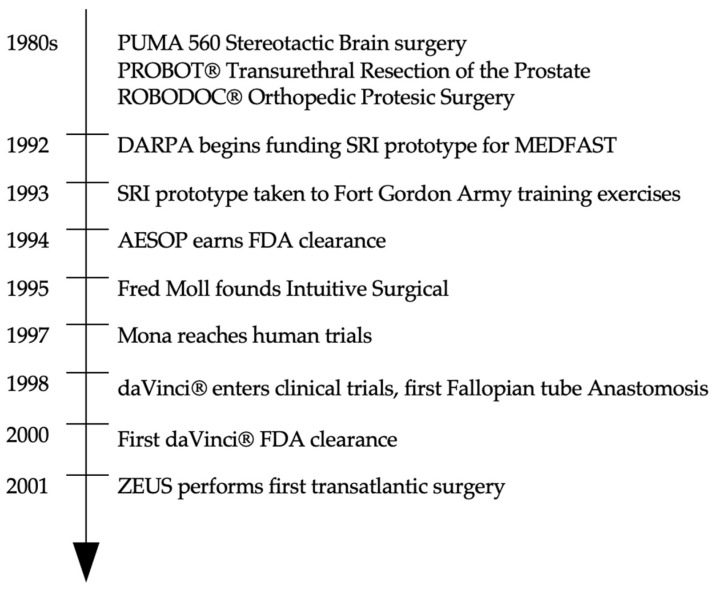
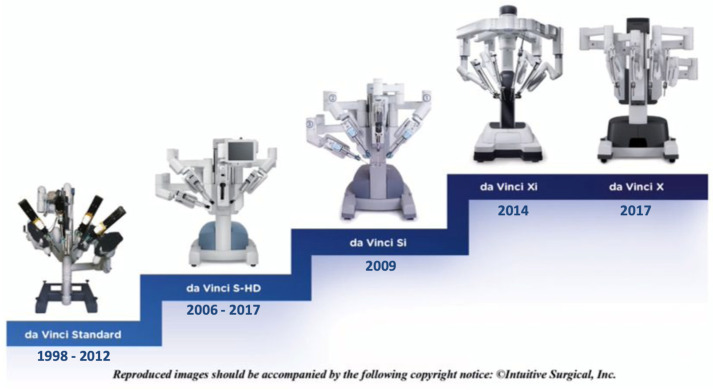
The advent of robotic surgical systems had a significant impact on every surgical area, especially urology, gynecology, and general and cardiac surgery. The aim of this article is to delineate robotic surgery, particularly focusing on its historical background, its evolution, its present status, and its future perspectives. A comprehensive literature review was conducted upon PubMed/MEDLINE, using the keywords "robotic surgical system", "robotic surgical device", "robotics AND urology". Additionally, the retrieved articles' reference lists were investigated. Analysis concentrated on urological surgical systems for laparoscopic surgery that have been given regulatory approval for use on humans. From the late 1980s, before daVinci® Era in 2000s, ancestor platform as Probot® and PUMA 560 were described to outline historical perspective. Thus, new robotic competitors of Intuitive Surgical such as Senhance®, Revo-I®, Versius®, Avatera®, Hinotori®, and HugoTM RAS were illustrated. Although daVinci® had high level competitiveness, and for many years represented the most plausible option for robotic procedures, several modern platforms are emerging in the surgical market. Growing competition through unique features of the new robotic technologies might extend applications fields, improve diffusion, and increase cost-effectiveness procedures. More experiences are needed to identify the role of these new advancements in surgical branches and in healthcare systems.
Keywords: Da Vinci; Hugo-RAS system; robotic platform; robotic surgery; urology.
Conflict of interest statement
The authors declare no conflict of interest.
Figures
References
-
- Goertz R.C. Remote-Control Manipulator. US Patent 2632574. 1953 March 24; US Patent Office: Washington, DC, USA.
-
- Goertz R.C. Fundamentals of General Purpose Remote Manipulators. Nucleonics. 1952;1001:36–42.
Publication types
MeSH terms
LinkOut - more resources
Full Text Sources
