


Digestive system deep infiltrating endometriosis: What do we know
- PMID: 37632165
- PMCID: PMC10718155
- DOI: 10.1111/jcmm.17921
Digestive system deep infiltrating endometriosis: What do we know
Abstract
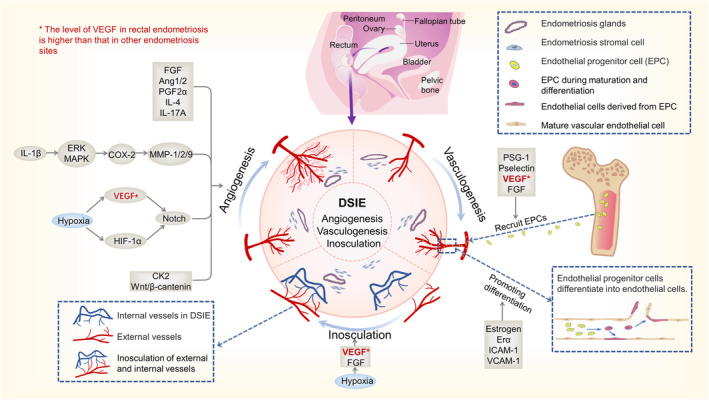
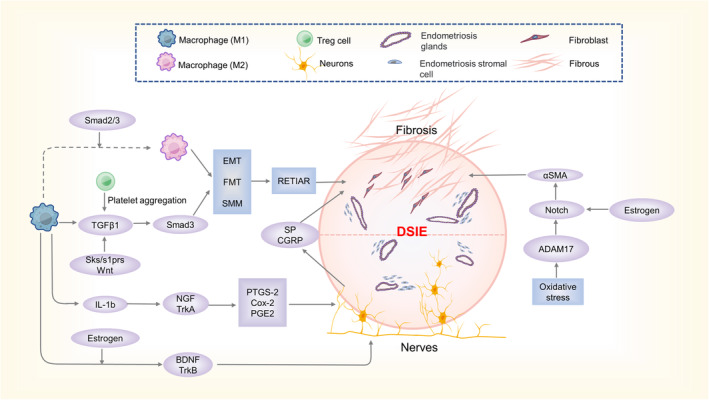
Digestive system infiltrating endometriosis (DSIE) is an uncommon form of endometriosis in the digestive system. DSIE often occurs in the intestines (especially the sigmoid rectum), liver, gallbladder and pancreas. Clinically, DSIE presents with the same symptoms as endometriosis, including cyclic pain, bleeding and infertility, in addition to specific biliary/intestinal obstruction and gastrointestinal bleeding. Compared to general endometriosis, DSIE has unique biological behaviour and pathophysiological mechanisms. Most DSIEs are deep invasive endometrioses, characterized by metastasis to the lymph nodes and lymphatic vessels, angiogenesis, peripheral nerve recruitment, fibrosis and invasion of surrounding tissues. DSIE-related peripheral angiogenesis is divided into three patterns: angiogenesis, vasculogenesis and inosculation. These patterns are regulated by interactions between multiple hypoxia-hormone cytokines. The nerve growth factors regulate the extensive neurofibril recruitment in DSIE lesions, which accounts for severe symptoms of deep pain. They are also associated with fibrosis and the aggressiveness of DSIE. Cyclic changes in DSIE lesions, recurrent inflammation and oxidative stress promote repeated tissue injury and repair (ReTIAR) mechanisms in the lesions, accelerating fibril formation and cancer-related mutations. Similar to malignant tumours, DSIE can also exhibit aggressiveness derived from collective cell migration mediated by E-cadherin and N-cadherin. This often makes DSIE misdiagnosed as a malignant tumour of the digestive system in clinical practice. In addition to surgery, novel treatments are urgently required to effectively eradicate this lesion.
Keywords: aetiology; digestive system; endometriosis; intestines; molecular mechanisms.
© 2023 The Authors. Journal of Cellular and Molecular Medicine published by Foundation for Cellular and Molecular Medicine and John Wiley & Sons Ltd.
Conflict of interest statement
The authors declare no conflicts of interest.
Figures
References
-
- Tosti C, Pinzauti S, Santulli P, Chapron C, Petraglia F. Pathogenetic mechanisms of deep infiltrating endometriosis. Reprod Sci. 2015;22:1053‐1059. - PubMed
-
- Andres MP, Arcoverde FVL, Souza CCC, Fernandes LFC, Abrão MS, Kho RM. Extrapelvic endometriosis: a systematic review. J Minim Invasive Gynecol. 2020;27:373‐389. - PubMed
-
- Matalliotakis M, Goulielmos GN, Kalogiannidis I, Koumantakis G, Matalliotakis I, Arici A. Extra pelvic endometriosis: retrospective analysis on 200 cases in two different countries. Eur J Obstet Gynecol Reprod Biol. 2017;217:34‐37. - PubMed
-
- Yantiss RK, Clement PB, Young RH. Endometriosis of the intestinal tract: a study of 44 cases of a disease that may cause diverse challenges in clinical and pathologic evaluation. Am J Surg Pathol. 2001;25:445‐454. - PubMed
-
- Sampson JA. Peritoneal endometriosis due to the menstrual dissemination of endometrial tissue into the peritoneal cavity. Am J Obstet Gynecol. 1927;14:422‐469.
Publication types
MeSH terms
Grants and funding
LinkOut - more resources
Full Text Sources
Medical
Research Materials
