


Apolipoprotein-mimetic nanodiscs reduce lipid accumulation and improve liver function in acid sphingomyelinase deficiency
- PMID: 37633404
- PMCID: PMC10530155
- DOI: 10.1016/j.nano.2023.102705
Apolipoprotein-mimetic nanodiscs reduce lipid accumulation and improve liver function in acid sphingomyelinase deficiency
Abstract
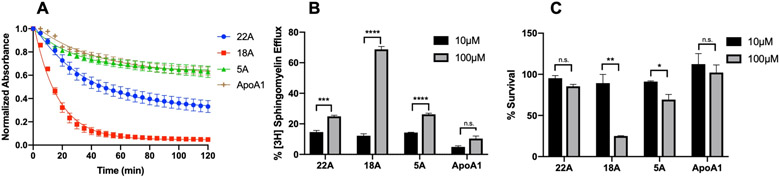
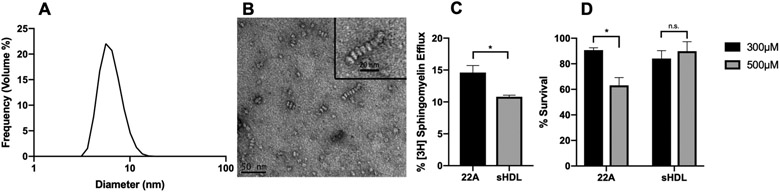
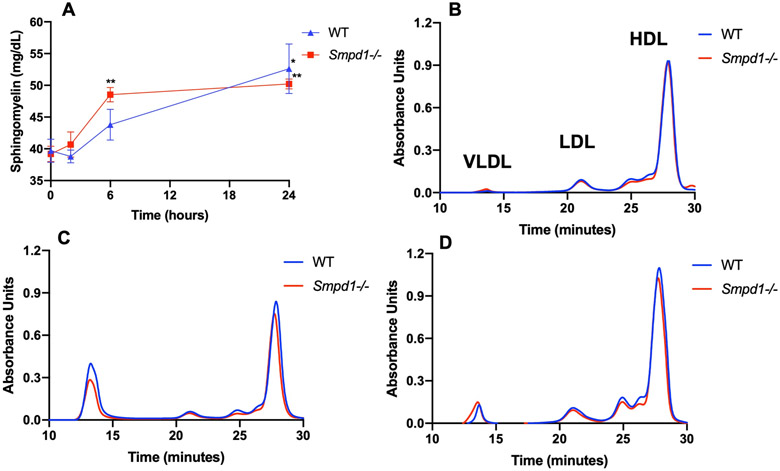
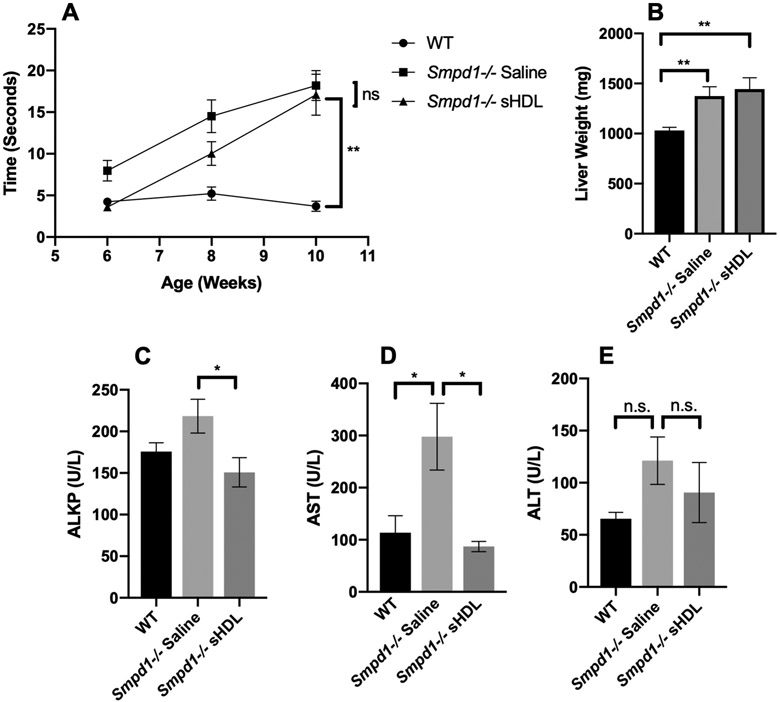
Acid sphingomyelinase deficiency (ASMD) is a severe lipid storage disorder caused by the diminished activity of the acid sphingomyelinase enzyme. ASMD is characterized by the accumulation of sphingomyelin in late endosomes and lysosomes leading to progressive neurological dysfunction and hepatosplenomegaly. Our objective was to investigate the utility of synthetic apolipoprotein A-I (ApoA-I) mimetics designed to act as lipid scavengers for the treatment of ASMD. We determined the lead peptide, 22A, could reduce sphingomyelin accumulation in ASMD patient skin fibroblasts in a dose dependent manner. Intraperitoneal administration of 22A formulated as a synthetic high-density lipoprotein (sHDL) nanodisc mobilized sphingomyelin from peripheral tissues into circulation and improved liver function in a mouse model of ASMD. Together, our data demonstrates that apolipoprotein mimetics could serve as a novel therapeutic strategy for modulating the pathology observed in ASMD.
Keywords: Acid sphingomyelinase deficiency; Apolipoprotein mimetics.
Copyright © 2023. Published by Elsevier Inc.
Conflict of interest statement
Declaration of competing interest Dr. Schwendeman declares financial interests for board membership, as a paid consultant, for research funding, and/or as equity holder in EVOQ Therapeutics. The University of Michigan has a financial interest in EVOQ Therapeutics, Inc.
Figures
References
-
- Schneider PB, Kennedy EP Sphingomyelinase in normal human spleens and in spleens from subjects with Niemann-Pick disease. J. Lipid Res 8, 202–209 (1967). - PubMed
-
- Wasserstein MP, Desnick RJ, Schuchman EH, Hossain S, Wallenstein S, Lamm C, McGovern MM The natural history of type B Niemann-Pick disease: Results from a 10-year longitudinal study. Pediatrics 114, (2004). - PubMed
-
- Schuchman EH, Wasserstein MP Types A and B Niemann-Pick disease. Best Pract. Res. Clin. Endocrinol. Metab 29, 237–247 (2015). - PubMed
-
- Ching YL, Lesimple A, Denis M, Vincent J, Larsen A, Mamer O, Krimbou L, Genest J, Marcil M Increased sphingomyelin content impairs HDL biogenesis and maturation in human Niemann-Pick disease type B. J. Lipid Res 47, 622–632 (2006). - PubMed
Publication types
MeSH terms
Substances
Grants and funding
LinkOut - more resources
Full Text Sources
