


Targeted delivery of a PD-1-blocking scFv by CD133-specific CAR-T cells using nonviral Sleeping Beauty transposition shows enhanced antitumour efficacy for advanced hepatocellular carcinoma
- PMID: 37635247
- PMCID: PMC10464109
- DOI: 10.1186/s12916-023-03016-0
Targeted delivery of a PD-1-blocking scFv by CD133-specific CAR-T cells using nonviral Sleeping Beauty transposition shows enhanced antitumour efficacy for advanced hepatocellular carcinoma
Abstract
Background: CD133 is considered a marker for cancer stem cells (CSCs) in several types of tumours, including hepatocellular carcinoma (HCC). Chimeric antigen receptor-specific T (CAR-T) cells targeting CD133-positive CSCs have emerged as a tool for the clinical treatment of HCC, but immunogenicity, the high cost of clinical-grade recombinant viral vectors and potential insertional mutagenesis limit their clinical application.
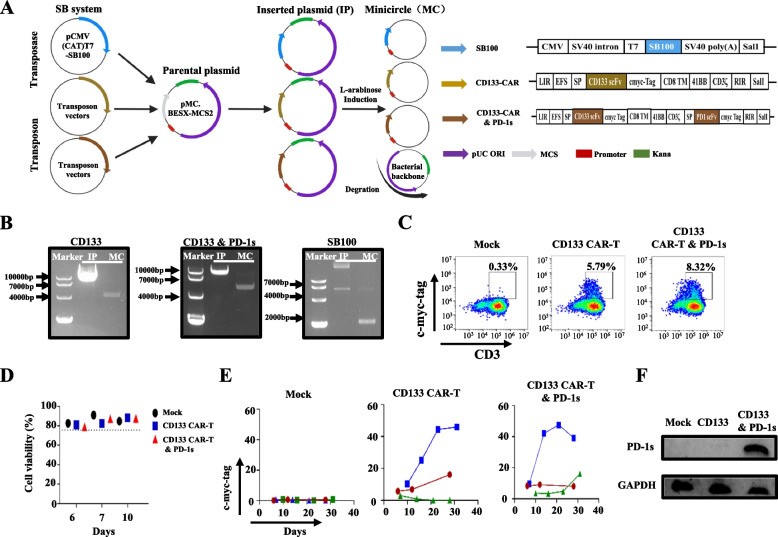
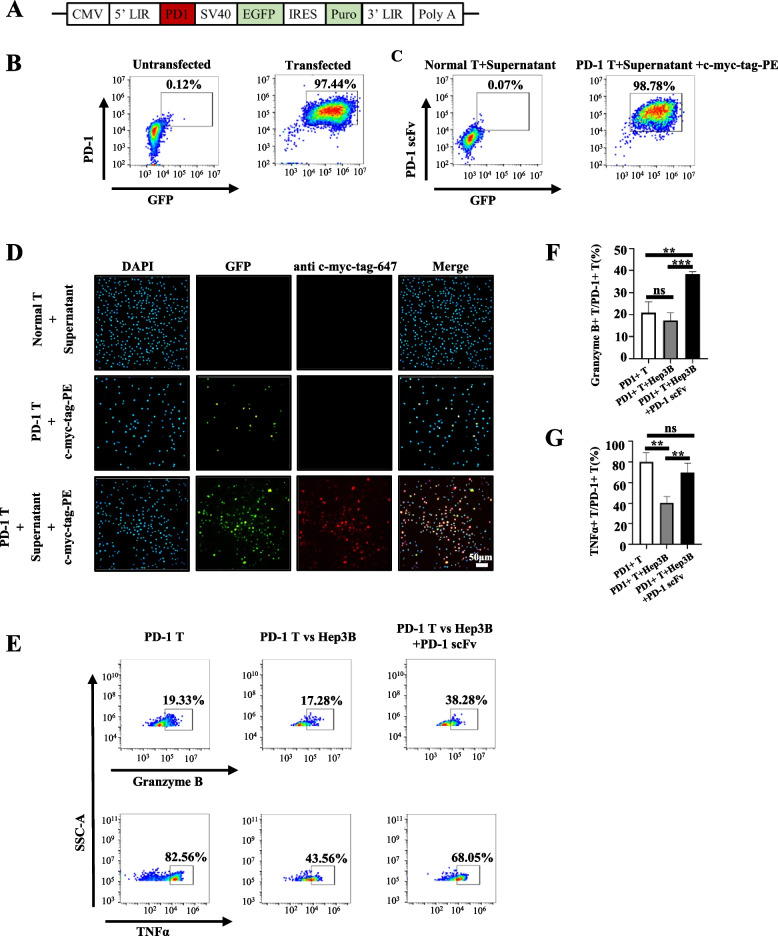
Methods: CD133-specific CAR-T cells secreting PD-1 blocking scFv (CD133 CAR-T and PD-1 s cells) were constructed using a sleeping beauty transposon system from minicircle technology, and the antitumour efficacy of CD133 CAR-T and PD-1 s cells was analysed in vitro and in vivo.
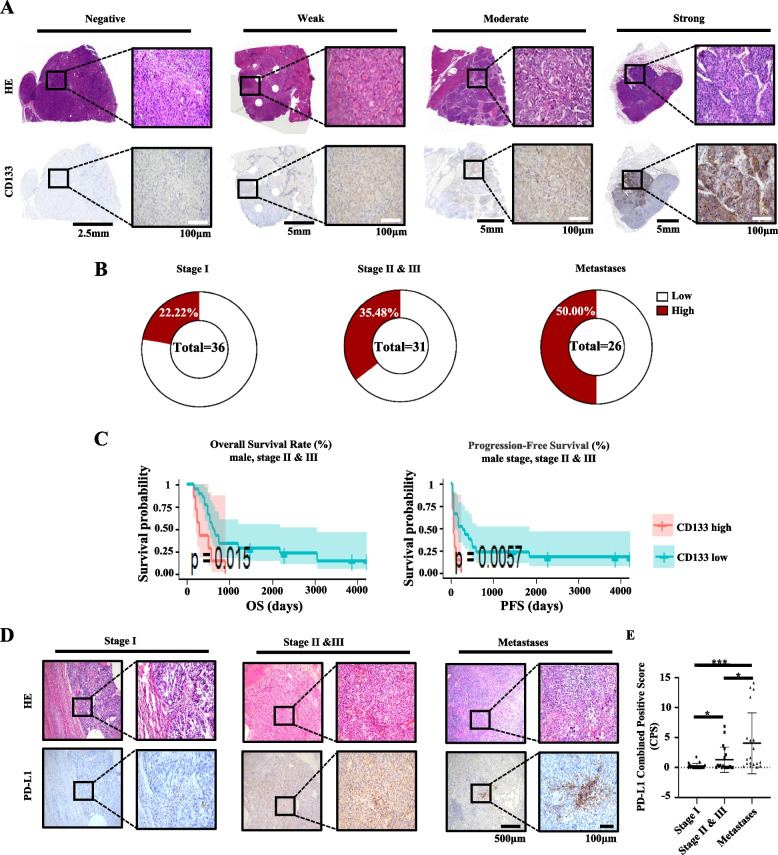
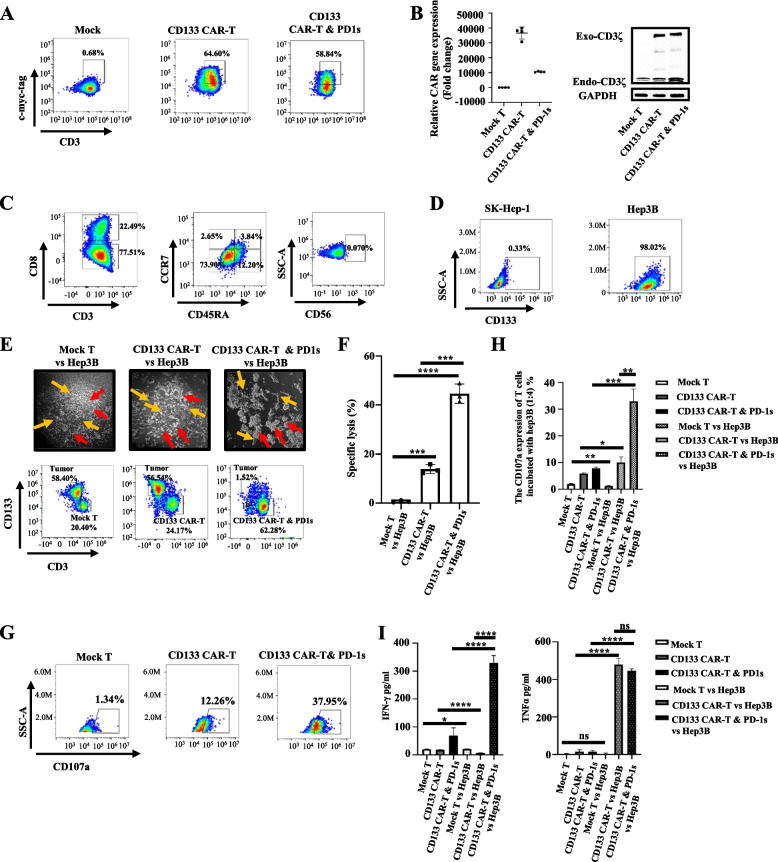
Results: A univariate analysis showed that CD133 expression in male patients at the late stage (II and III) was significantly associated with worse progression-free survival (PFS) (P = 0.0057) and overall survival (OS) (P = 0.015), and a multivariate analysis showed a trend toward worse OS (P = 0.041). Male patients with advanced HCC exhibited an approximately 20-fold higher PD-L1 combined positive score (CPS) compared with those with HCC at an early stage. We successfully generated CD133 CAR-T and PD-1 s cells that could secrete PD-1 blocking scFv based on a sleeping beauty system involving minicircle vectors. CD133 CAR-T and PD-1 s cells exhibited significant antitumour activity against HCC in vitro and in xenograft mouse models. Thus, CD133 CAR-T and PD-1 s cells may be a therapeutically tractable strategy for targeting CD133-positive CSCs in male patients with advanced HCC.
Conclusions: Our study provides a nonviral strategy for constructing CAR-T cells that could also secrete checkpoint blockade inhibitors based on a Sleeping Beauty system from minicircle vectors and revealed a potential benefit of this strategy for male patients with advanced HCC and high CD133 expression (median immunohistochemistry score > 2.284).
Keywords: CAR-T; CD133; Hepatocellular carcinoma; Minicircle; PD-1; Sleeping Beauty system.
© 2023. BioMed Central Ltd., part of Springer Nature.
Conflict of interest statement
The authors declare that they have no competing interests.
Figures


References
-
- Sung H, Ferlay J, Siegel RL, Laversanne M, Soerjomataram I, Jemal A, et al. Global cancer statistics 2020: GLOBOCAN estimates of incidence and mortality worldwide for 36 cancers in 185 Countries. CA Cancer J Clin. 2021;71(3):209–249. - PubMed
-
- Zhu AX, Finn RS, Edeline J, Cattan S, Ogasawara S, Palmer D, et al. Pembrolizumab in patients with advanced hepatocellular carcinoma previously treated with sorafenib (KEYNOTE-224): a non-randomised, open-label phase 2 trial. Lancet Oncol. 2018;19(7):940–952. - PubMed
Publication types
MeSH terms
Substances
LinkOut - more resources
Full Text Sources
Medical
Research Materials
