Clinical Trial
. 2023 Sep 19;330(11):1042-1053.
doi: 10.1001/jama.2023.16503.

Muvalaplin, an Oral Small Molecule Inhibitor of Lipoprotein(a) Formation: A Randomized Clinical Trial

Affiliations
Clinical Trial

Muvalaplin, an Oral Small Molecule Inhibitor of Lipoprotein(a) Formation: A Randomized Clinical Trial

Stephen J Nicholls et al. JAMA. .

Abstract

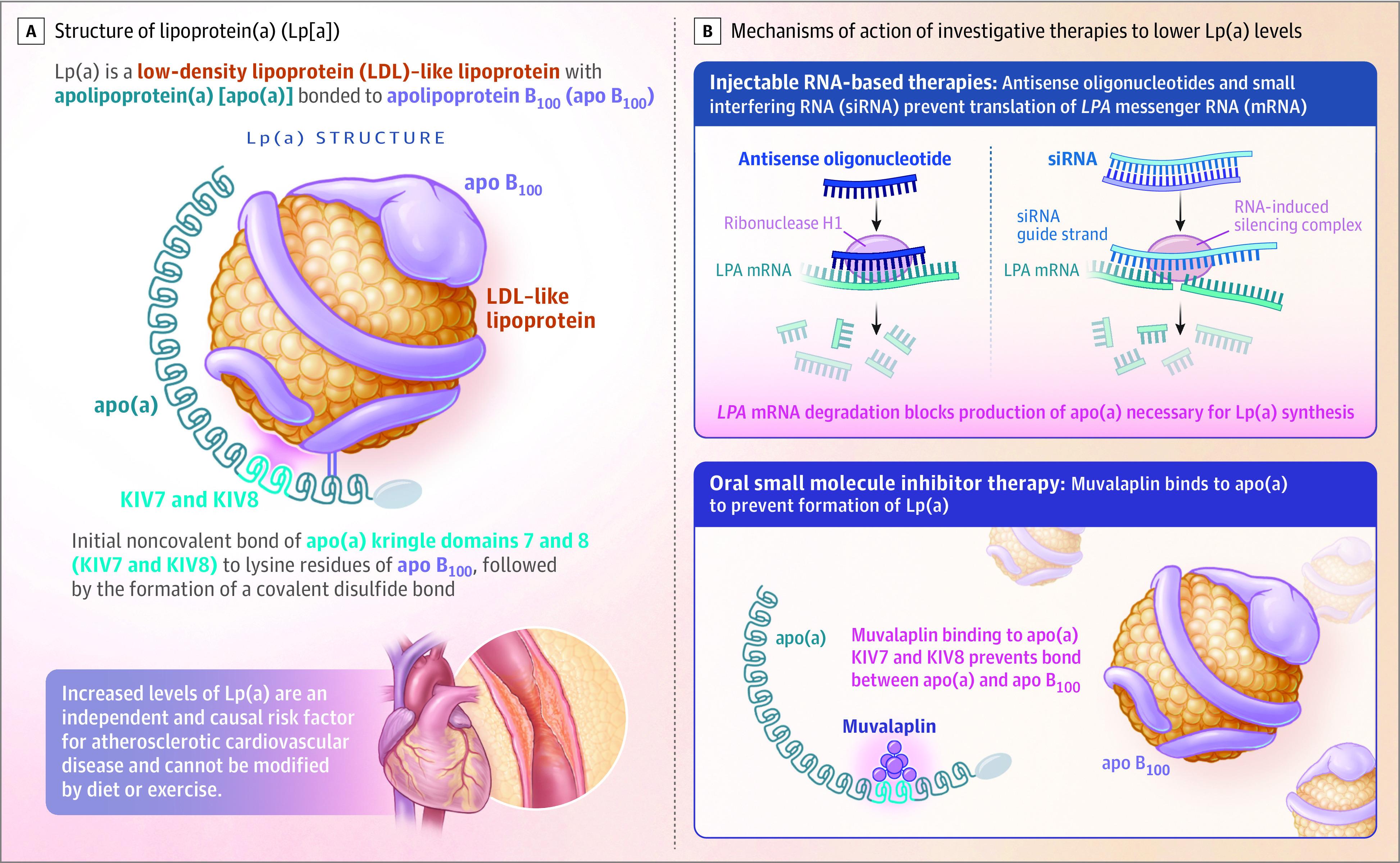
Importance: Lipoprotein(a) (Lp[a]) is associated with atherosclerotic disease and aortic stenosis. Lp(a) forms by bonding between apolipoprotein(a) (apo[a]) and apo B100. Muvalaplin is an orally administered small molecule that inhibits Lp(a) formation by blocking the apo(a)-apo B100 interaction while avoiding interaction with a homologous protein, plasminogen.

Objective: To determine the safety, tolerability, pharmacokinetics, and pharmacodynamic effects of muvalaplin.

Design, setting, and participants: This phase 1 randomized, double-blind, parallel-design study enrolled 114 participants (55 assigned to a single-ascending dose; 59 assigned to a multiple-ascending dose group) at 1 site in the Netherlands.

Interventions: The single ascending dose treatment evaluated the effect of a single dose of muvalaplin ranging from 1 mg to 800 mg or placebo taken by healthy participants with any Lp(a) level. The multiple ascending dose treatment evaluated the effect of taking daily doses of muvalaplin (30 mg to 800 mg) or placebo for 14 days in patients with Lp(a) levels of 30 mg/dL or higher.

Main outcomes and measures: Outcomes included safety, tolerability, pharmacokinetics, and exploratory pharmacodynamic biomarkers.

Results: Among 114 randomized (55 in the single ascending dose group: mean [SD] age, 29 [10] years, 35 females [64%], 2 American Indian or Alaska Native [4%], 50 White [91%], 3 multiracial [5%]; 59 in the multiple ascending dose group: mean [SD] age 32 [15] years; 34 females [58%]; 3 American Indian or Alaska Native [5%], 6 Black [10%], 47 White [80%], 3 multiracial [5%]), 105 completed the trial. Muvalaplin was not associated with tolerability concerns or clinically significant adverse effects. Oral doses of 30 mg to 800 mg for 14 days resulted in increasing muvalaplin plasma concentrations and half-life ranging from 70 to 414 hours. Muvalaplin lowered Lp(a) plasma levels within 24 hours after the first dose, with further Lp(a) reduction on repeated dosing. Maximum placebo-adjusted Lp(a) reduction was 63% to 65%, resulting in Lp(a) plasma levels less than 50 mg/dL in 93% of participants, with similar effects at daily doses of 100 mg or more. No clinically significant changes in plasminogen levels or activity were observed.

Conclusion: Muvalaplin, a selective small molecule inhibitor of Lp(a) formation, was not associated with tolerability concerns and lowered Lp(a) levels up to 65% following daily administration for 14 days. Longer and larger trials will be required to further evaluate safety, tolerability, and effect of muvalaplin on Lp(a) levels and cardiovascular outcomes.

Trial registration: ClinicalTrials.gov Identifier: NCT04472676.


Conflict of interest statement

Conflict of Interest Disclosures: Dr Nicholls reported receiving grants from Esperion, AstraZeneca, New Amsterdam Pharma, Amgen, Anthera, Eli Lilly, Esperion, Novartis, Cerenis, The Medicines Company, Resverlogix, InfraReDx, Roche, Sanofi-Regeneron, and LipoScience; receiving honoraria to his institution from AstraZeneca, Amarin, Akcea, Eli Lilly, Anthera, Omthera, Merck, Takeda, Resverlogix, Sanofi-Regeneron, CSL Behring, Esperion, Boehringer Ingelheim, Vaxxinity, and Sequiris; and that he is a named inventor on a patent for PCSK9 inhibitors and atherosclerosis. Dr Nissen reported receiving grants to perform clinical trials from AbbVie, AstraZeneca, Amgen, Bristol Myers Squibb, Eli Lilly, Esperion Therapeutics Inc, Medtronic, MyoKardia, New Amsterdam Pharmaceuticals, Novartis, and Silence Therapeutics. Dr Urva reported being an employee and stockholder at Eli Lilly and Company. Dr Suico reported being an employee and stockholder at Eli Lilly and Company. Mr Berg reported being an employee and stockholder at Eli Lilly and Company. Dr Linnebjerg reported receiving support from, being an employee of, and holding owning stock in Eli Lilly and Company. Dr Ruotolo reported being an employee of and owning stock in Eli Lilly and Company. Dr Turner reported being an employee and stockholder at Eli Lilly and Company. Dr Micahel reported being an employee and stockholder at Eli Lilly and Company.

Figures

Figure 1.
Figure 1.. Lipoprotein(a) Biology and Therapeutic Approaches to Lower Lipoprotein(a)
Figure 2.
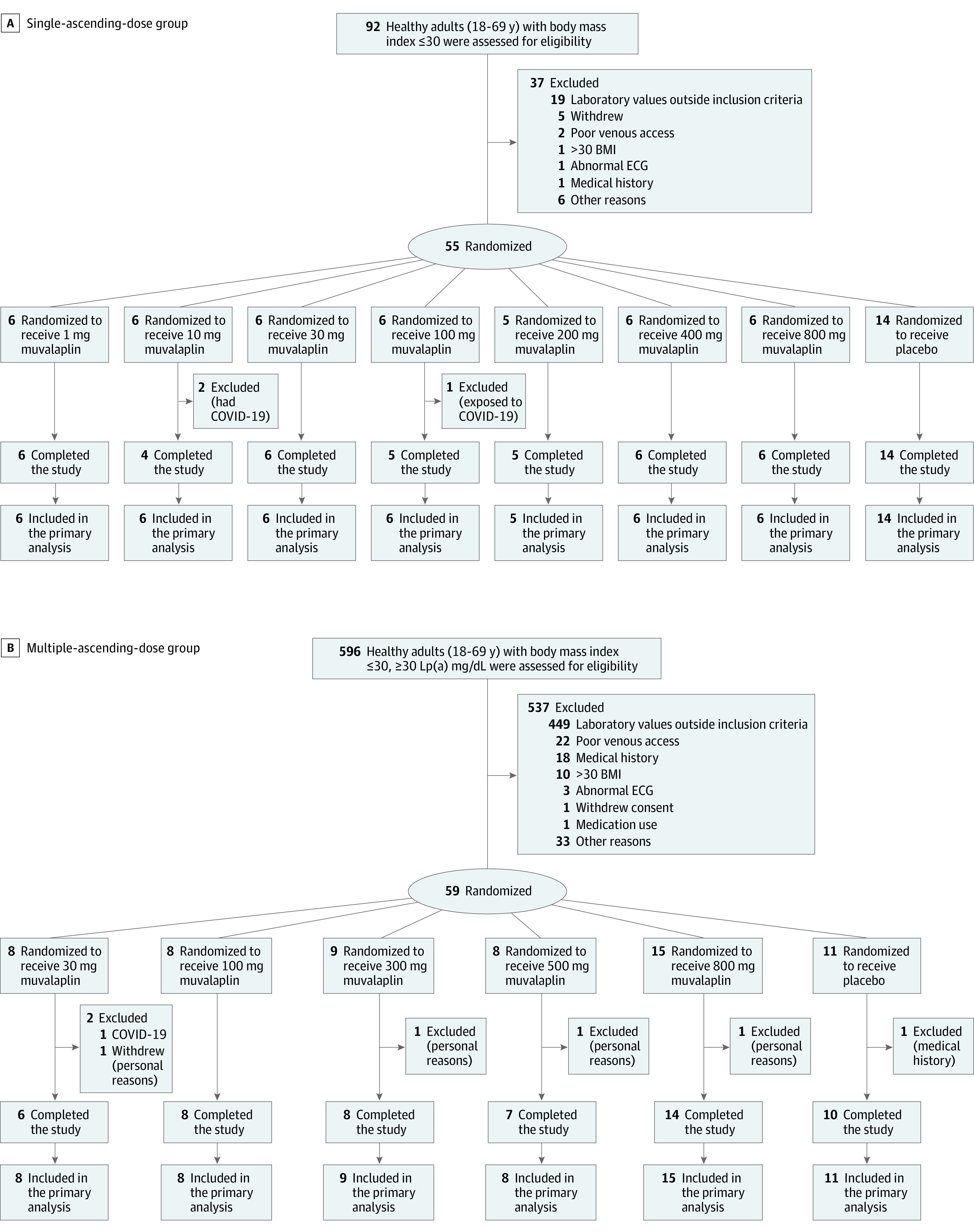
Figure 2.. Flow of Patients Through Both Parts of the Study of Muvalaplin for Lipoprotein(a) Inhibition
Within each study part, participants were randomly assigned to receive either muvalaplin or placebo in a 6:2 ratio for the single ascending dose part, and in a 8:2 ratio for the first 4 cohorts and 15:2 ratio in the last cohort of the multiple ascending dose study part. Two participants were given sentinel 1-mg doses in the single ascending dose part of the study prior to dosing the full cohort. The primary analysis assessed safety. Abbreviations: BMI, body mass index, calculated as weight in kilograms divided by height in meters squared; ECG, electrocardiogram.
Figure 3.
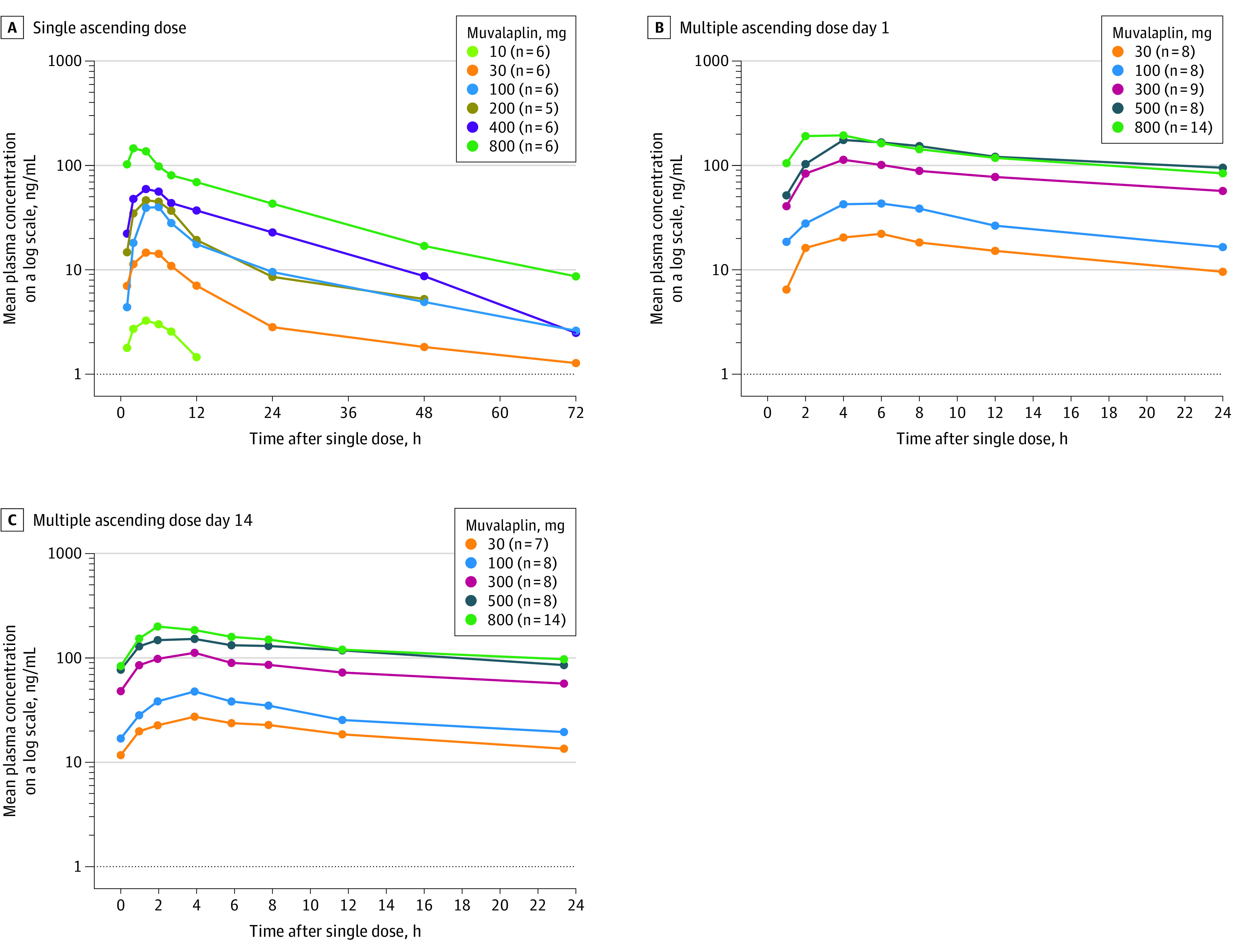
Figure 3.. Plasma Muvalaplin Concentration-Time Profile Following Single and Multiple Daily Doses of Muvalaplin
A, Plasma muvalaplin concentration-time profile after a single oral administration of muvalaplin in healthy participants. B, Plasma muvalaplin concentration-time profiles 0 to 24 hours of participants with elevated lipoprotein(a) levels (≥30 mg/dL) after receiving the first dose on day 1. C, Plasma muvalaplin concentration-time profiles 0 to 24 hours in participants with elevated lipoprotein(a) levels (≥30 mg/dL) after receiving the last dose on day 14.
Figure 4.
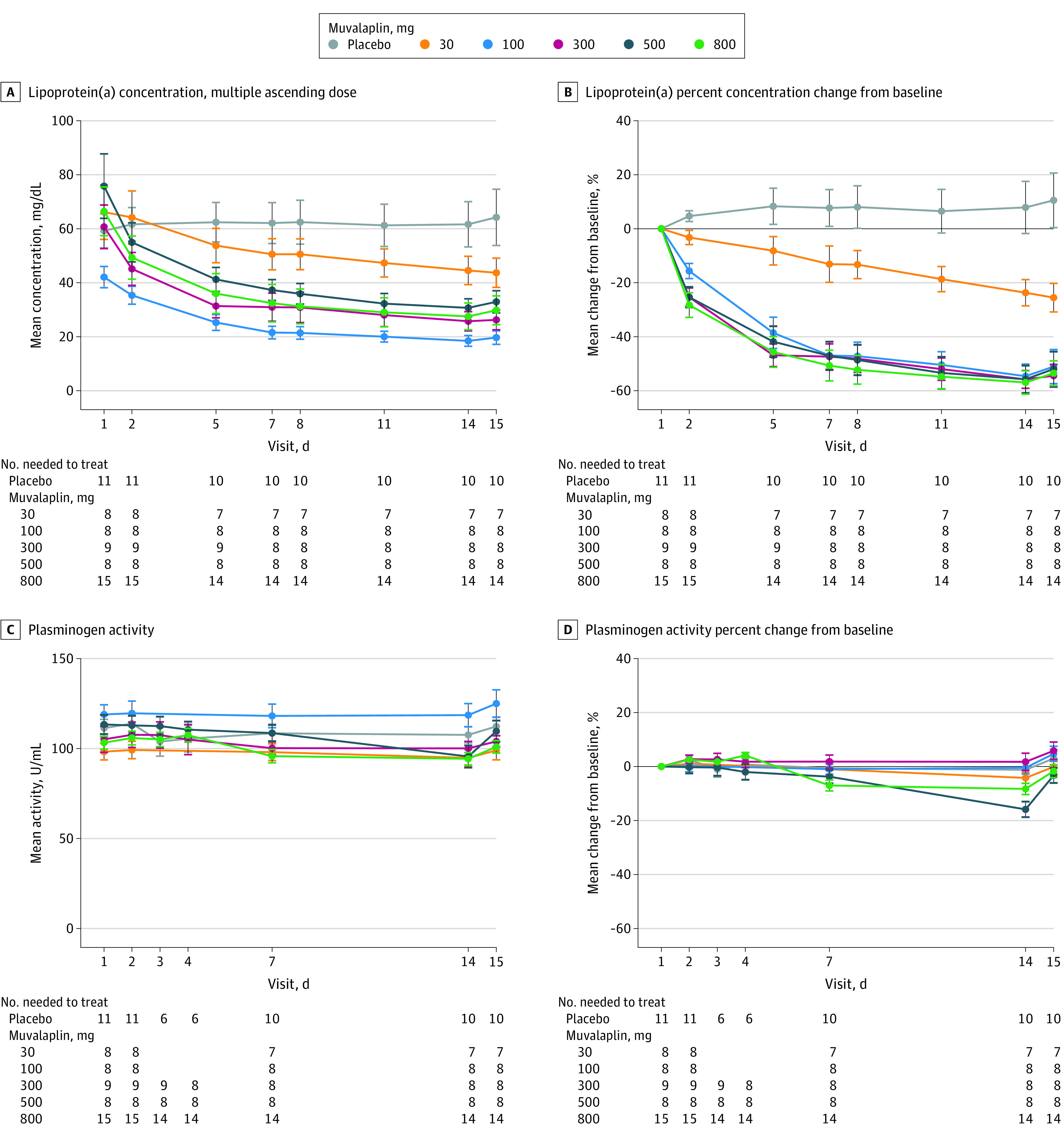
Figure 4.. Effect of Multiple Daily Doses of Muvalaplin on Lipoprotein(a) and Plasminogen Activity
Dosing began on day 1, and the values shown from day 1 are from before dosing began. A, The absolute change in lipoprotein(a) (Lp[a]) levels in participants with levels of 30 mg/dL or higher. B, The mean percent change from baseline in Lp(a) levels over time. C, The absolute change in plasminogen activity. D, The mean percent change from baseline in plasminogen activity in the same participants and during the same time shown in panels A and B. Data markers indicate the mean; error bars, SEM.

References

    1. Kronenberg F, Mora S, Stroes ESG, et al. . Lipoprotein(a) in atherosclerotic cardiovascular disease and aortic stenosis: a European Atherosclerosis Society consensus statement. Eur Heart J. 2022;43(39):3925-3946. doi:10.1093/eurheartj/ehac361 - DOI - PMC - PubMed
    1. Erqou S, Kaptoge S, Perry PL, et al. ; Emerging Risk Factors Collaboration . Lipoprotein(a) concentration and the risk of coronary heart disease, stroke, and nonvascular mortality. JAMA. 2009;302(4):412-423. doi:10.1001/jama.2009.1063 - DOI - PMC - PubMed
    1. Kamstrup PR, Tybjaerg-Hansen A, Steffensen R, Nordestgaard BG. Genetically elevated lipoprotein(a) and increased risk of myocardial infarction. JAMA. 2009;301(22):2331-2339. doi:10.1001/jama.2009.801 - DOI - PubMed
    1. Clarke R, Peden JF, Hopewell JC, et al. ; PROCARDIS Consortium . Genetic variants associated with Lp(a) lipoprotein level and coronary disease. N Engl J Med. 2009;361(26):2518-2528. doi:10.1056/NEJMoa0902604 - DOI - PubMed
    1. Burgess S, Ference BA, Staley JR, et al. ; European Prospective Investigation Into Cancer and Nutrition–Cardiovascular Disease (EPIC-CVD) Consortium . Association of LPA variants with risk of coronary disease and the implications for lipoprotein(a)-lowering therapies: a MENDELIAN randomization analysis. JAMA Cardiol. 2018;3(7):619-627. doi:10.1001/jamacardio.2018.1470 - DOI - PMC - PubMed

Publication types

MeSH terms

Associated data