


Insights into elastic fiber fragmentation: Mechanisms and treatment of aortic aneurysm in Marfan syndrome
- PMID: 37640090
- PMCID: PMC10872825
- DOI: 10.1016/j.vph.2023.107215
Insights into elastic fiber fragmentation: Mechanisms and treatment of aortic aneurysm in Marfan syndrome
Abstract
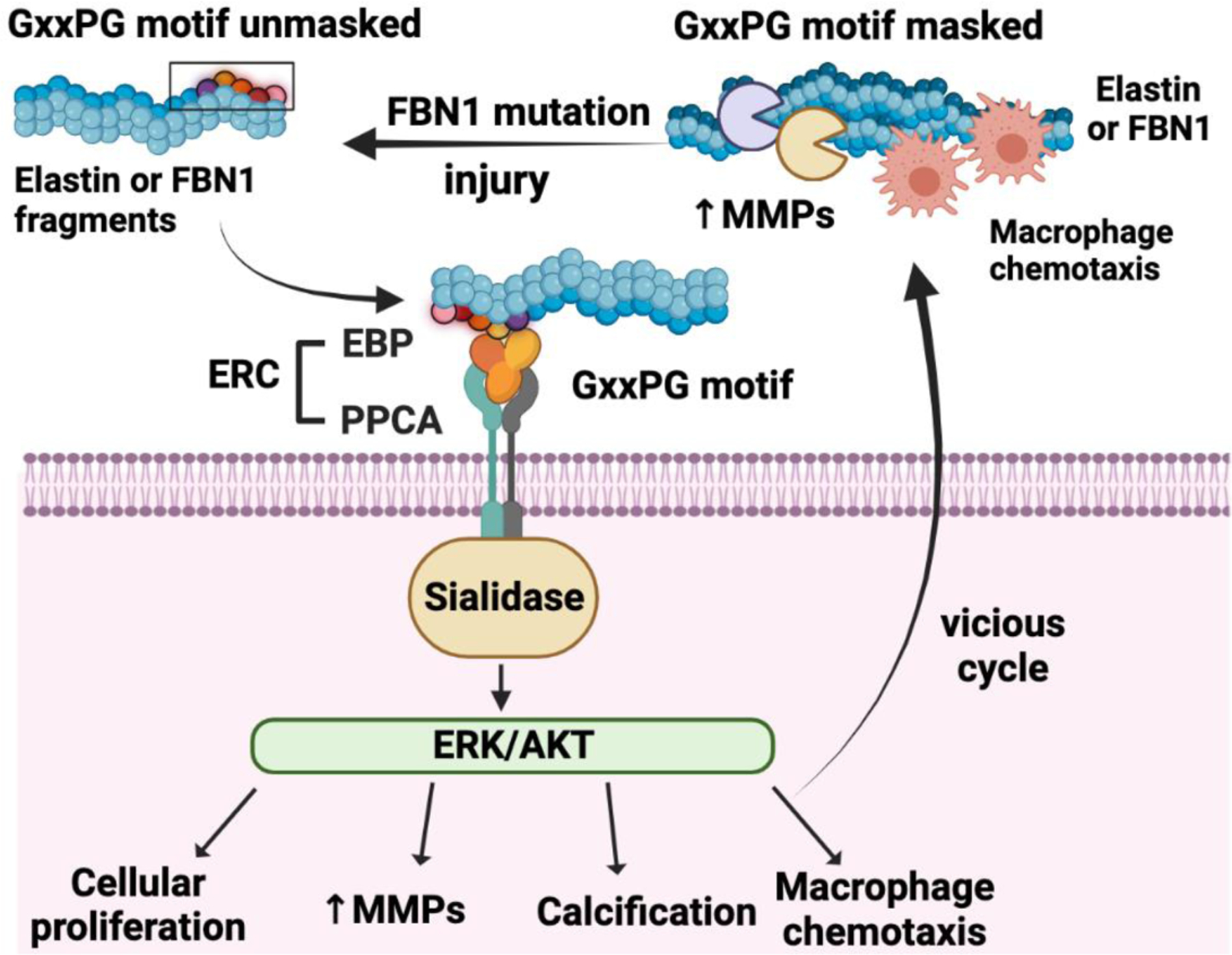
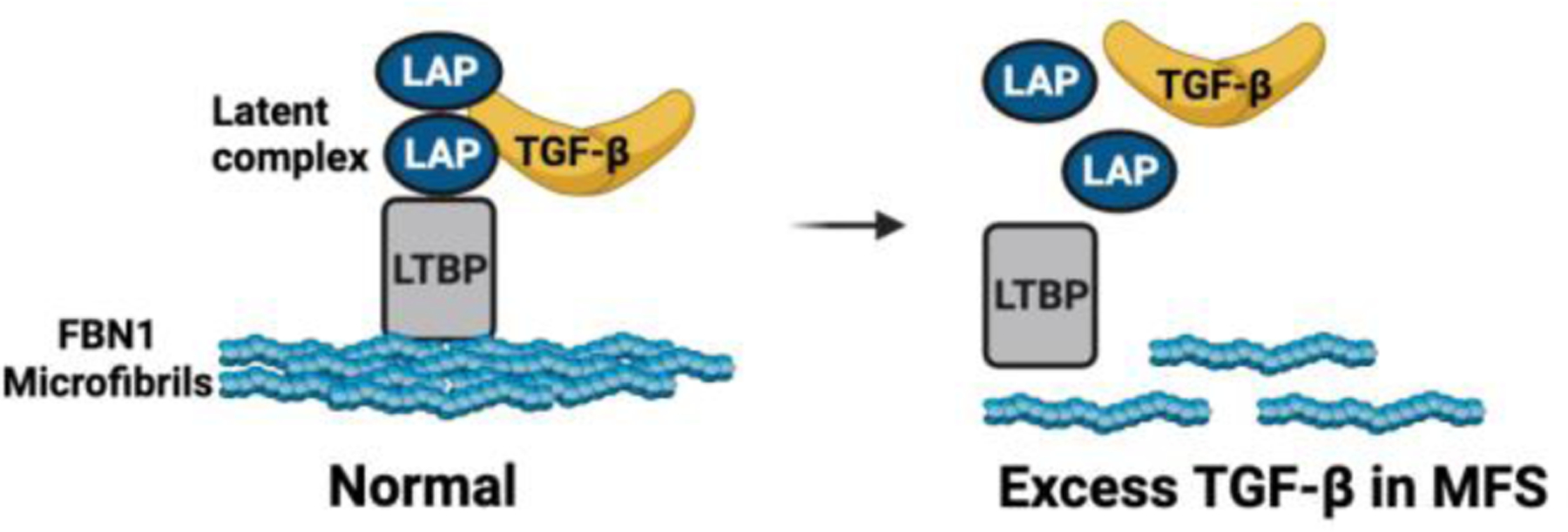
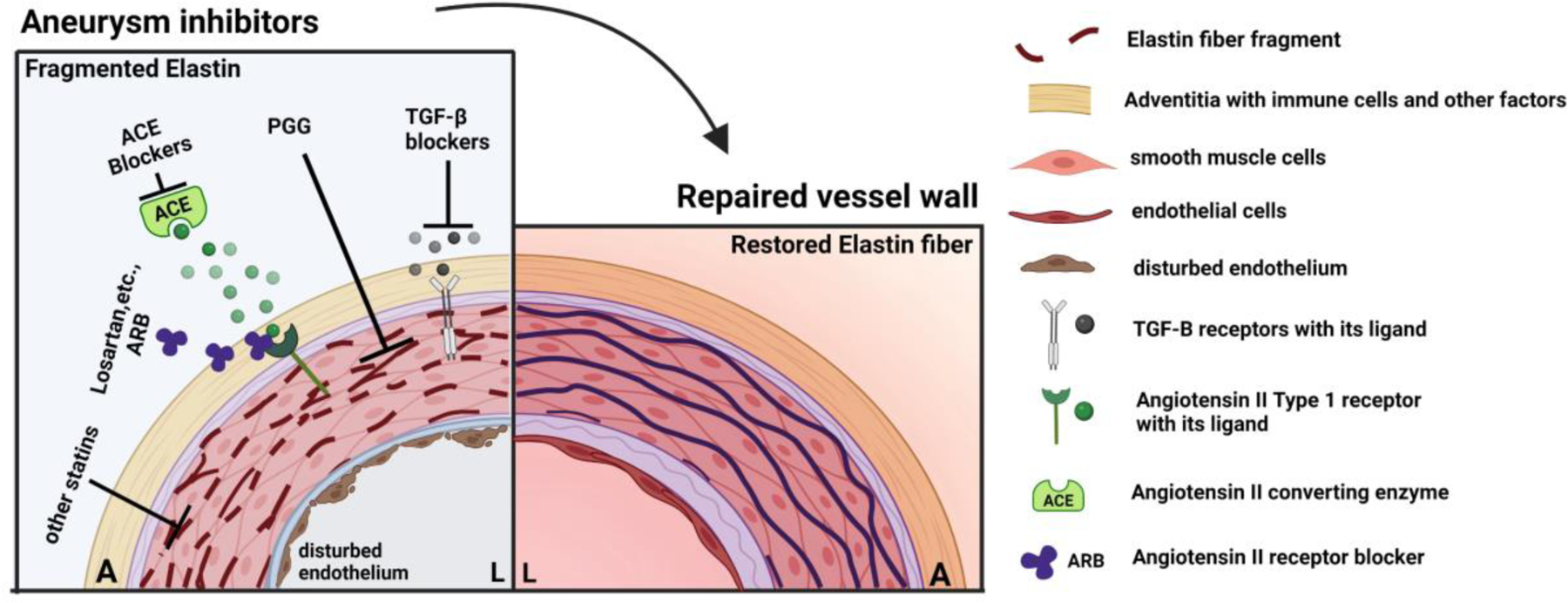
Marfan syndrome (MFS) is an autosomal dominant connective tissue disorder caused by mutations in fibrillin 1 (FBN1) gene. These mutations result in defects in the skeletal, ocular, and cardiovascular systems. Aortic aneurysm is the leading cause of premature mortality in untreated MFS patients. Elastic fiber fragmentation in the aortic vessel wall is a hallmark of MFS-associated aortic aneurysms. FBN1 mutations result in FBN1 fragments that also contribute to elastic fiber fragmentation. Although recent research has advanced our understanding of MFS, the contribution of elastic fiber fragmentation to the pathogenesis of aneurysm formation remains poorly understood. This review provides a comprehensive overview of the molecular mechanisms of elastic fiber fragmentation and its role in the pathogenesis of aortic aneurysm progression. Increased comprehension of elastic fragmentation has significant clinical implications for developing targeted interventions to block aneurysm progression, which would benefit not only individuals with Marfan syndrome but also other patients with aneurysms. Moreover, this review highlights an overlooked connection between inhibiting aneurysm and the restoration of elastic fibers in the vessel wall with various aneurysm inhibitors, including drugs and chemicals. Investigating the underlying molecular mechanisms could uncover innovative therapeutic strategies to inhibit elastin fragmentation and prevent the progression of aneurysms.
Keywords: Angiotensin receptor blocker (ARB); Aortic aneurysm; Elastic fiber fragmentation; Elastin; Fibrillin-1; Losartan; MMP; Marfan syndrome; TGF-β.
Copyright © 2023 Elsevier Inc. All rights reserved.
Conflict of interest statement
Declaration of Competing Interest The authors declare no conflicts of interest.
Figures
References
-
- Dietz HC, Cutting GR, Pyeritz RE, Maslen CL, Sakai LY, Corson GM, Puffenberger EG, Hamosh A, Nanthakumar EJ, Curristin SM, et al., Marfan syndrome caused by a recurrent de novo missense mutation in the fibrillin gene, Nature 352(6333) (1991) 337–9. - PubMed
-
- Keane MG, Pyeritz RE, Medical management of Marfan syndrome, Circulation 117(21) (2008) 2802–13. - PubMed
-
- Isselbacher EM, Preventza O, Hamilton Black Iii J, Augoustides JG, Beck AW, Bolen MA, Braverman AC, Bray BE, Brown-Zimmerman MM, Chen EP, Collins TJ, DeAnda A Jr., Fanola CL, Girardi LN, Hicks CW, Hui DS, Jones WS, Kalahasti V, Kim KM, Milewicz DM, Oderich GS, Ogbechie L, Promes SB, Ross EG, Schermerhorn ML, Times SS, Tseng EE, Wang GJ, Woo YJ, 2022 ACC/AHA Guideline for the Diagnosis and Management of Aortic Disease: A Report of the American Heart Association/American College of Cardiology Joint Committee on Clinical Practice Guidelines, J Am Coll Cardiol 80(24) (2022) e223–e393. - PMC - PubMed
Publication types
MeSH terms
Substances
Grants and funding
LinkOut - more resources
Full Text Sources
Medical
