


Posttraumatic stress disorder in a war-affected area of Northeast Ethiopia: a cross-sectional study
- PMID: 37641083
- PMCID: PMC10464176
- DOI: 10.1186/s12888-023-05116-w
Posttraumatic stress disorder in a war-affected area of Northeast Ethiopia: a cross-sectional study
Abstract
Background: Post-Traumatic Stress Disorder (PTSD) is a chronic condition that affects a significant proportion of war survivors following war and conflict. If PTSD is not managed, it can lead to decreased quality of life and impairments in daily functioning and lead to death. This study aimed to assess the prevalence of post-traumatic stress disorder and its associated factors among residents in a war-affected area, Dessie Town, Northeast Ethiopia.
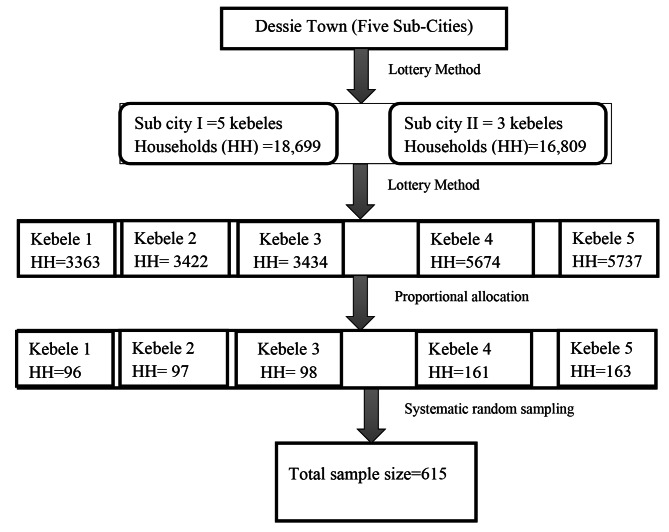
Methods: A community-based cross-sectional study was conducted among adult residents in the war-affected area, Dessie Town. A total of 615 individuals were selected by a systematic random sampling method. PTSD was assessed using the Post-Traumatic Stress Disorder Checklist, Civilian Version. Multivariable logistic regressions were used to measure the associated factors. Associations between variables were described using odds ratios, 95% confidence intervals, and a p-value less than 0.05.
Results: The prevalence of PTSD was 34.5% (95% CI: 31-38). Female sex (AOR: 1.82; CI: 1.18-2.82), divorced or widowed (AOR: 2.12, CI: 1.23-3.66), having only primary schooling (AOR: 2.17; CI: 1.25-3.78), depression (AOR: 2.03; CI: 1.34-3.08), experienced ill health without medical care during the wartime (AOR: 2.97; CI: 1.43-6.16), forced separation from family (AOR: 1.90; CI: 1.16-3.12), and experienced stressful life events (AOR: 1.60; CI: 1.06-2.42) were significantly associated with PTSD.
Conclusion: A significant rate of PTSD was found among residents of the war-affected area, Dessie Town. One in three people was experiencing PTSD. As a result, post-war mental health early screening and intervention is a priority, particularly for females, those who are separated or divorced, and those who have experienced stressful life events due to the war.
Keywords: Post-traumatic stress disorder; War; War affected area.
© 2023. BioMed Central Ltd., part of Springer Nature.
Conflict of interest statement
The authors declare no competing interests.
Figures
References
-
- Edition F. Diagnostic and statistical manual of mental disorders. Am Psychiatric Assoc. 2013;21:591–643.
MeSH terms
LinkOut - more resources
Full Text Sources
Medical
Research Materials
