


Trends in mosquito species distribution modeling: insights for vector surveillance and disease control
- PMID: 37641089
- PMCID: PMC10463544
- DOI: 10.1186/s13071-023-05912-z
Trends in mosquito species distribution modeling: insights for vector surveillance and disease control
Abstract
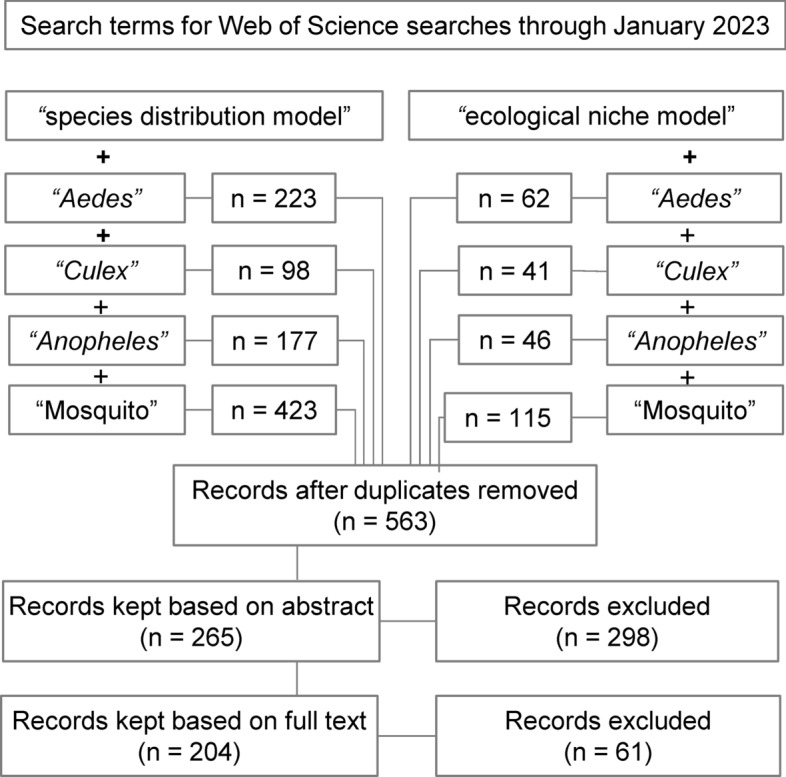
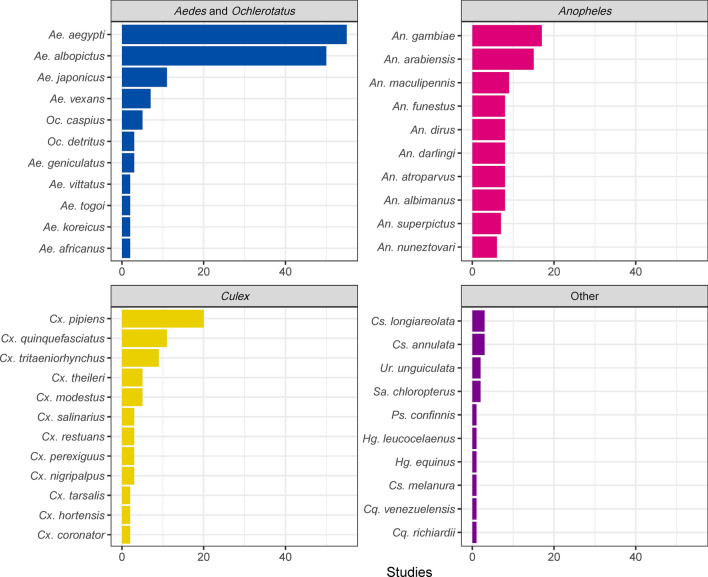
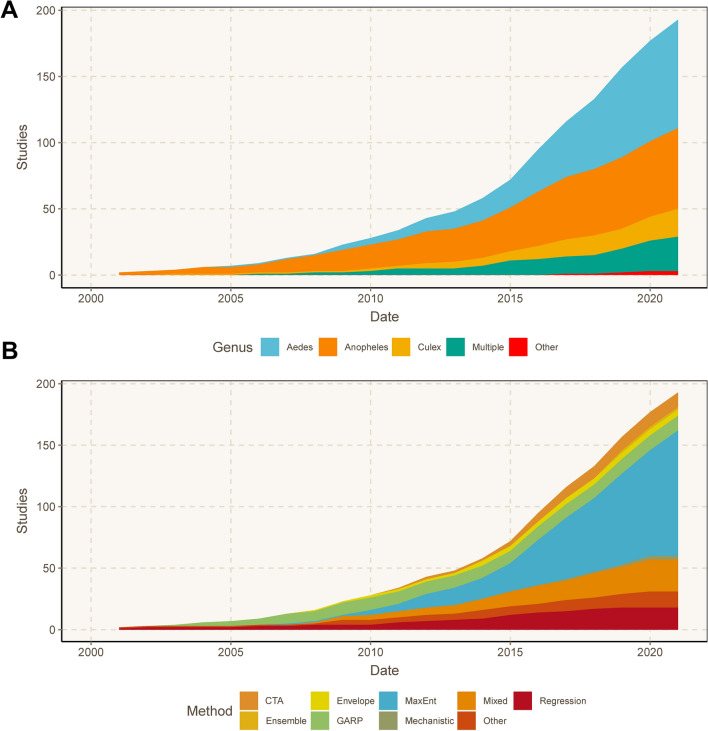
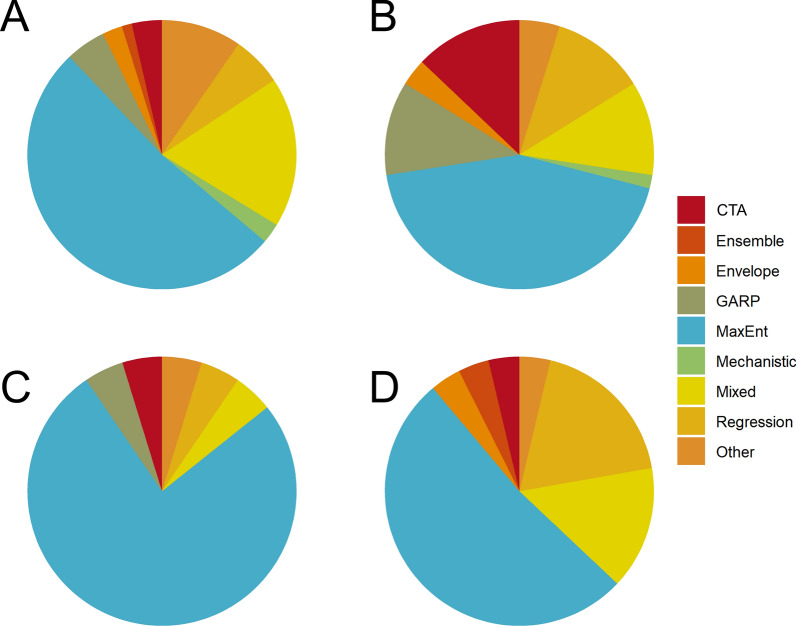
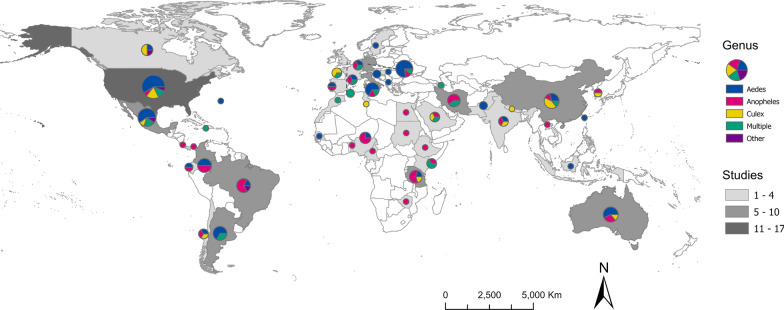
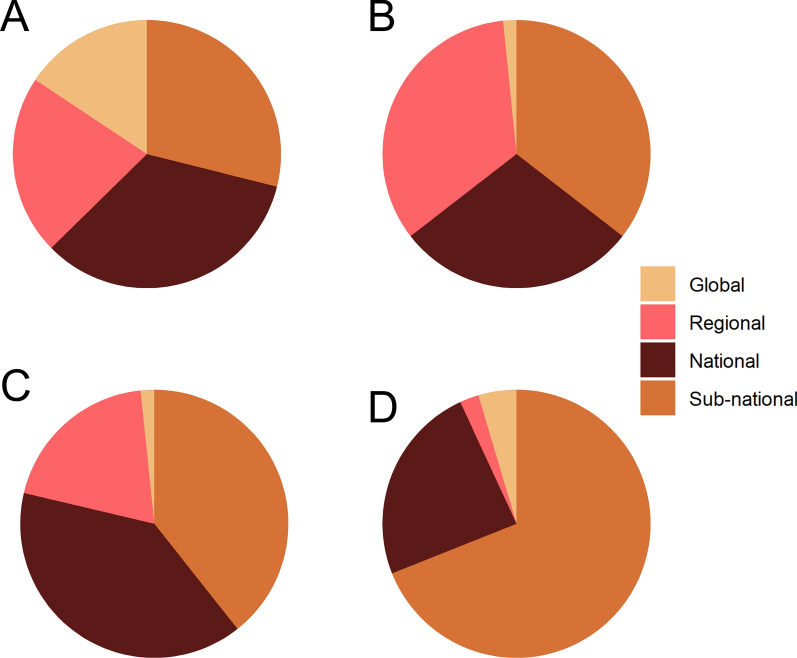
Species distribution modeling (SDM) has become an increasingly common approach to explore questions about ecology, geography, outbreak risk, and global change as they relate to infectious disease vectors. Here, we conducted a systematic review of the scientific literature, screening 563 abstracts and identifying 204 studies that used SDMs to produce distribution estimates for mosquito species. While the number of studies employing SDM methods has increased markedly over the past decade, the overwhelming majority used a single method (maximum entropy modeling; MaxEnt) and focused on human infectious disease vectors or their close relatives. The majority of regional models were developed for areas in Africa and Asia, while more localized modeling efforts were most common for North America and Europe. Findings from this study highlight gaps in taxonomic, geographic, and methodological foci of current SDM literature for mosquitoes that can guide future efforts to study the geography of mosquito-borne disease risk.
Keywords: Aedes; Anopheles; Culex; MaxEnt; Maximum entropy modeling; Species distribution modeling.
© 2023. BioMed Central Ltd., part of Springer Nature.
Conflict of interest statement
The authors declare that they have no competing interests.
Figures
References
-
- WHO. A global brief on vector-borne diseases. World Health Organization; 2014. Report no.: WHO/DCO/WHD/2014.1.
-
- Alonso P, Noor AM. The global fight against malaria is at a crossroads. The Lancet. 2017;390:2532–2534. - PubMed
Publication types
MeSH terms
Grants and funding
LinkOut - more resources
Full Text Sources
Medical
Miscellaneous
