Review
. 2023 Aug 28;16(1):100.
doi: 10.1186/s13045-023-01497-3.

Recent advances in targeted strategies for triple-negative breast cancer

Affiliations
Review

Recent advances in targeted strategies for triple-negative breast cancer

Shuangli Zhu et al. J Hematol Oncol. .

Abstract

Triple-negative breast cancer (TNBC), a highly aggressive subtype of breast cancer, negatively expresses estrogen receptor, progesterone receptor, and the human epidermal growth factor receptor 2 (HER2). Although chemotherapy is the main form of treatment for patients with TNBC, the effectiveness of chemotherapy for TNBC is still limited. The search for more effective therapies is urgent. Multiple targeted therapeutic strategies have emerged according to the specific molecules and signaling pathways expressed in TNBC. These include PI3K/AKT/mTOR inhibitors, epidermal growth factor receptor inhibitors, Notch inhibitors, poly ADP-ribose polymerase inhibitors, and antibody-drug conjugates. Moreover, immune checkpoint inhibitors, for example, pembrolizumab, atezolizumab, and durvalumab, are widely explored in the clinic. We summarize recent advances in targeted therapy and immunotherapy in TNBC, with the aim of serving as a reference for the development of individualized treatment of patients with TNBC in the future.

Keywords: Immunotherapy; Molecular subtype; Targeted therapy; Triple-negative breast cancer.


Conflict of interest statement

The authors declare that they have no competing interests.

Figures
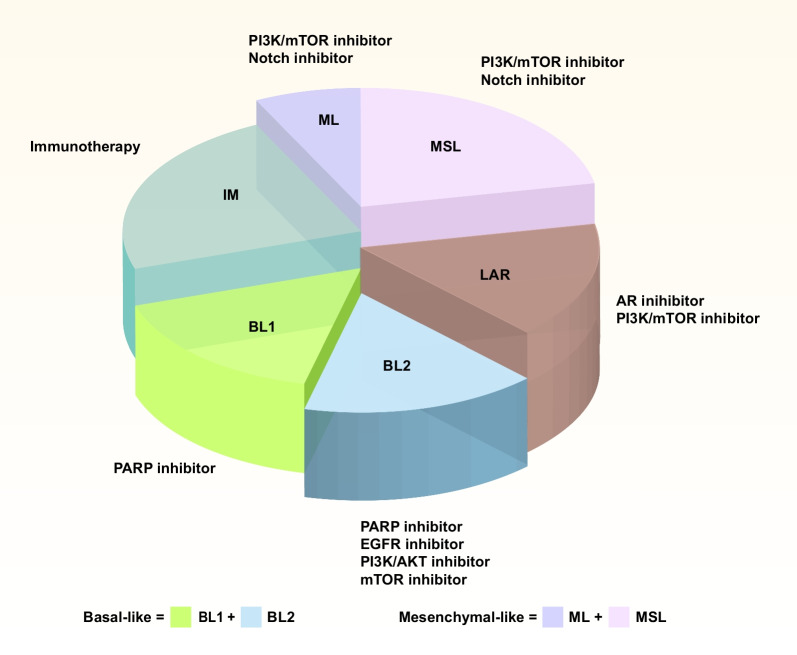
Fig. 1
Fig. 1
The molecular subtype of TNBC. At present, TNBC is mainly divided into the following categories, including BL1/2, IM, ML, MSL, and LAR. (The molecular subtype of TNBC was adapted from Fig. 2 in [23]) BL1: basal-like 1, IM: immunomodulatory, ML: mesenchymal-like, MSL: mesenchymal stem-like, LAR: luminal androgen receptor
Fig. 2
Fig. 2
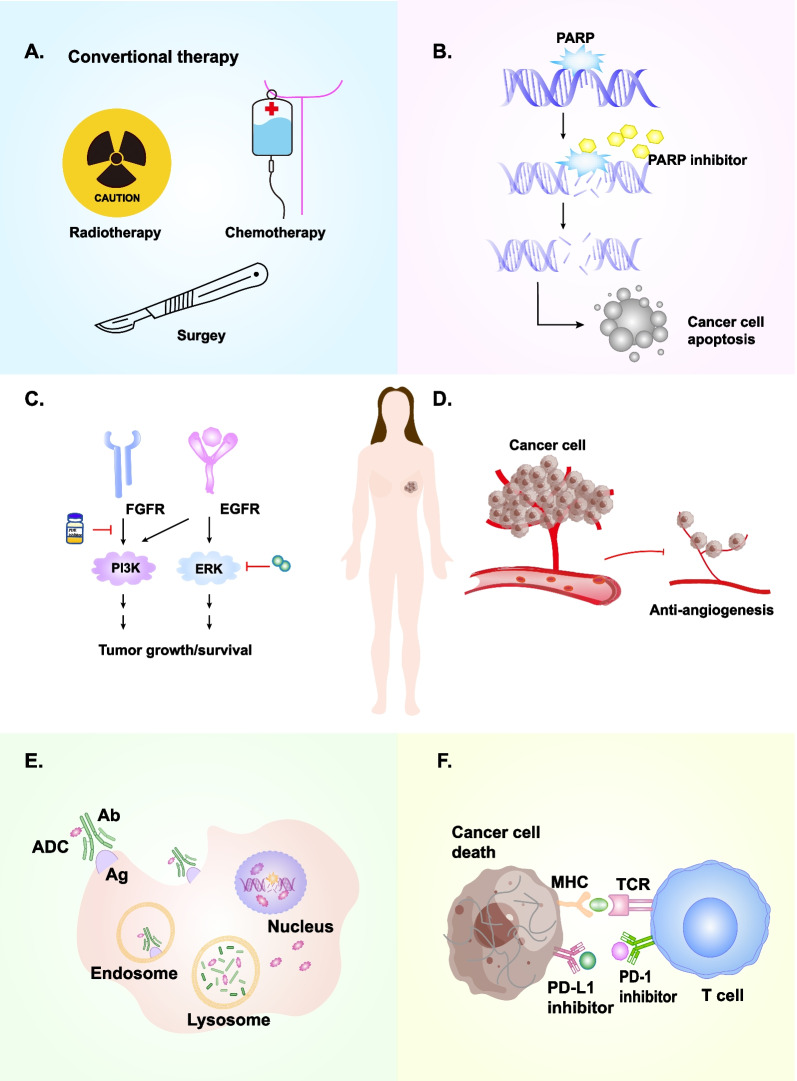
The therapeutic strategies in TNBC. There are several therapeutic strategies in TNBC. A. Traditional treatments for TNBC, including chemotherapy, radiotherapy, and surgery; B. PARP inhibitor; C. Signaling pathway-related inhibitors; D. VEGF/VEGFR inhibitors; E. ADC; F. Immune checkpoint inhibitors
Fig. 3
Fig. 3
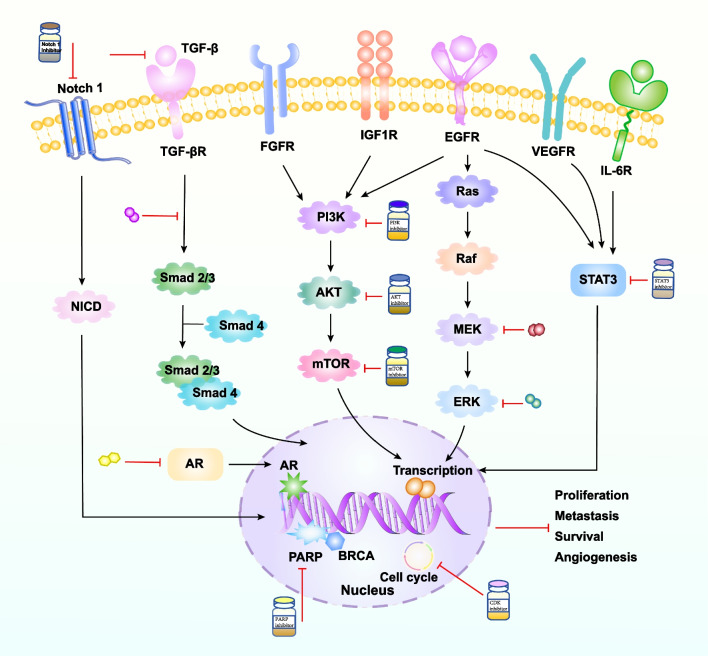
The signaling pathway and its inhibitors of TNBC. Presentation of TNBC-related signaling pathways and their inhibitors. Excitatory regulation is symbolized by black arrows, red arrows stand for inhibitory effects. (The TNBC signaling pathway and its inhibitors were adapted from Fig. 2 in [79])
Fig. 4
Fig. 4
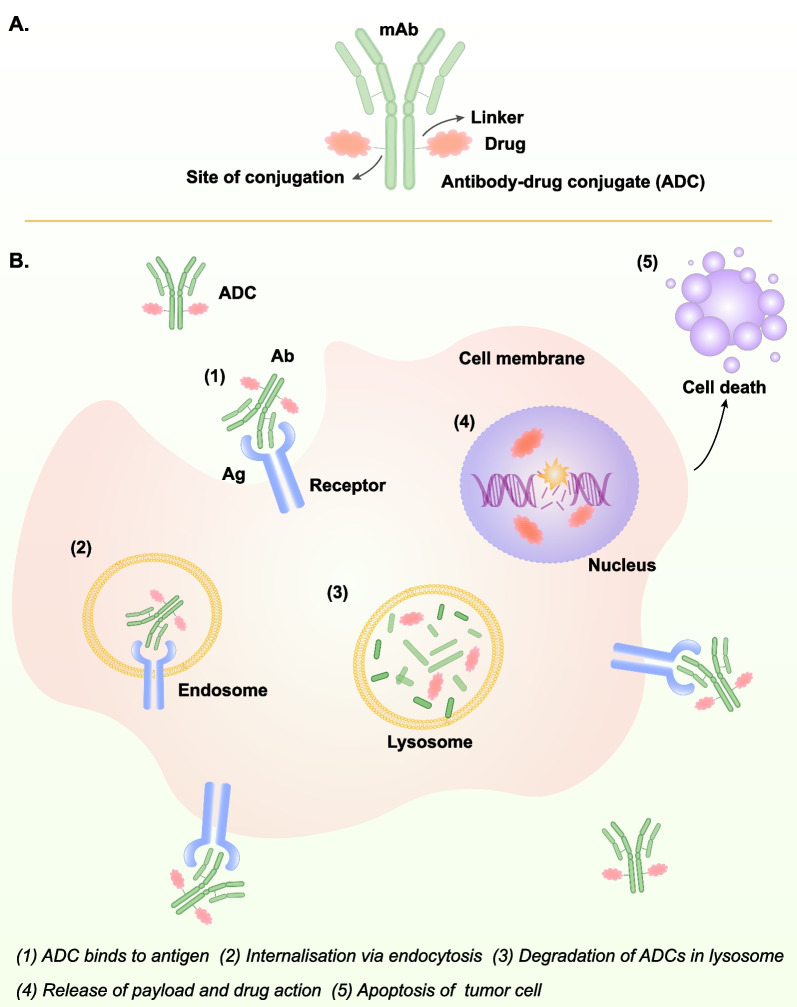
The structure and mechanism of ADC. A. The structure of ADC, B. The mechanism of ADC: (1)-(5). (The action mechanism of ADC was adapted from Fig. 2 in [243])

References

    1. Siegel RL, Miller KD, Wagle NS, Jemal A. Cancer statistics, 2023. CA Cancer J Clin. 2023;73:17–48. doi: 10.3322/caac.21763. - DOI - PubMed
    1. Yi M, Li T, Niu M, et al. Epidemiological trends of women's cancers from 1990 to 2019 at the global, regional, and national levels: a population-based study. Biomark Res. 2021;9:55. doi: 10.1186/s40364-021-00310-y. - DOI - PMC - PubMed
    1. Goldhirsch A, Winer EP, Coates AS, et al. Personalizing the treatment of women with early breast cancer: Highlights of the St Gallen international expert consensus on the primary therapy of early breast cancer 2013. Ann Oncol. 2013;24:2206–2223. doi: 10.1093/annonc/mdt303. - DOI - PMC - PubMed
    1. Borri F, Granaglia A. Pathology of triple negative breast cancer. Semin Cancer Biol. 2021;72:136–145. doi: 10.1016/j.semcancer.2020.06.005. - DOI - PubMed
    1. Poteat TC, Adams MA, Malone J, et al. Delays in breast cancer care by race and sexual orientation: results from a national survey with diverse women in the United States. Cancer. 2021;127:3514–3522. doi: 10.1002/cncr.33629. - DOI - PMC - PubMed

Publication types

Substances