


Beyond the TCA cycle: new insights into mitochondrial calcium regulation of oxidative phosphorylation
- PMID: 37641565
- PMCID: PMC10508640
- DOI: 10.1042/BST20230012
Beyond the TCA cycle: new insights into mitochondrial calcium regulation of oxidative phosphorylation
Abstract
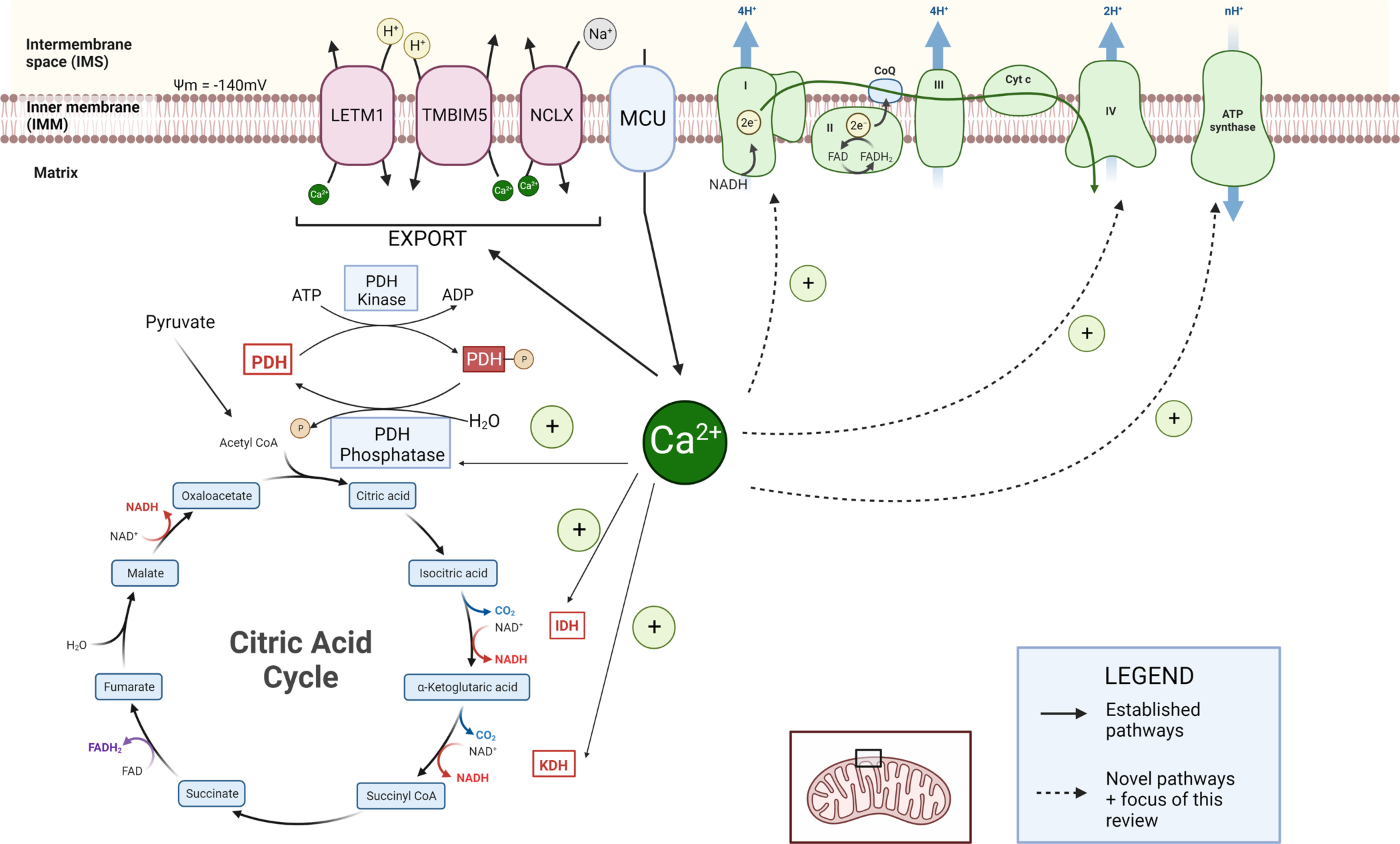
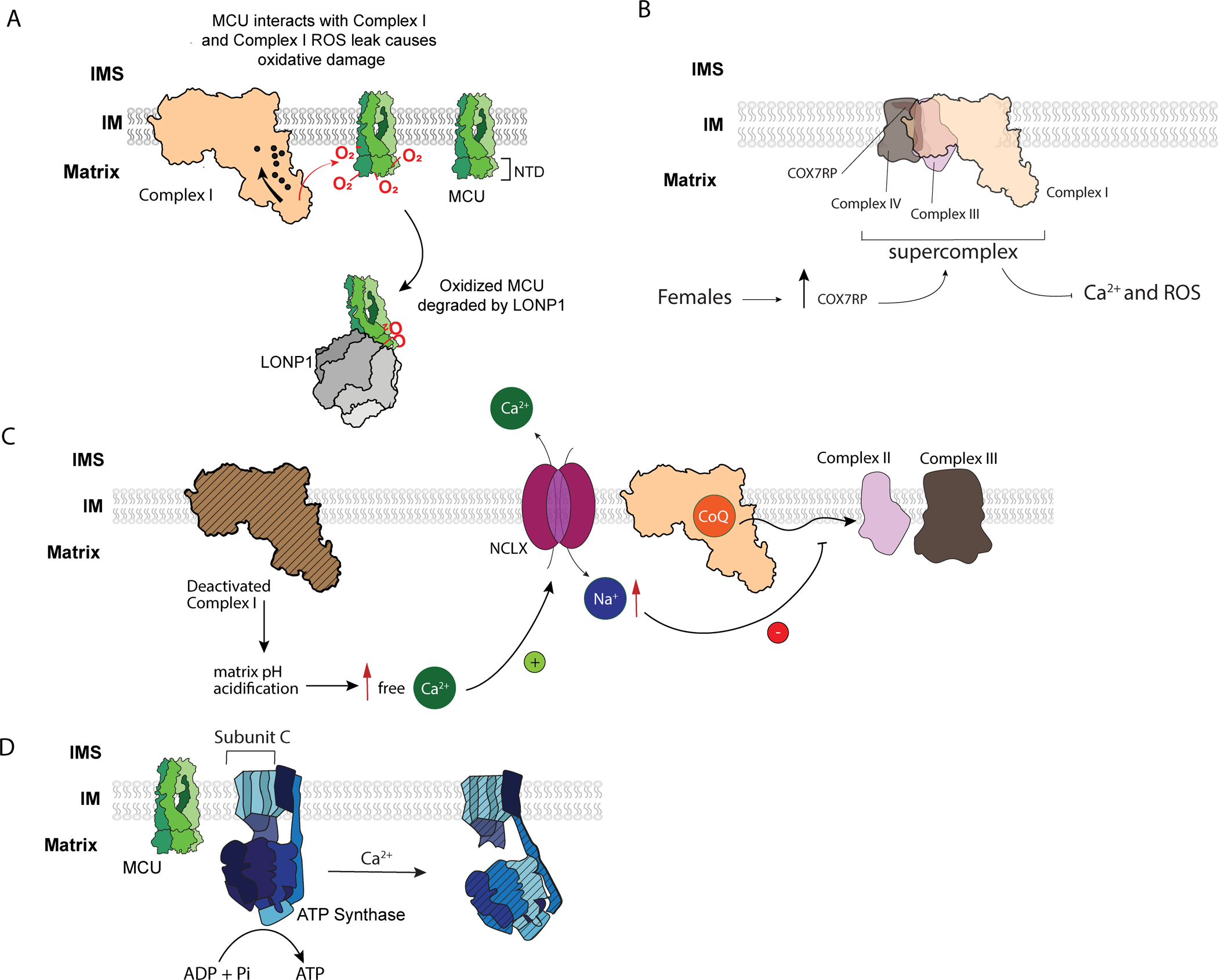
While mitochondria oxidative phosphorylation is broadly regulated, the impact of mitochondrial Ca2+ on substrate flux under both physiological and pathological conditions is increasingly being recognized. Under physiologic conditions, mitochondrial Ca2+ enters through the mitochondrial Ca2+ uniporter and boosts ATP production. However, maintaining Ca2+ homeostasis is crucial as too little Ca2+ inhibits adaptation to stress and Ca2+ overload can trigger cell death. In this review, we discuss new insights obtained over the past several years expanding the relationship between mitochondrial Ca2+ and oxidative phosphorylation, with most data obtained from heart, liver, or skeletal muscle. Two new themes are emerging. First, beyond boosting ATP synthesis, Ca2+ appears to be a critical determinant of fuel substrate choice between glucose and fatty acids. Second, Ca2+ exerts local effects on the electron transport chain indirectly, not via traditional allosteric mechanisms. These depend critically on the transporters involved, such as the uniporter or the Na+-Ca2+ exchanger. Alteration of these new relationships during disease can be either compensatory or harmful and suggest that targeting mitochondrial Ca2+ may be of therapeutic benefit during diseases featuring impairments in oxidative phosphorylation.
Keywords: MCU; NCLX; electron transport chain; mitochondrial dysfunction; mitochondrial permeability transition pores; oxidative phosphorylation.
© 2023 The Author(s). Published by Portland Press Limited on behalf of the Biochemical Society.
Figures
References
Publication types
MeSH terms
Substances
Grants and funding
LinkOut - more resources
Full Text Sources
Miscellaneous
