. 2023 Aug 30;480(16):1331-1363.
doi: 10.1042/BCJ20220217.

How many kinases are druggable? A review of our current understanding

Affiliations

How many kinases are druggable? A review of our current understanding

Brian Anderson et al. Biochem J. .

Abstract

There are over 500 human kinases ranging from very well-studied to almost completely ignored. Kinases are tractable and implicated in many diseases, making them ideal targets for medicinal chemistry campaigns, but is it possible to discover a drug for each individual kinase? For every human kinase, we gathered data on their citation count, availability of chemical probes, approved and investigational drugs, PDB structures, and biochemical and cellular assays. Analysis of these factors highlights which kinase groups have a wealth of information available, and which groups still have room for progress. The data suggest a disproportionate focus on the more well characterized kinases while much of the kinome remains comparatively understudied. It is noteworthy that tool compounds for understudied kinases have already been developed, and there is still untapped potential for further development in this chemical space. Finally, this review discusses many of the different strategies employed to generate selectivity between kinases. Given the large volume of information available and the progress made over the past 20 years when it comes to drugging kinases, we believe it is possible to develop a tool compound for every human kinase. We hope this review will prove to be both a useful resource as well as inspire the discovery of a tool for every kinase.

Keywords: chemical probe; druggable; kinase; kinase inhibitor; understudied kinase.


Conflict of interest statement

The authors declare that there are no competing interests associated with the manuscript.

Figures

Figure 1.
Figure 1.. Distribution of citation counts across the kinome based on SciFindern search results relative to the size of the kinase group in the kinome.
Figure 2.
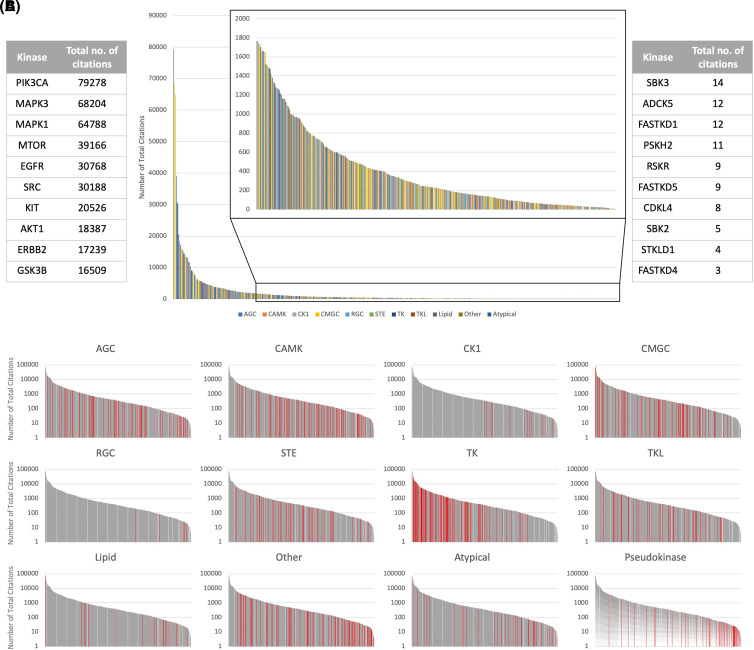
Figure 2.. Total number of citations for each kinase.
(A) Distribution of total number of citations across the kinome. Each vertical line represents a kinase, colored by their kinase group. The list of kinases is sorted in descending order based on total number of citations. (inset) Distribution after the top 100 kinases have been removed to illustrate the disparity between the studied and the understudied kinases. (left) The 10 kinases with the highest total number of citations. (right) The 10 kinases with the lowest total number of citations. (B) Distribution of the total number of citations for kinases across the 11 major kinase groups, and for pseudokinases (across all kinase groups). Each vertical line represents a kinase, colored red for the specific kinase group, and gray otherwise. These plots are plotted on the logarithmic scale for better visualization.
Figure 3.
Figure 3.. FDA approved drugs by year of approval and main kinase targeted.
Figure 4.
Figure 4.. The availability of chemical probes and FDA approved drugs for each individual kinase.
Kinases with both a drug and probe are colored in green, kinases with a drug but no probe are blue, kinases with a probe but no drug are yellow, and kinases with neither are gray. This kinome tree was created using CORAL [90].
Figure 5.
Figure 5.. Comparison between distributions of chemical probes and drugs across kinase groups.
Comparison between the proportion of a kinase group with at least one chemical probe versus the proportion of that group with one approved drug (A) or approved or investigational drug (B).
Figure 6.
Figure 6.. Visual representation of PDB structure availability based on kinase group.
Figure 7.
Figure 7.. Comparison between availability of a probe or drug and availability of a crystal structure.
Figure 8.
Figure 8.. Assay availability of each kinase, ranked by total number of citations.
(A) Assay availability across the kinome. Each vertical line represents a kinase, colored by whether any one assay is available. The list of kinases is sorted in descending order based on total number of citations. The plot is plotted on a logarithmic scale for better visualization. These assays included are Eurofins DiscoverX KinomeScan Binding Assay, the Eurofins KinaseProfiler Biochemical Assay, the RBC Biochemical Assay, the RBC Cell Phosphorylation Assay, and the Promega NanoBRET cellular target engagement assay. (B) Assay availability by percentile of kinome when ranked based on total citation count.
Figure 9.
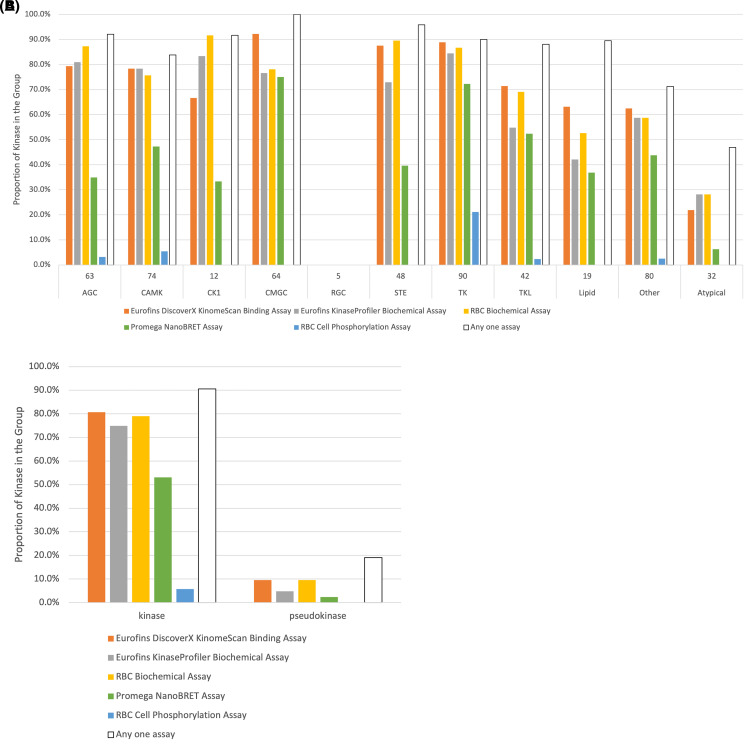
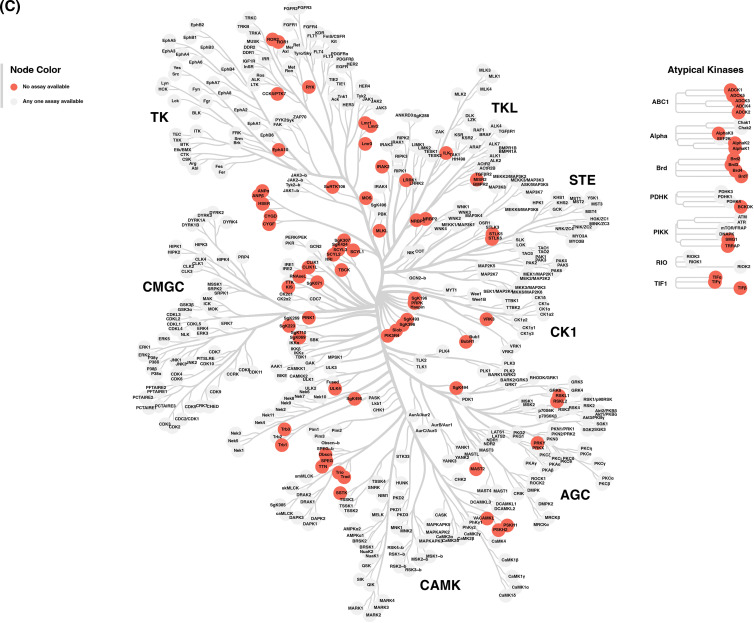
Figure 9.. Assay availability by kinase group or classification.
(A) Assay availability by kinase group. (B) Assay availability by kinase or pseudokinase classification. (C) A kinome tree illustrating the distribution of kinases without a commercial assay. Each red circle corresponds to a single kinase that currently has no commercial assay available. This kinome tree was created using CORAL [47].
Figure 9.
Figure 9.. Assay availability by kinase group or classification.
(A) Assay availability by kinase group. (B) Assay availability by kinase or pseudokinase classification. (C) A kinome tree illustrating the distribution of kinases without a commercial assay. Each red circle corresponds to a single kinase that currently has no commercial assay available. This kinome tree was created using CORAL [47].
Figure 10.
Figure 10.. Impact of assay availability on number of citations in medicinal chemistry journals.
Figure 11.
Figure 11.. Selected FDA approved kinase inhibitors with hinge-binding functionality highlighted with a yellow box.
Figure 12.
Figure 12.. Examples of generated selectivity by addressing the gatekeeper residue.
Key selectivity-generating substitutions are highlighted in yellow.
Figure 13.
Figure 13.. Modulating selectivity by addressing the middle hinge residue.
For Lorlatinib, Ravoxertinib, and BI-2536 selectivity is gained because the group highlighted in yellow clashes for kinases with a Tyr or Phe residue here. In the case of the CDK12 inhibitor, the highlighted nitrogen of the benzimidazole makes a hydrogen bond with the Tyr-OH, improving potency and thus enhancing selectivity.
Figure 14.
Figure 14.. Examples of kinase inhibitors with covalent warheads targeting cysteine or lysine.
The electrophilic moiety responsible for the covalent interaction is highlighted in yellow.
Figure 15.
Figure 15.. Rapid expansion of kinase targets of FDA approved drugs over the past 20 years.
In 2003, only 10 unique kinases were targeted compared with 63 in 2023.

References

    1. Piovesan, A., Antonaros, F., Vitale, L., Strippoli, P., Pelleri, M.C. and Caracausi, M. (2019) Human protein-coding genes and gene feature statistics in 2019. BMC Res. Notes 12, 315 10.1186/s13104-019-4343-8 - DOI - PMC - PubMed
    1. Hunter, T. and Sefton, B.M. (1980) Transforming gene product of Rous sarcoma virus phosphorylates tyrosine. Proc. Natl Acad. Sci. U.S.A. 77, 1311–1315 10.1073/pnas.77.3.1311 - DOI - PMC - PubMed
    1. Hunter, T. (2015) Discovering the first tyrosine kinase. Proc. Natl Acad. Sci. U.S.A. 112, 7877–7882 10.1073/pnas.1508223112 - DOI - PMC - PubMed
    1. Ushiro, H. and Cohen, S. (1980) Identification of phosphotyrosine as a product of epidermal growth factor-activated protein kinase in A-431 cell membranes. J. Biol. Chem. 255, 8363–8365 10.1016/S0021-9258(18)43497-7 - DOI - PubMed
    1. Hanks, S.K., Quinn, A.M. and Hunter, T. (1988) The protein kinase family: conserved features and deduced phylogeny of the catalytic domains. Science 241, 42–52 10.1126/science.3291115 - DOI - PubMed

Publication types