


Effect of body mass index on N-terminal pro-brain natriuretic peptide values in patients with heart failure
- PMID: 37642755
- PMCID: PMC10465415
- DOI: 10.1186/s43044-023-00401-1
Effect of body mass index on N-terminal pro-brain natriuretic peptide values in patients with heart failure
Abstract
Background: N-terminal pro-B-type natriuretic peptide (NT-proBNP) is a biomarker used for the diagnosis of heart failure. There is a relationship between NT-proBNP levels and body mass index (BMI). The study aimed to explore the impact of BMI on NT-proBNP concentrations and to examine whether other factors independent of or combined with BMI affect NT-proBNP values in patients with heart failure.
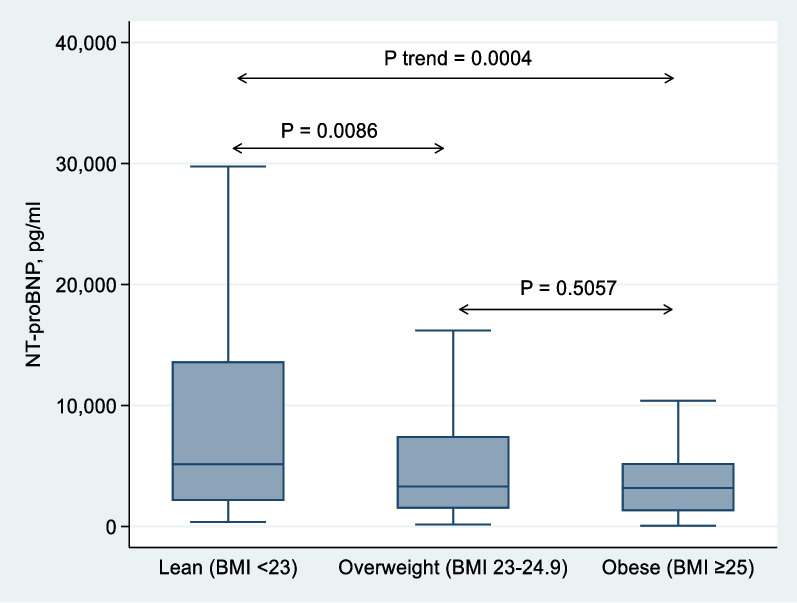
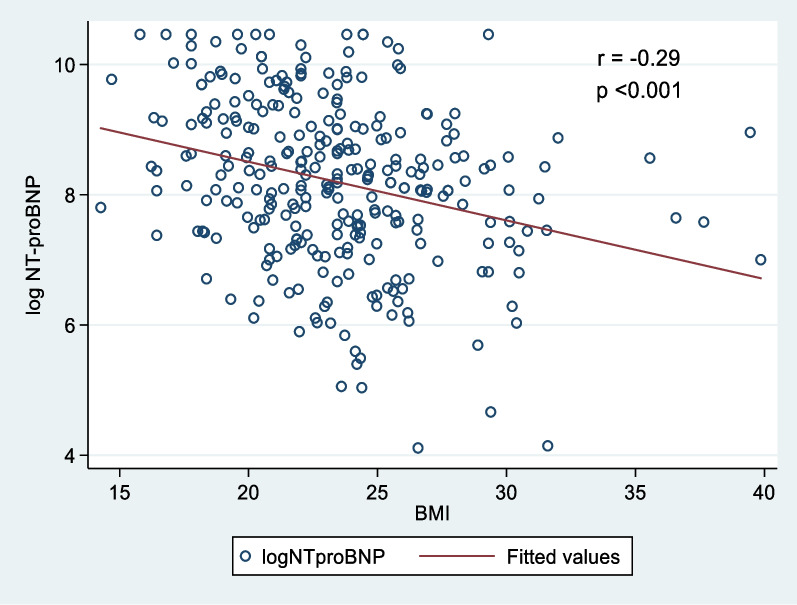
Results: A total of 293 participants were recruited. The mean age was 68.9 ± 13.2 years, males accounted for 46.4% of the total cohort, the mean BMI was 23.1 ± 4.0 kg/m2, and the median NT-proBNP level was 3776 (1672-8806) pg/ml. There was an inverse relationship between BMI and log NT-proBNP (r = - 0.29; p < 0.001, Spearman correlation). Each standard deviation increase in BMI (4 kg/m2) was associated with a 7% decrease in NT-proBNP values in the total cohort. The independent inverse determinants of NT-proBNP other than BMI were male gender and eGFR, while the variables directly correlated to NT-proBNP were LVEF ≤ 40% and NYHA class III-IV heart failure.
Conclusions: There is an inverse association between BMI and NT-proBNP levels. However, the correlation is weak, and there are other variables that have a significant impact on the NT-proBNP values as well. The NT-proBNP levels are still valuable in the diagnosis of heart failure regardless of BMI status.
Keywords: Body mass index (BMI); Heart failure; N-terminal pro-B-type natriuretic peptide (NT-proBNP); Obesity.
© 2023. Egyptian Society of Cardiology.
Conflict of interest statement
The authors declare that they have no competing interests.
Figures
References
LinkOut - more resources
Full Text Sources
Research Materials
Miscellaneous