


An Evaluation of a Personalized Multicomponent Commercial Digital Weight Management Program: Single-Arm Behavioral Trial
- PMID: 37642986
- PMCID: PMC10498321
- DOI: 10.2196/44955
An Evaluation of a Personalized Multicomponent Commercial Digital Weight Management Program: Single-Arm Behavioral Trial
Abstract
Background: Digital behavioral weight loss programs are scalable and effective, and they provide an opportunity to personalize intervention components. However, more research is needed to test the acceptability and efficacy of personalized digital behavioral weight loss interventions.
Objective: In a 6-month single-arm trial, we examined weight loss, acceptability, and secondary outcomes of a digital commercial weight loss program (WeightWatchers). This digital program included a personalized weight loss program based on sex, age, height, weight, and personal food preferences, as well as synchronous (eg, virtual workshops and individual weekly check-ins) and asynchronous (eg, mobile app and virtual group) elements. In addition to a personalized daily and weekly PersonalPoints target, the program provided users with personalized lists of ≥300 ZeroPoint foods, which are foods that do not need to be weighed, measured, or tracked.
Methods: We conducted a pre-post evaluation of this 6-month, digitally delivered, and personalized WeightWatchers weight management program on weight loss at 3 and 6 months in adults with overweight and obesity. The secondary outcomes included participation, satisfaction, fruit and vegetable intake, physical activity, sleep quality, hunger, food cravings, quality of life, self-compassion, well-being, and behavioral automaticity.
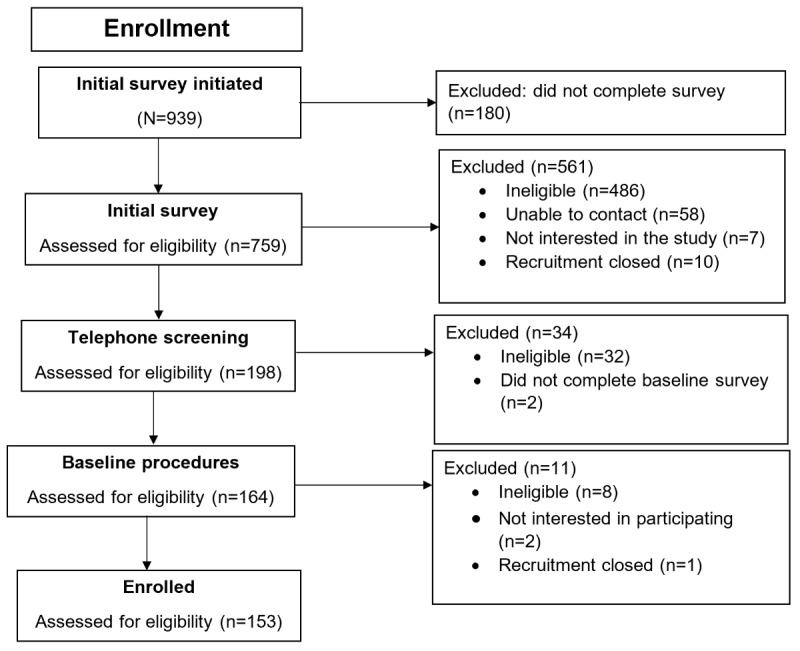
Results: Of the 153 participants, 107 (69.9%) were female, and 65 (42.5%) identified as being from a minoritized racial or ethnic group. Participants' mean age was 41.09 (SD 13.78) years, and their mean BMI was 31.8 (SD 5.0) kg/m2. Participants had an average weight change of -4.25% (SD 3.93%) from baseline to 3 months and -5.05% (SD 5.59%) from baseline to 6 months. At 6 months, the percentages of participants who experienced ≥3%, ≥5%, and ≥10% weight loss were 63.4% (97/153), 51% (78/153), and 14.4% (22/153), respectively. The mean percentage of weeks in which participants engaged in ≥1 aspects of the program was 87.53% (SD 23.40%) at 3 months and 77.67% (SD 28.69%) at 6 months. Retention was high (132/153, 86.3%), and more than two-thirds (94/140, 67.1%) of the participants reported that the program helped them lose weight. Significant improvements were observed in fruit and vegetable intake, physical activity, sleep quality, hunger, food cravings, quality of life, and well-being (all P values <.01).
Conclusions: This personalized, digital, and scalable behavioral weight management program resulted in clinically significant weight loss in half (78/153, 51%) of the participants as well as improvements in behavioral and psychosocial outcomes. Future research should compare personalized digital weight loss programs with generic programs on weight loss, participation, and acceptability.
Keywords: ZeroPoint foods; diet management; digital behavioral weight management program; digital intervention; exercise; personalized weight loss program; single-arm behavioral trial; weight loss; weight management.
©Sherry Pagoto, Ran Xu, Tiffany Bullard, Gary D Foster, Richard Bannor, Kaylei Arcangel, Joseph DiVito, Matthew Schroeder, Michelle I Cardel. Originally published in the Journal of Medical Internet Research (https://www.jmir.org), 29.08.2023.
Conflict of interest statement
Conflicts of Interest: MIC and GDF are employees and shareholders of WW International, Inc. SP has served as a paid scientific advisor for WW International, Inc, and Fitbit and also received research funds from WW International, Inc. All other authors declare no other conflicts of interest.
Figures
References
-
- Beleigoli AM, Andrade AQ, Cançado AG, Paulo MN, Diniz MD, Ribeiro AL. Web-based digital health interventions for weight loss and lifestyle habit changes in overweight and obese adults: systematic review and meta-analysis. J Med Internet Res. 2019 Jan 08;21(1):e298. doi: 10.2196/jmir.9609. https://www.jmir.org/2019/1/e298/ v21i1e298 - DOI - PMC - PubMed
-
- Heron KE, Smyth JM. Ecological momentary interventions: incorporating mobile technology into psychosocial and health behaviour treatments. Br J Health Psychol. 2010 Feb;15(Pt 1):1–39. doi: 10.1348/135910709X466063. https://europepmc.org/abstract/MED/19646331 bjhp696 - DOI - PMC - PubMed
-
- Nahum-Shani I, Hekler EB, Spruijt-Metz D. Building health behavior models to guide the development of just-in-time adaptive interventions: a pragmatic framework. Health Psychol. 2015 Dec;34S:1209–19. doi: 10.1037/hea0000306. https://europepmc.org/abstract/MED/26651462 2015-56045-002 - DOI - PMC - PubMed
-
- Jesuthasan J, Low M, Ong T. The impact of personalized human support on engagement with behavioral intervention technologies for employee mental health: an exploratory retrospective study. Front Digit Health. 2022 Apr 27;4:846375. doi: 10.3389/fdgth.2022.846375. https://europepmc.org/abstract/MED/35574254 - DOI - PMC - PubMed
-
- Ryan K, Dockray S, Linehan C. A systematic review of tailored eHealth interventions for weight loss. Digit Health. 2019 Feb 05;5:2055207619826685. doi: 10.1177/2055207619826685. https://journals.sagepub.com/doi/10.1177/2055207619826685?url_ver=Z39.88... 10.1177_2055207619826685 - DOI - PMC - PubMed
Publication types
MeSH terms
Grants and funding
LinkOut - more resources
Full Text Sources
