


Old foes following news ways?-Pandemic-related changes in the epidemiology of viral respiratory tract infections
- PMID: 37644253
- PMCID: PMC10811157
- DOI: 10.1007/s15010-023-02085-w
Old foes following news ways?-Pandemic-related changes in the epidemiology of viral respiratory tract infections
Abstract
Introduction: Following lockdown periods and restricting public health measures in response to the COVID-19 pandemic, respiratory tract infections (RTIs) rose significantly worldwide. This led to an increased burden on children's hospitals compromising medical care of acutely and chronically ill children. We characterized changes in the epidemiological pattern of circulating respiratory viral infections.
Methods: We assessed the number of patients with RTIs and the annual distribution of virus detections between 2019 and 2022 based on 4809 clinical samples (4131 patients) from a German pediatric tertiary care-center. We investigated the impact of lockdown periods on spectra of circulating respiratory viruses, pattern of coinfections, age, and seasonality of infections.
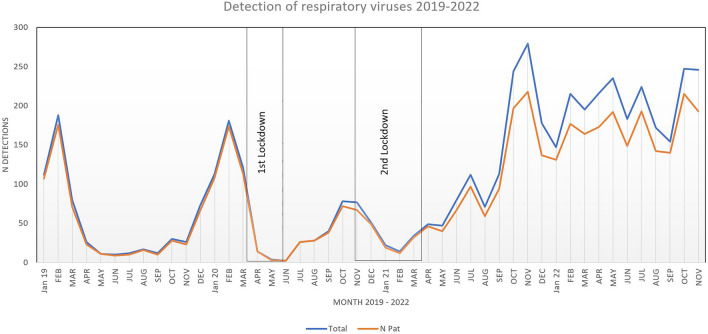
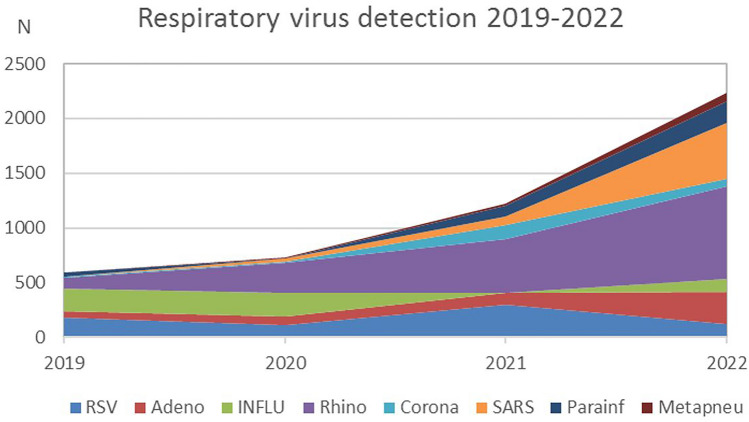
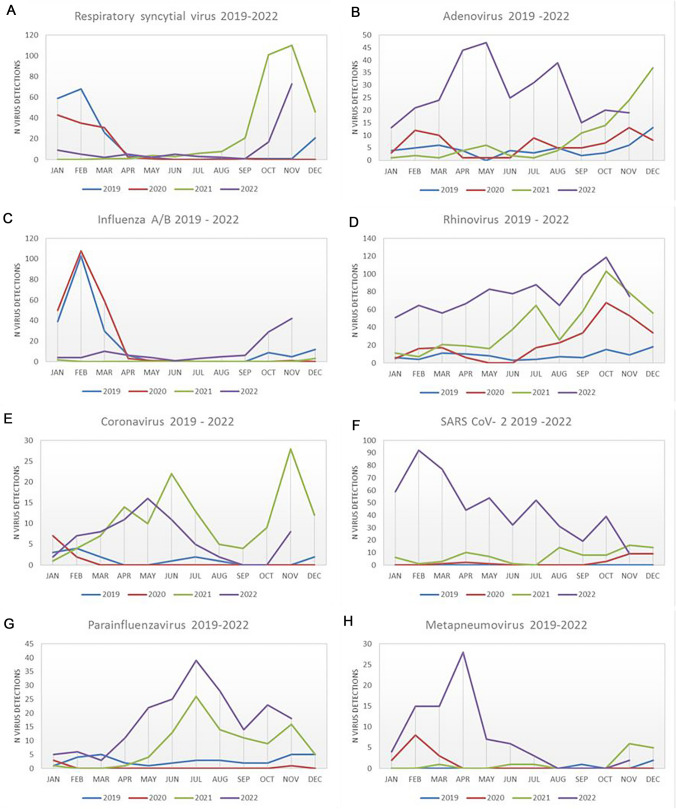
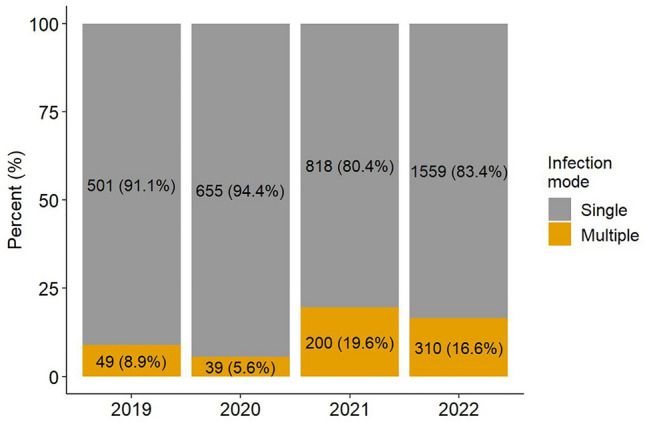
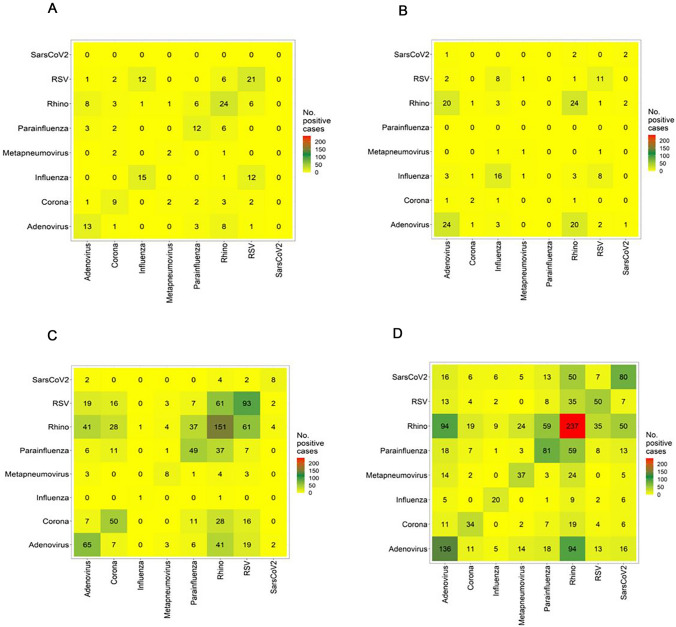
Results: A fourfold increase in the number of respiratory virus detections was observed in 2022 vs 2019 with numbers doubling in 2022 (vs 2021). In 2022, seasonal patterns of circulating virus, particularly Adeno and seasonal Coronavirus were far less pronounced compared to previous years, in fact almost disappeared for Rhinoviruses.". SARS-CoV-2, Parainfluenza- and human Metapneumovirus detections increased significantly in 2022 (2019 vs 2022, p < 0.01). Coinfections with multiple viruses occurred more frequently since 2021 compared to pre-pandemic years, especially in younger children (2019 vs 2022, p < 0.01).
Conclusion: Compared to pre-pandemic years, we observed a dramatic increase in pediatric RTIs with an incrementing spectrum of viruses and a predominance in Rhino/Enterovirus infections - leading to a high rate of hospital admissions, particularly in conjunction with other viruses. This caused an acute shortage in medical care and may also be followed by an increase of virus-triggered secondary chronic respiratory diseases like asthma-rendering a burden on the health system.
Keywords: Epidemiology; Pandemic; Respiratory tract infection; Respiratory viruses; Rhinovirus.
© 2023. The Author(s).
Conflict of interest statement
Nicole Maison, Jimmy Omony, Ulrich von Both, Johannes Huebner, Sophia Rinderknecht, Laura Kohlberg, Melanie Meyer-Buehn have no conflict of interest. Erika von Mutius received consulting fees and funding for the research project “Impact of COVID 19 pandemic on patients with asthma and wheeze” from OM Pharma S.A.
Figures
References
-
- De Conto F, Conversano F, Medici MC, Ferraglia F, Pinardi F, Arcangeletti MC, et al. Epidemiology of human respiratory viruses in children with acute respiratory tract infection in a 3-year hospital-based survey in Northern Italy. Diagn Microbiol Infect Dis. 2019;94:260–7. doi: 10.1016/j.diagmicrobio.2019.01.008. - DOI - PMC - PubMed
-
- Chadha M, Hirve S, Bancej C, Barr I, Baumeister E, Caetano B, et al. Human respiratory syncytial virus and influenza seasonality patterns-Early findings from the WHO global respiratory syncytial virus surveillance. Influenza Other Respir Viruses. 2020;14:638–46. doi: 10.1111/irv.12726. - DOI - PMC - PubMed
MeSH terms
LinkOut - more resources
Full Text Sources
Miscellaneous
