


System interventions to support rural access to maternity care: an analysis of the rural surgical obstetrical networks program
- PMID: 37644407
- PMCID: PMC10466771
- DOI: 10.1186/s12884-023-05898-7
System interventions to support rural access to maternity care: an analysis of the rural surgical obstetrical networks program
Abstract
Background: The Rural Surgical Obstetrical Networks (RSON) project was developed in response to the persistent attrition of rural maternity services across Canada over the past two decades. While other research has demonstrated the adverse health and psychosocial consequences of losing local maternity services, this paper explores the impact of a program designed to increase the sustainability of rural services themselves, through the funding of four "pillars": increased scope and volume, clinical coaching, continuous quality improvement (CQI) and remote presence technology.
Methods: We conducted in-depth, qualitative research interviews with rural health care providers and administrators in eight rural communities across British Columbia to understand the impact of the RSON program on maternity services. Researchers used thematic analysis to generate common themes across the dataset and interpret findings.
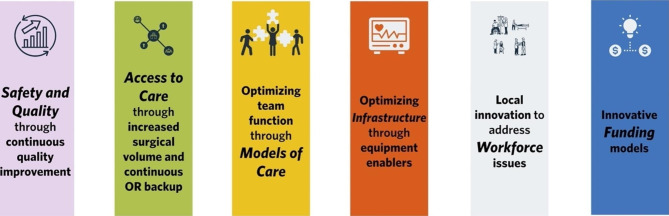
Findings: Participants articulated six themes regarding the sustainability of maternity care as actualized through the RSON project: safety and quality through quality improvement opportunities, improved access to care through increased surgical volume and OR backup, optimized team function through innovative models of care, improved infrastructure, local innovation surrounding workforce shortages, and locally tailored funding models.
Conclusion: Rural maternity sites benefited from the funding offered through the RSON pillars, as demonstrated by larger volumes of local deliveries, nearly unanimous positive accounts of the interventions by health care providers, and evidence of staffing stability during the study time frame. As such, the interventions provided through the Rural Surgical Obstetrical Networks project as well as study findings on the common themes of sustainable maternity care should be considered when planning core rural health services funding schemes.
Keywords: Health service planning; Health services accessibility; Qualitative research; Rural health; Rural maternity care.
© 2023. BioMed Central Ltd., part of Springer Nature.
Conflict of interest statement
Kim Williams received salary funding from the Rural Coordination Centre of BC (RCCbc) in her capacity as administrative co-lead for the Rural Surgical and Obstetrical Networks (RSON) initiative. She also received funding to travel to the rural communities where the patients whom we report on in this manuscript had surgical care. Tom Skinner is employed by the Rural Coordination Centre of BC (RCCbc) as the Project Manager of the RSON Initiative. The findings reported in this survey are part of the evaluation of RSON. As an employee, his travel to the rural communities were covered because he was supporting hospital teams in implementing the RSON initiative. Dr. Sean Ebert received sessional funding from the Rural Coordination Centre of BC (RCCbc) in his role as medical lead for the Quality Improvement Pillar for the Rural Surgical and Obstetrical Networks (RSON) initiative. In his capacity as CQI medical lead for the Quality Improvement Pillar he received funding to travel to the rural communities where the patients whom we report on in this manuscript had surgical care. All other authors are part of the RSON evaluation team at the University of British Columbia, Canada and have no conflicts of interest to declare.
Figures
References
-
- Miewald C, Klein MC, Ulrich C, Butcher D, Rosinski J, Procyk A. “You don’t know what you’ve got till it’s gone” *: the role of maternity care in community sustainability. Can J Rural Med. 2011;16.
-
- Kozhimannil KB, Henning-Smith C, Hung P, Casey MM, Prasad S. Ensuring Access to High-Quality Maternity Care in Rural America. Women’s Heal Issues. 2016;26:247–50. Available from: 10.1016/j.whi.2016.02.001. - PubMed
MeSH terms
Grants and funding
LinkOut - more resources
Full Text Sources
Research Materials
Miscellaneous
