


Prognostic factors for the outcomes of COVID-19 patients infected with SARS-CoV-2 Omicron and Delta variants
- PMID: 37644458
- PMCID: PMC10464379
- DOI: 10.1186/s12920-023-01637-1
Prognostic factors for the outcomes of COVID-19 patients infected with SARS-CoV-2 Omicron and Delta variants
Abstract
Background: The SARS-CoV-2 Omicron variant has replaced the previously dominant Delta variant because of high transmissibility. However, studies on the impact of the Omicron variant on the severity of COVID-19 are still limited in developing countries. Our study aimed to determine the prognostic factors for the outcomes of patients infected with SARS-CoV-2 Omicron and Delta variants, including age, sex, comorbidities, and smoking.
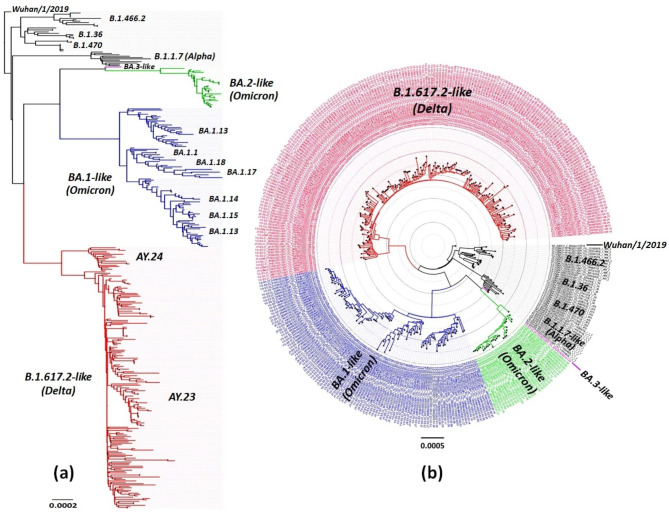
Methods: In this retrospective cross-sectional study, we involved 352 patients with COVID-19 from Yogyakarta and Central Java provinces, Indonesia, from May 2021 to February 2022, consisting of 164 males and 188 females. We included all patients with the PCR's Ct value of less than 30 for further whole-genome sequencing.
Results: Ct value and mean age of COVID-19 patients were not significantly different between both groups (p = 0.146 and 0.273, respectively). Patients infected with Omicron (n = 139) and Delta (n = 213) variants showed similar hospitalization (p = 0.396) and mortality rates (p = 0.565). Multivariate analysis of both groups showed that older age (≥ 65 years) had a higher risk for hospitalization (OR = 3.86 [95% CI = 1.29-11.5]; p = 0.015) and fatalities (OR = 3.91 [95% CI = 1.35-11.42]; p = 0.012). In both groups, patients with cardiovascular disease had a higher risk for hospitalization (OR = 5.36 [95% CI = 1.08-26.52]; p = 0.039), whereas patients with diabetes revealed a higher risk for fatalities (OR = 9.47 [95% CI = 3.23-27.01]; p = < 0.001).
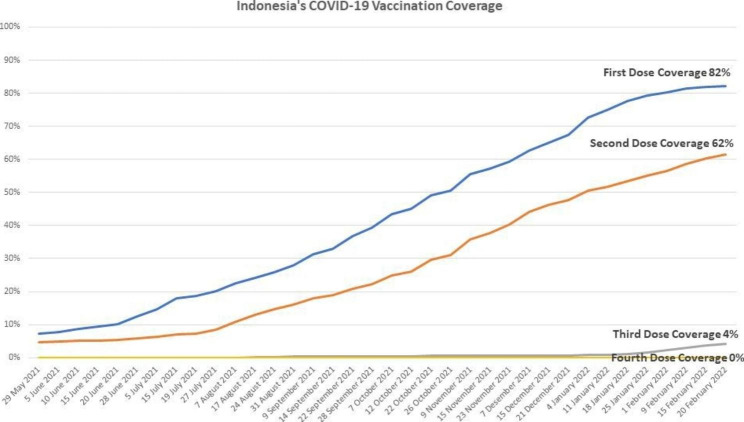
Conclusions: Our study shows that patients infected with Omicron and Delta variants reveal similar clinical outcomes, including hospitalization and mortality. Our findings further confirm that older age, cardiovascular disease, and diabetes are substantial prognostic factors for the outcomes of COVID-19 patients. Our findings imply that COVID-19 patients with older age, cardiovascular disease, or diabetes should be treated comprehensively and cautiously to prevent further morbidity and mortality. Furthermore, incomplete data on vaccination status hampered us from analyzing further its impact on hospitalization and mortality in our patients.
Keywords: COVID-19 outcomes; Delta variant; Hospitalization; Mortality; Omicron variant; SARS-CoV-2; Whole-genome sequencing.
© 2023. BioMed Central Ltd., part of Springer Nature.
Conflict of interest statement
The authors declare no competing interests.
Figures
References
-
- WHO. (World Health Organization). : Coronavirus Disease (COVID-2019) Situation Reports. https://www.who.int/wmergencies/diseases/novel-coronavirus-2019/situatio.... Retrieved on April 4, 2020.
-
- Ritchie H, Mathieu E, Rodés-Guirao L, Appel C, Giattino C, Ortiz-Ospina E et al. Coronavirus Pandemic (COVID-19) [Online Resource]. Our World in Data. Available from: https://ourworldindata.org/coronavirus. 2020.
-
- World Health Organization, Technical Advisory Group on SARS-CoV-2 Virus Evolution (TAG-VE). Classification of Omicron (B.1.1.529): SARS-CoV-2 Variant of Concern. Statement. 2021.
Publication types
MeSH terms
Supplementary concepts
LinkOut - more resources
Full Text Sources
Medical
Miscellaneous
