


Delta-9-tetrahydrocannabinol modulates pain sensitivity among persons receiving opioid agonist therapy for opioid use disorder: A within-subject, randomized, placebo-controlled laboratory study
- PMID: 37644897
- PMCID: PMC10468603
- DOI: 10.1111/adb.13317
Delta-9-tetrahydrocannabinol modulates pain sensitivity among persons receiving opioid agonist therapy for opioid use disorder: A within-subject, randomized, placebo-controlled laboratory study
Abstract
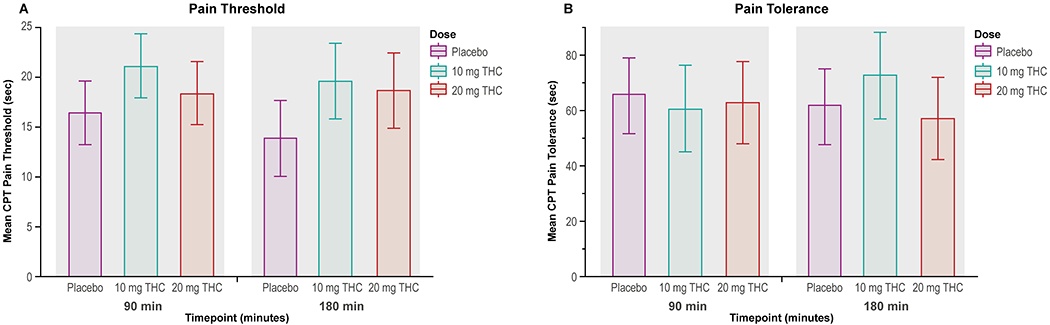
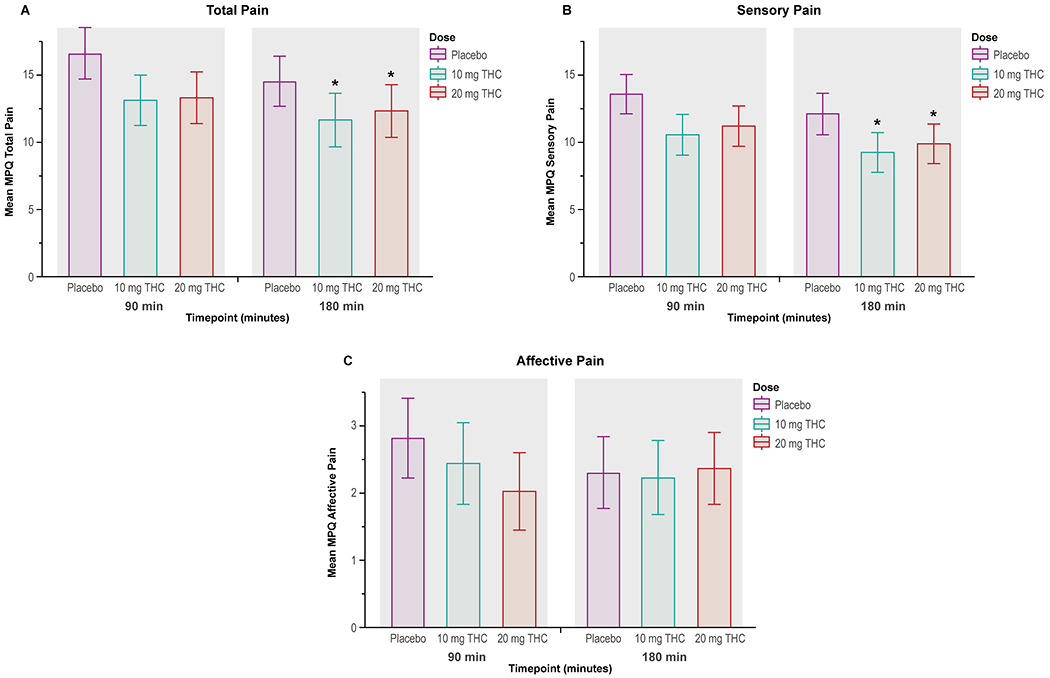
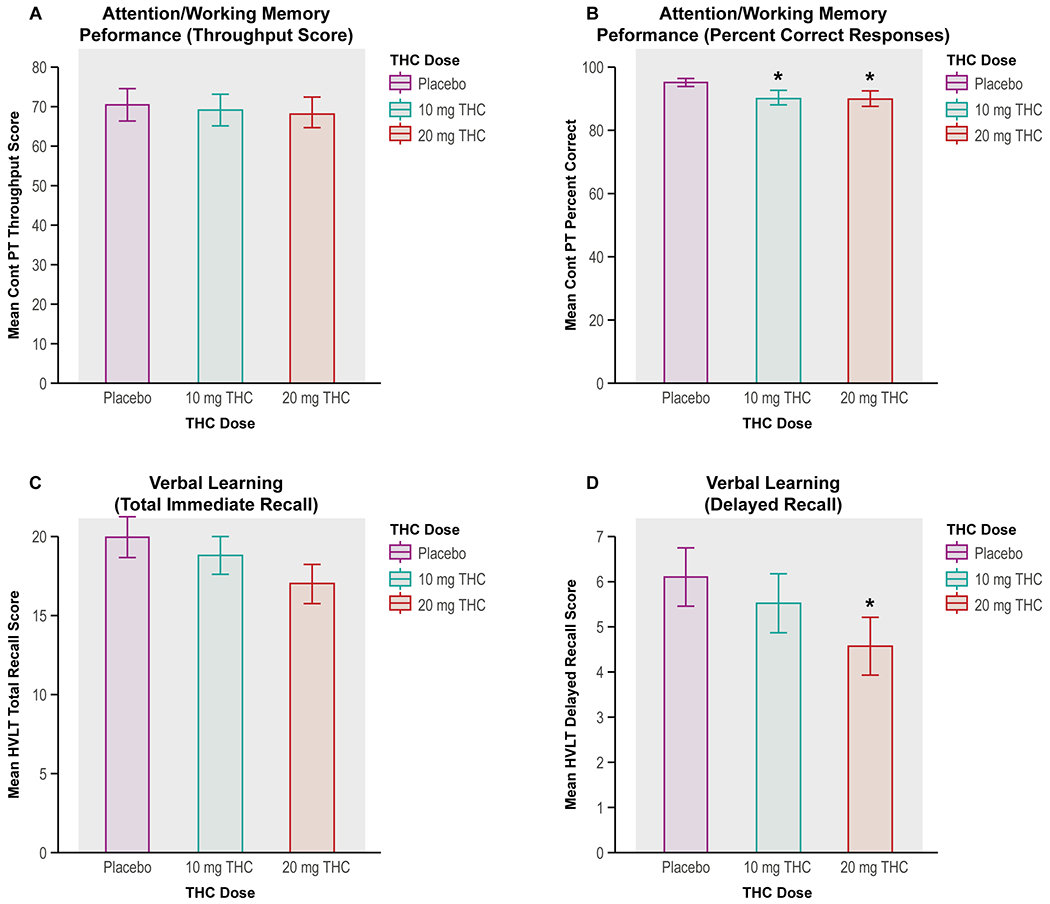
The opioid and cannabinoid receptor systems are inextricably linked-overlapping at the anatomical, functional and behavioural levels. Preclinical studies have reported that cannabinoid and opioid agonists produce synergistic antinociceptive effects. Still, there are no experimental data on the effects of cannabinoid agonists among humans who receive opioid agonist therapies for opioid use disorder (OUD). We conducted an experimental study to investigate the acute effects of the delta-9-tetrahydrocannabinol (THC) among persons receiving methadone therapy for OUD. Using a within-subject, crossover, human laboratory design, 25 persons on methadone therapy for OUD (24% women) were randomly assigned to receive single oral doses of THC (10 or 20 mg, administered as dronabinol) or placebo, during three separate 5-h test sessions. Measures of experimental and self-reported pain sensitivity, abuse potential, cognitive performance and physiological effects were collected. Mixed-effects models examined the main effects of THC dose and interactions between THC (10 and 20 mg) and methadone doses (low-dose methadone defined as <90 mg/day; high dose defined as >90 mg/day). Results demonstrated that, for self-reported rather than experimental pain sensitivity measures, 10 mg THC provided greater relief than 20 mg THC, with no substantial evidence of abuse potential, and inconsistent dose-dependent cognitive adverse effects. There was no indication of any interaction between THC and methadone doses. Collectively, these results provide valuable insights for future studies aiming to evaluate the risk-benefit profile of cannabinoids to relieve pain among individuals receiving opioid agonist therapy for OUD, a timely endeavour amidst the opioid crisis.
Keywords: cannabis; nociception; opioid addiction; opioid-sparing effects.
© 2023 Society for the Study of Addiction.
Conflict of interest statement
Conflict of Interest
The authors report no conflict of interest.
Figures

References
-
- Enthoven LF. Trends and Relationships in Opioid Prescribing Rates and Overdose Rates in the United States 2013-2019. medRxiv. 2022:2022.2012. 2004.22283072.
-
- Hagemeier NE. Introduction to the opioid epidemic: the economic burden on the healthcare system and impact on quality of life. Am J Manag Care. 2018;24(10 Suppl):S200–S206. - PubMed
-
- Colvin LA, Bull F, Hales TG. Perioperative opioid analgesia—when is enough too much? A review of opioid-induced tolerance and hyperalgesia. Lancet. 2019;393(10180):1558–1568. - PubMed
-
- Mercadante S, Arcuri E, Santoni A. Opioid-induced tolerance and hyperalgesia. CNS drugs. 2019;33(10):943–955. - PubMed
Publication types
MeSH terms
Substances
Grants and funding
LinkOut - more resources
Full Text Sources
Medical
