


This is a preprint.
Phosphorylation of a Cleaved Tau Proteoform at a Single Residue Inhibits Binding to the E3 Ubiquitin Ligase, CHIP
- PMID: 37645969
- PMCID: PMC10462110
- DOI: 10.1101/2023.08.16.553575
Phosphorylation of a Cleaved Tau Proteoform at a Single Residue Inhibits Binding to the E3 Ubiquitin Ligase, CHIP
Update in
-
Phosphorylation of tau at a single residue inhibits binding to the E3 ubiquitin ligase, CHIP.Nat Commun. 2024 Sep 12;15(1):7972. doi: 10.1038/s41467-024-52075-1. Nat Commun. 2024. PMID: 39266525 Free PMC article.
Abstract
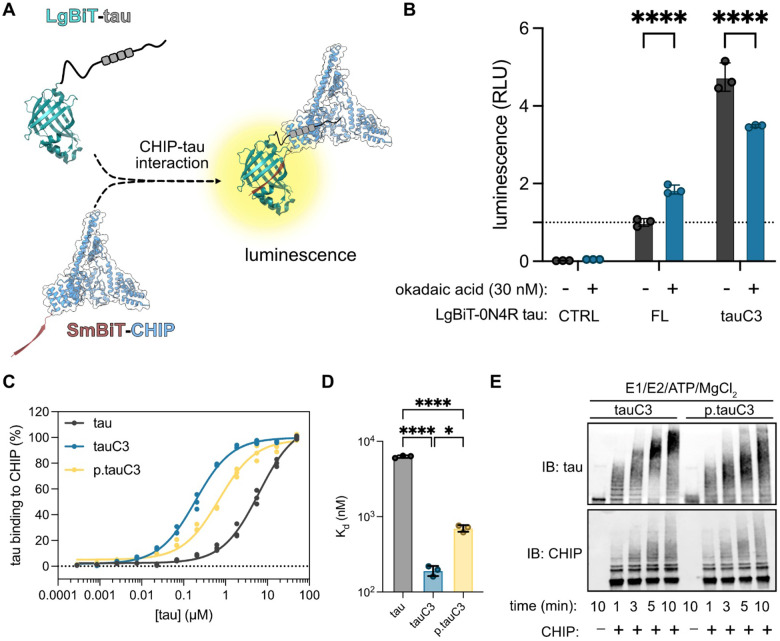
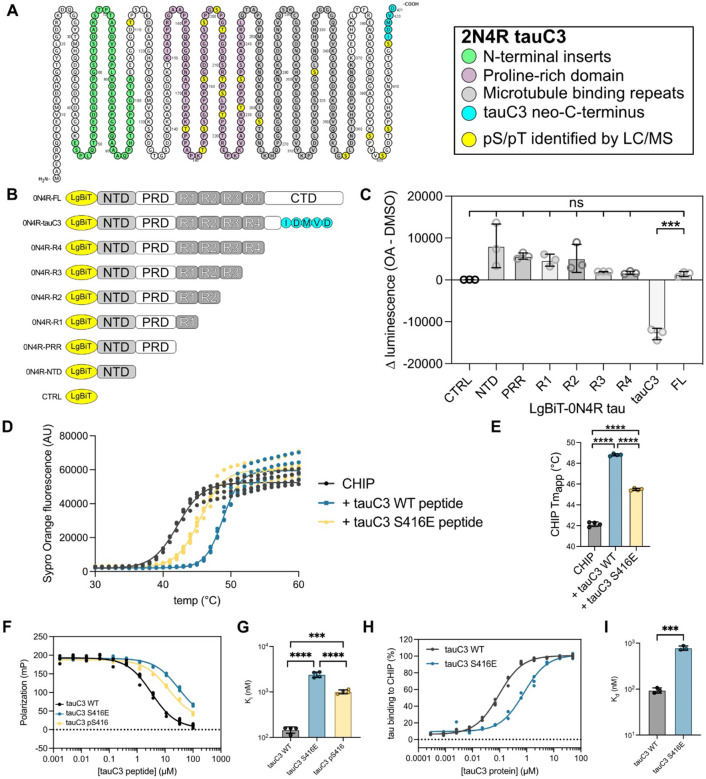
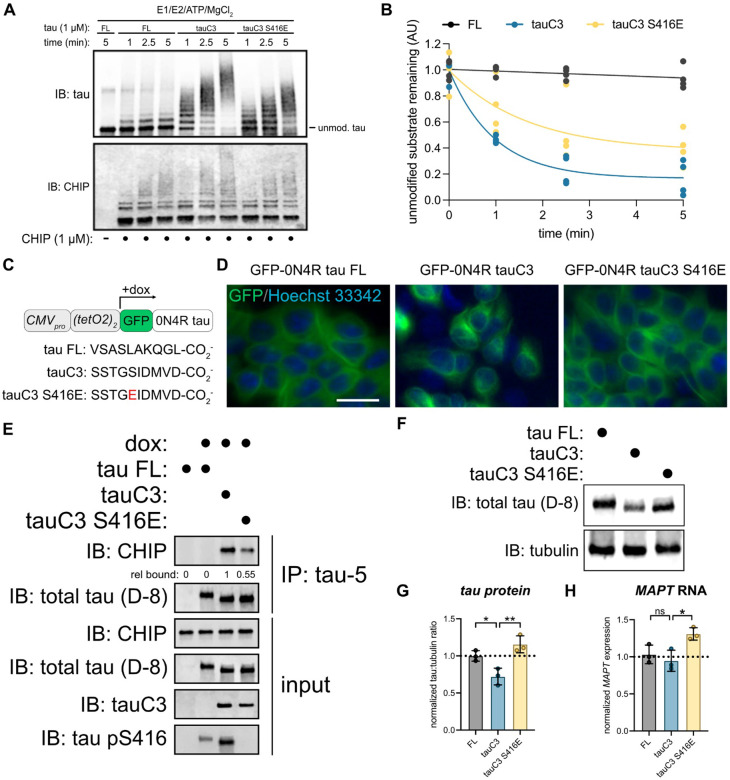
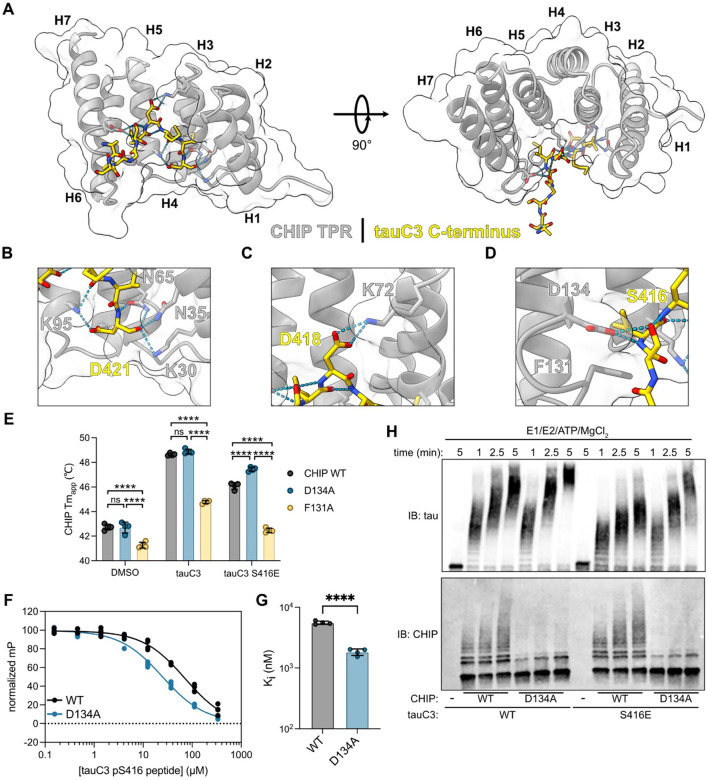
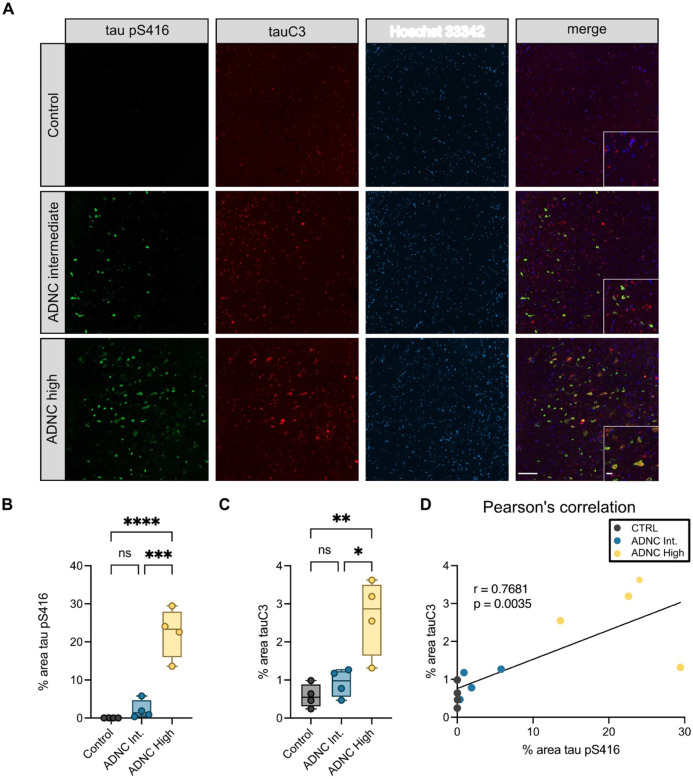
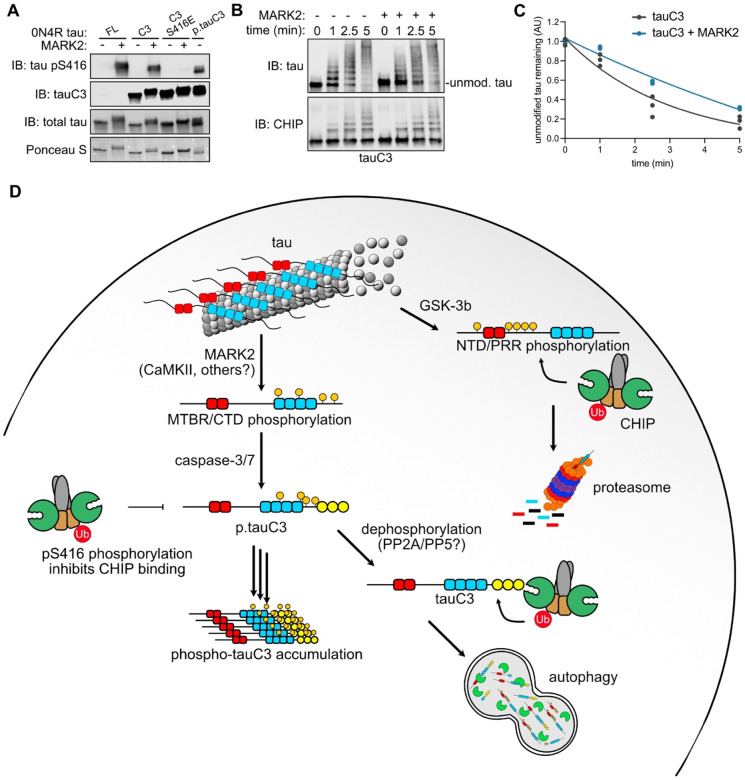
Microtubule-associated protein tau (MAPT/tau) accumulates in a family of neurodegenerative diseases, including Alzheimer's disease (AD). In disease, tau is aberrantly modified by post-translational modifications (PTMs), including hyper-phosphorylation. However, it is often unclear which of these PTMs contribute to tau's accumulation or what mechanisms might be involved. To explore these questions, we focused on a cleaved proteoform of tau (tauC3), which selectively accumulates in AD and was recently shown to be degraded by its direct binding to the E3 ubiquitin ligase, CHIP. Here, we find that phosphorylation of tauC3 at a single residue, pS416, is sufficient to block its interaction with CHIP. A co-crystal structure of CHIP bound to the C-terminus of tauC3 revealed the mechanism of this clash and allowed design of a mutation (CHIPD134A) that partially restores binding and turnover of pS416 tauC3. We find that pS416 is produced by the known AD-associated kinase, MARK2/Par-1b, providing a potential link to disease. In further support of this idea, an antibody against pS416 co-localizes with tauC3 in degenerative neurons within the hippocampus of AD patients. Together, these studies suggest a discrete molecular mechanism for how phosphorylation at a specific site contributes to accumulation of an important tau proteoform.
Conflict of interest statement
Competing Interests The authors have no conflicts to report.
Figures
References
-
- Petrucelli L. et al. CHIP and Hsp70 regulate tau ubiquitination, degradation and aggregation. Hum Mol Genet 13, 703–714 (2004). - PubMed
Publication types
Grants and funding
LinkOut - more resources
Full Text Sources
Miscellaneous
