


Early Alterations of PACAP and VIP Expression in the Female Rat Brain Following Spinal Cord Injury
- PMID: 37646964
- PMCID: PMC10694121
- DOI: 10.1007/s12031-023-02151-w
Early Alterations of PACAP and VIP Expression in the Female Rat Brain Following Spinal Cord Injury
Abstract
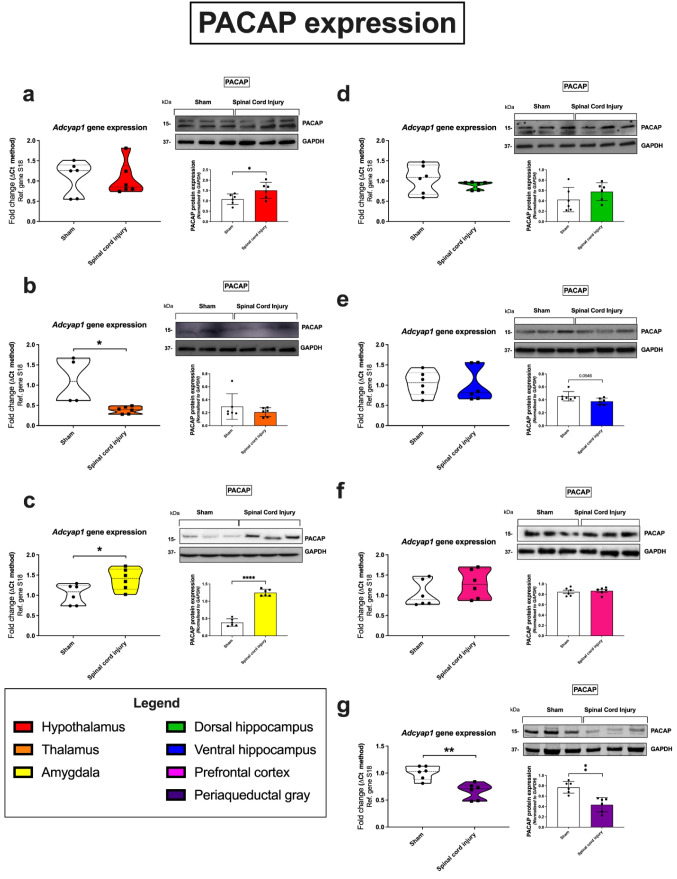
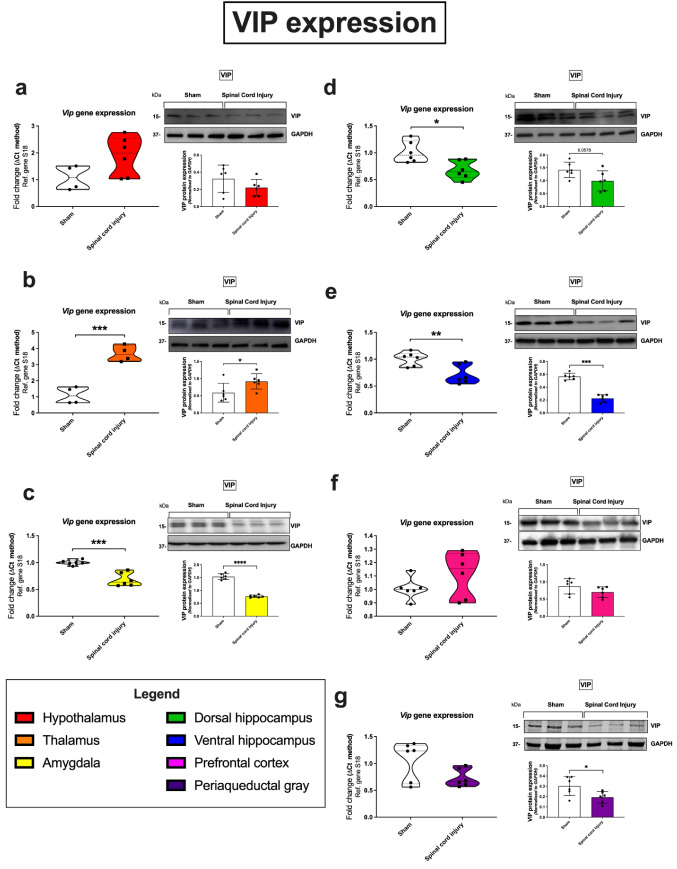
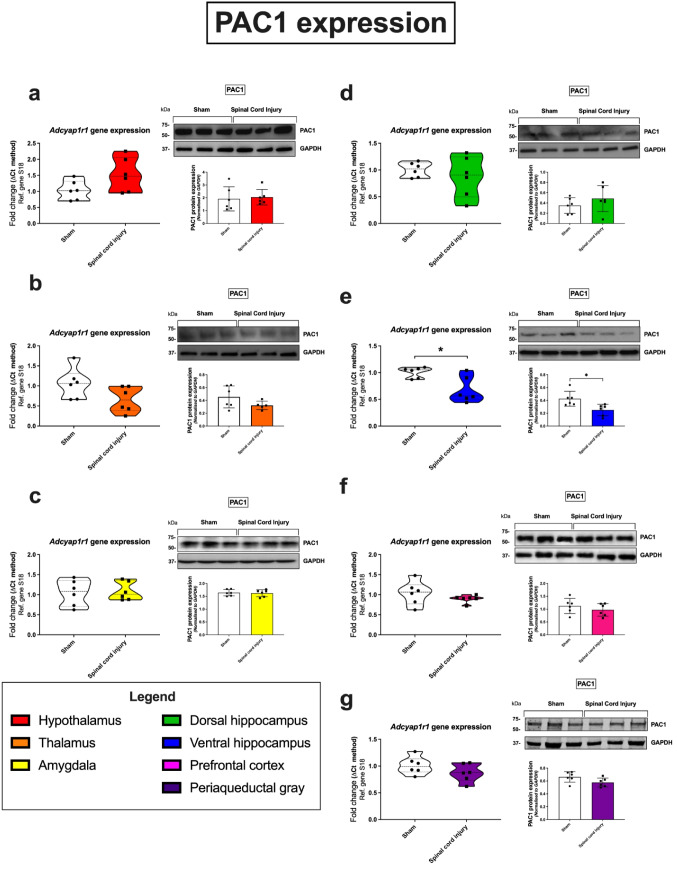
Previous evidence shows that rapid changes occur in the brain following spinal cord injury (SCI). Here, we interrogated the expression of the neuropeptides pituitary adenylyl cyclase-activating peptide (PACAP), vasoactive intestinal peptides (VIP), and their binding receptors in the rat brain 24 h following SCI. Female Sprague-Dawley rats underwent thoracic laminectomy; half of the rats received a mild contusion injury at the level of the T10 vertebrate (SCI group); the other half underwent sham surgery (sham group). Twenty-four hours post-surgery, the hypothalamus, thalamus, amygdala, hippocampus (dorsal and ventral), prefrontal cortex, and periaqueductal gray were collected. PACAP, VIP, PAC1, VPAC1, and VPAC2 mRNA and protein levels were measured by real-time quantitative polymerase chain reaction and Western blot. In SCI rats, PACAP expression was increased in the hypothalamus (104-141% vs sham) and amygdala (138-350%), but downregulated in the thalamus (35-95%) and periaqueductal gray (58-68%). VIP expression was increased only in the thalamus (175-385%), with a reduction in the amygdala (51-68%), hippocampus (40-75%), and periaqueductal gray (74-76%). The expression of the PAC1 receptor was the least disturbed by SCI, with decrease expression in the ventral hippocampus (63-68%) only. The expression levels of VPAC1 and VPAC2 receptors were globally reduced, with more prominent reductions of VPAC1 vs VPAC2 in the amygdala (21-70%) and ventral hippocampus (72-75%). In addition, VPAC1 downregulation also extended to the dorsal hippocampus (69-70%). These findings demonstrate that as early as 24 h post-SCI, there are region-specific disruptions of PACAP, VIP, and related receptor transcript and protein levels in supraspinal regions controlling higher cognitive functions.
Keywords: Central nervous system (CNS); Pituitary adenylate cyclase-activating polypeptide (PACAP); Spinal cord injury (SCI); Vasoactive intestinal peptide (VIP).
© 2023. The Author(s).
Conflict of interest statement
The authors declare no competing interests.
Figures


References
-
- Atlasz T, Szabadfi K, Kiss P, Racz B, Gallyas F, Tamas A, Gaal V, Marton Z, Gabriel R, Reglodi D (2010) Pituitary adenylate cyclase activating polypeptide in the retina: focus on the retinoprotective effects. Ann NY Acad Sci 1200:128–139. 10.1111/j.1749-6632.2010.05512.x - PubMed
MeSH terms
Substances
LinkOut - more resources
Full Text Sources
Medical
Molecular Biology Databases
Research Materials
