


Serologic evolution and follow-up to IgG antibodies of infants born to mothers with gestational COVID
- PMID: 37648971
- PMCID: PMC10469412
- DOI: 10.1186/s12884-023-05926-6
Serologic evolution and follow-up to IgG antibodies of infants born to mothers with gestational COVID
Abstract
Background: It is known that SARS-CoV-2 antibodies from pregnant women with SARS-CoV-2 infection during pregnancy cross the placenta but the duration and the protective effect of these antibodies in infants is scarce.
Methods: This prospective study included mothers with SARS-COV-2 infection during pregnancy and their infants from April 2020 to March 2021. IgG antibodies to SARS-CoV-2 spike protein were performed on women and infants at birth and at two and six months during follow-up. Anthropometrical measures and physical and neurological examinations and a clinical history of symptoms and COVID-19 diagnosis were collected. Simple linear regression was performed to compare categorical and continuous variables. To compare the mother's and infant's antibody titers evolution, a mixed linear regression model was used. A predictive model of newborn antibody titers at birth has been established by means of simple stepwise linear regression.
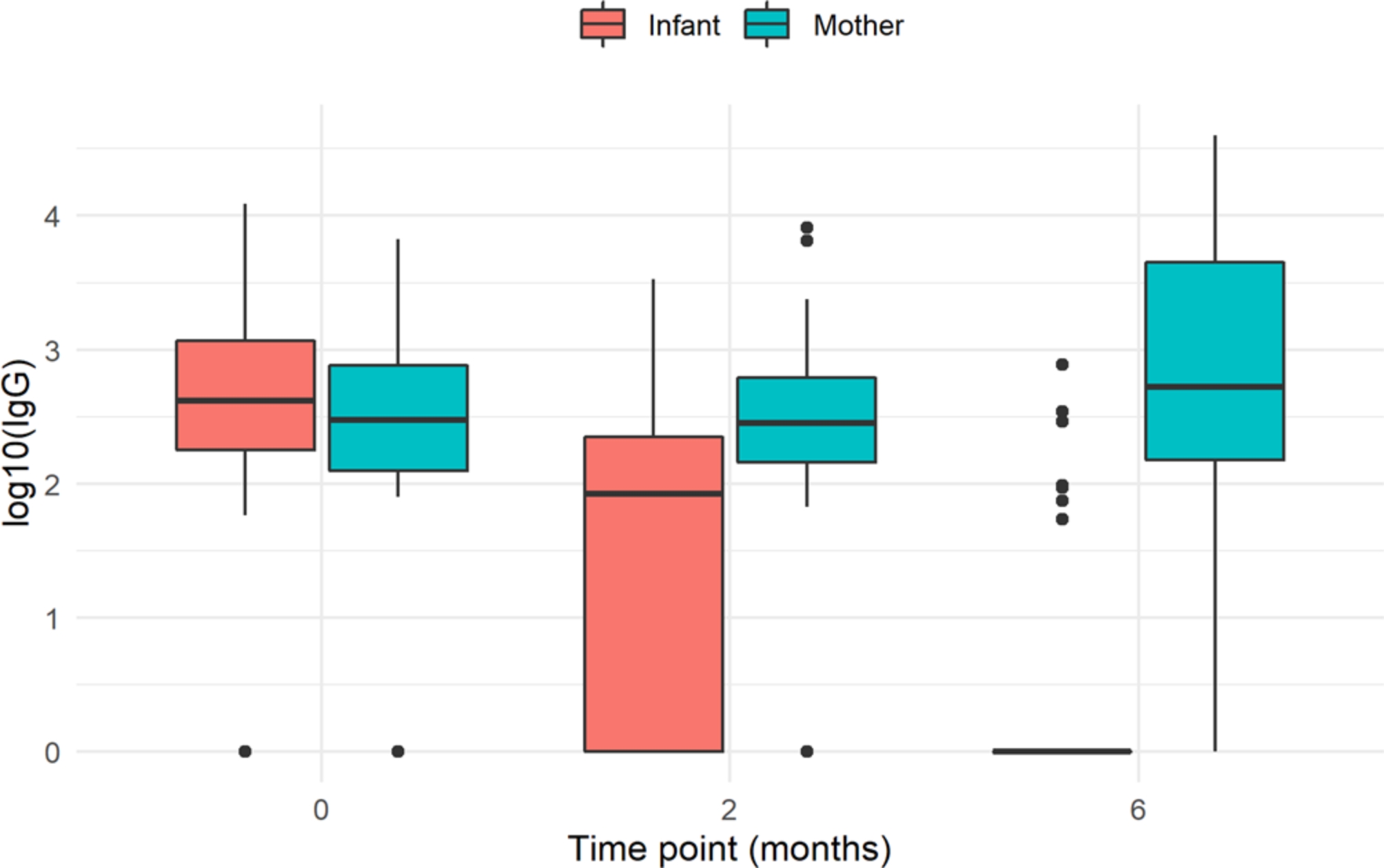
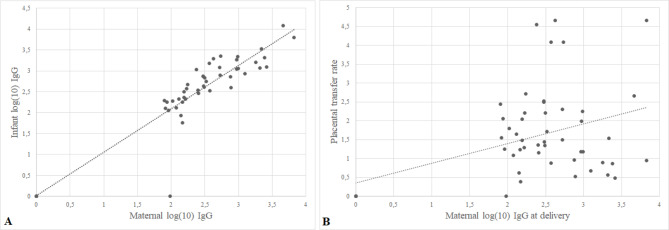
Results: 51 mother-infant couples were included. 45 (90%) of the mothers and 44 (86.3%) of the newborns had a positive serology al birth. These antibodies were progressively decreasing and were positive in 34 (66.7%) and 7 (13.7%) of infants at 2 and 6 months, respectively. IgG titers of newborns at birth were related to mothers' titers, with a positive moderate correlation (Pearson's correlation coefficient: 0.82, p < 0,001). Fetal/maternal antibodies placental transference rate was 1.3 (IQR: 0.7-2.2). The maternal IgG titers at delivery and the type of maternal infection (acute, recent, or past infection) was significantly related with infants' antibody titers at birth. No other epidemiological or clinical factors were related to antibodies titers. Neurodevelopment, psychomotor development, and growth were normal in 94.2% of infants in the third follow-up visit. No infants had a COVID-19 diagnosis during the follow-up period.
Conclusions: Transplacental transfer of maternal antibodies is high in newborns from mothers with recent or past infection at delivery, but these antibodies decrease after the first months of life. Infant's IgG titers were related to maternal IgG titers at delivery. Further studies are needed to learn about the protective role of maternal antibodies in infants.
Keywords: Antibodies titers; Antibodies transplacental transfer; Gestational COVID; Neonatal SARS-COV-2 infection; Serological test.
© 2023. BioMed Central Ltd., part of Springer Nature.
Conflict of interest statement
The authors declare no competing interests.
Figures
References
-
- WHO Coronavirus (COVID-19.) Dashboard | WHO Coronavirus (COVID-19) Dashboard With Vaccination Data. https://covid19.who.int/. Accessed 19 Dec 2021.
-
- Joseph NT, Dude CM, Verkerke HP, Irby LS, Dunlop AL, Patel RM, et al. Maternal antibody response, neutralizing potency, and placental antibody transfer after severe Acute Respiratory Syndrome Coronavirus 2 (SARS-CoV-2) infection. Obstet Gynecol. 2021;138:189–97. doi: 10.1097/AOG.0000000000004440. - DOI - PMC - PubMed
MeSH terms
Substances
Grants and funding
LinkOut - more resources
Full Text Sources
Medical
Miscellaneous
