


Women's knowledge and attitudes to the menopause: a comparison of women over 40 who were in the perimenopause, post menopause and those not in the peri or post menopause
- PMID: 37648988
- PMCID: PMC10469514
- DOI: 10.1186/s12905-023-02424-x
Women's knowledge and attitudes to the menopause: a comparison of women over 40 who were in the perimenopause, post menopause and those not in the peri or post menopause
Abstract
Objectives: To evaluate women's knowledge and attitudes towards the menopause by comparing three groups of women: perimenopause, post menopause and those women not in either the peri or post menopause (other).
Methods: A 35 question online survey was advertised on social media to evaluate women's attitudes and knowledge of the menopause. Three groups of women were compared: perimenopause, post menopause and those women not in either the peri or post menopause (other).
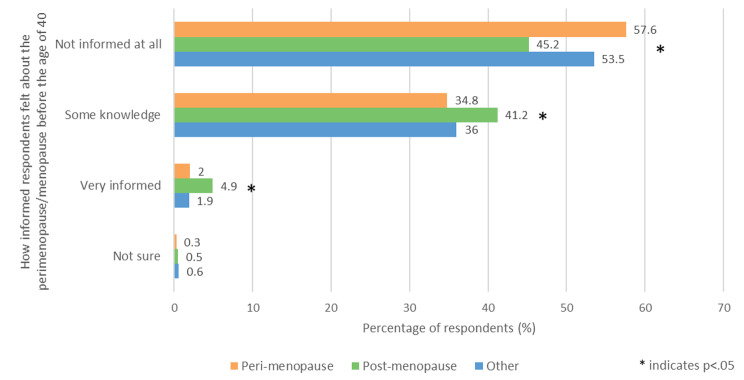
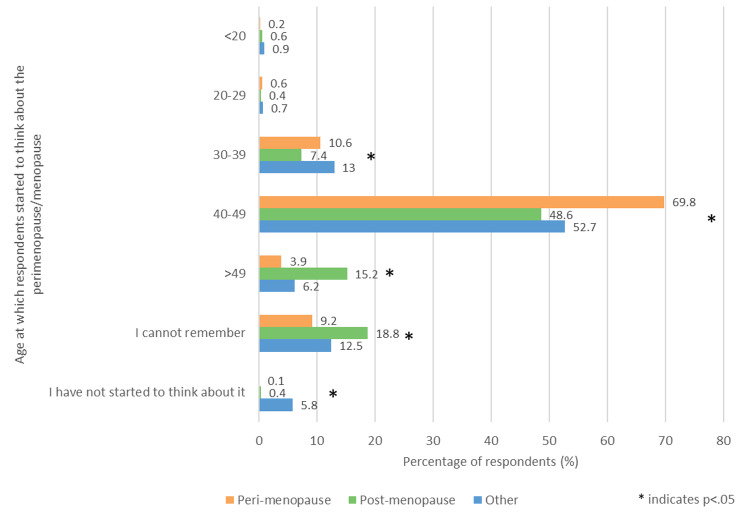
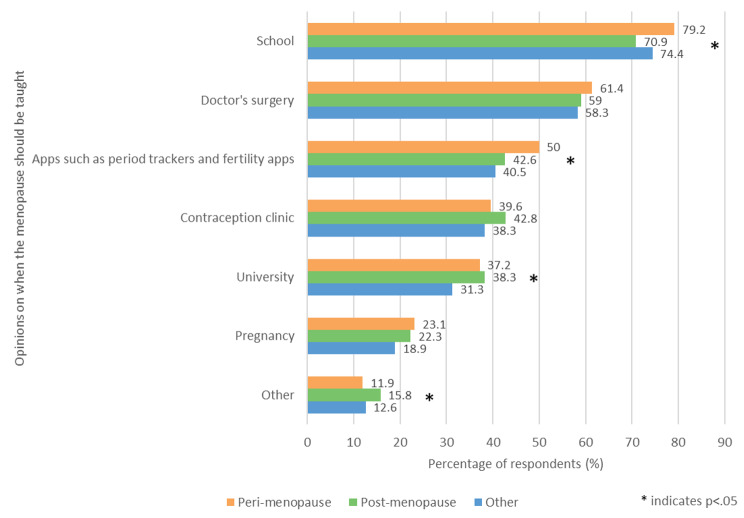
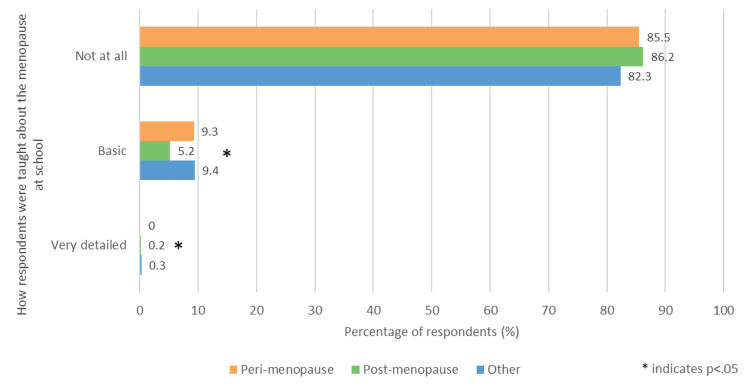
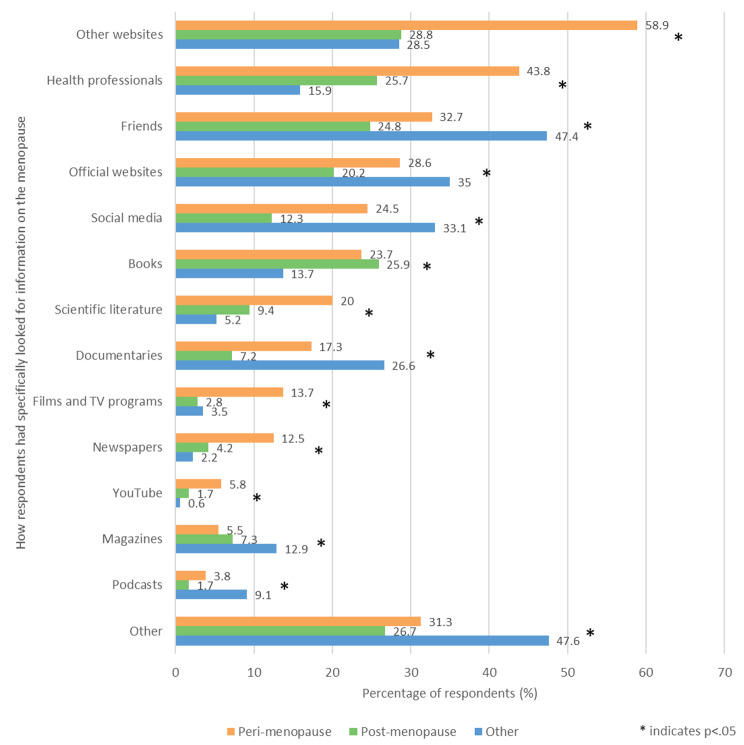
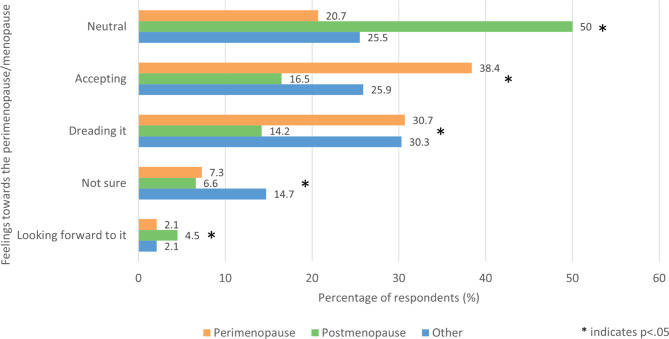
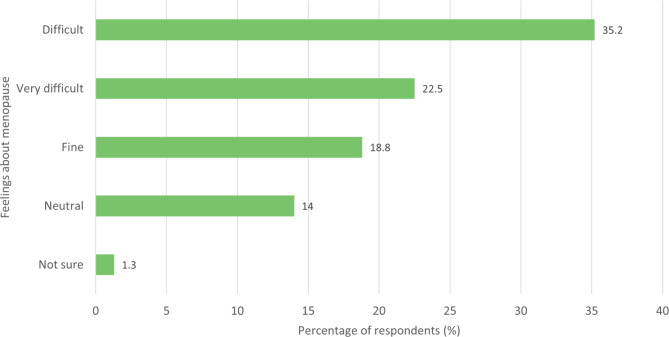
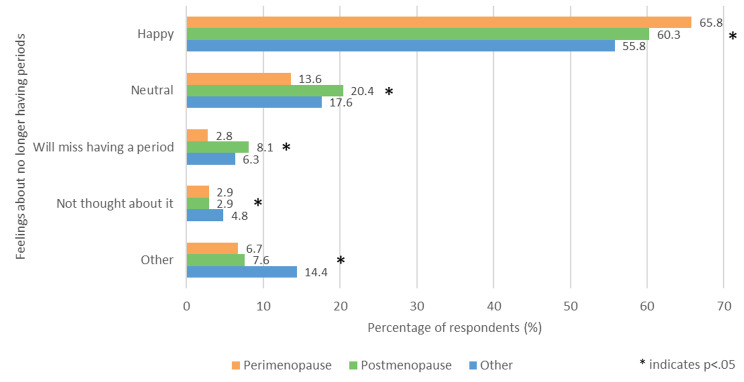
Results: Most women were completely uninformed or only had some knowledge of the menopause before the age of 40. Most women thought that the menopause should be taught at school, but over 80% had received no menopause education at school themselves. The most popular sources of menopause information were independent websites and friends. Perimenopausal women were significantly more likely than postmenopausal women to use online resources for menopause information. The perimenopausal and postmenopausal groups had more positive attitudes towards the menopause than the other group. 57.5% of postmenopausal women found the menopause difficult or very difficult. Most women were happy about no longer menstruating, although some expressed sadness regarding fertility loss.
Conclusions: Most women had limited knowledge and negative attitudes towards the menopause, leaving them unprepared to cope with the physical and psychological changes associated with this stage of life. Improved menopause education is required to improve quality of life during the menopausal transition and a most positive narrative of life postmenopause.
© 2023. BioMed Central Ltd., part of Springer Nature.
Conflict of interest statement
Joyce Harper is author of Your Fertile Years and founder of Reproductive Health at Work. She is regularly paid to give lectures on the menopause. None of the other authors have competing interests.
Figures
References
-
- Dintakurti N, Kalyanasundaram S, Jha P, Talaulikar V. An online survey and interview of GPs in the UK for assessing their satisfaction regarding the medical training curriculum and NICE guidelines for the management of menopause. Post Reproductive Health. 2022;28(3):137–41. doi: 10.1177/20533691221106011. - DOI - PMC - PubMed
-
- Harper JC, Phillips S, Biswakarma R, Yasmin E, Radhakrishnan S, Saridogan E, Davies M, Talaulikar V. Perimenopause – a thematic analysis of education and knowledge and its effect on women’s lived experience. To be published in SAGE Women’s Health [Preprint]; 2022.
Publication types
MeSH terms
LinkOut - more resources
Full Text Sources
