


Telehealth in antenatal care: recent insights and advances
- PMID: 37649028
- PMCID: PMC10470141
- DOI: 10.1186/s12916-023-03042-y
Telehealth in antenatal care: recent insights and advances
Abstract
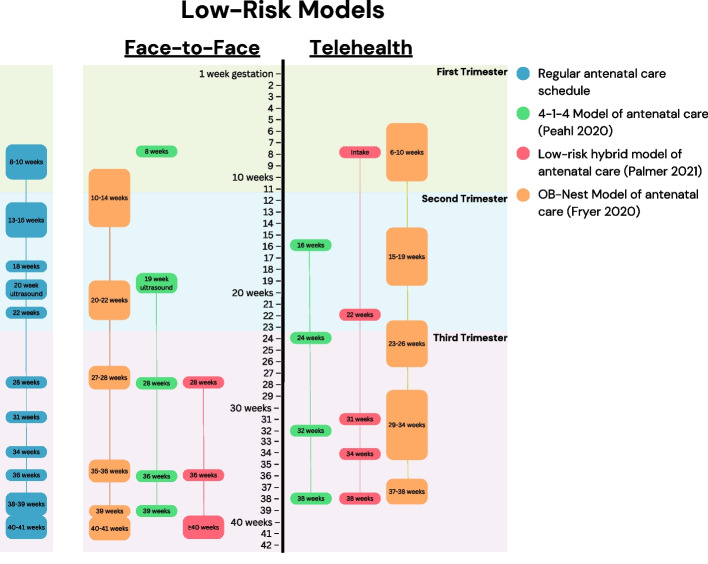
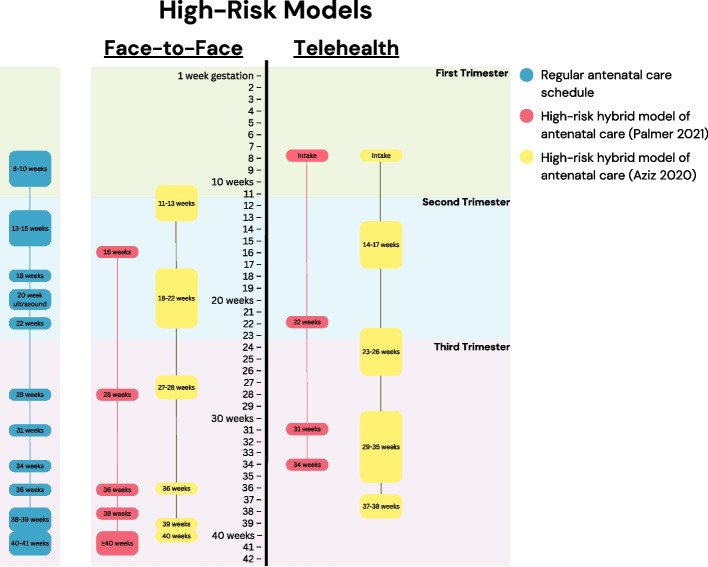
Background: For decades, antenatal care in high-resource settings has involved 12-14 face-to-face visits across pregnancy. The COVID-19 pandemic forced many care providers to rapidly embrace telehealth to reduce face-to-face visits. Here we review recent advances in telehealth used to provide antenatal care.
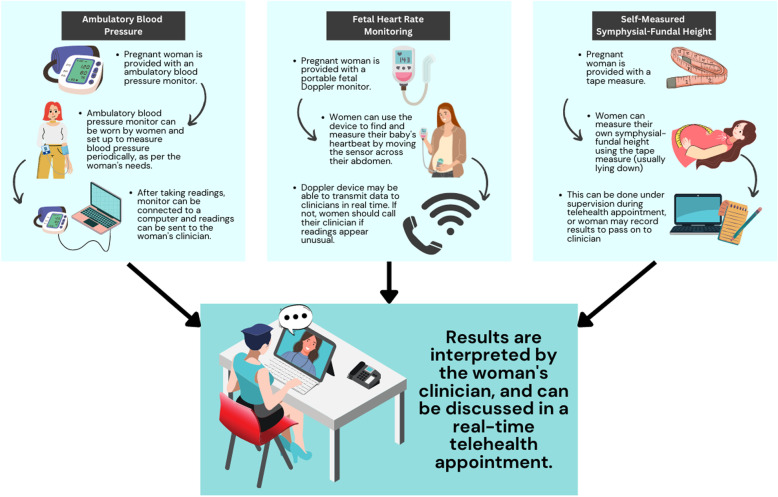
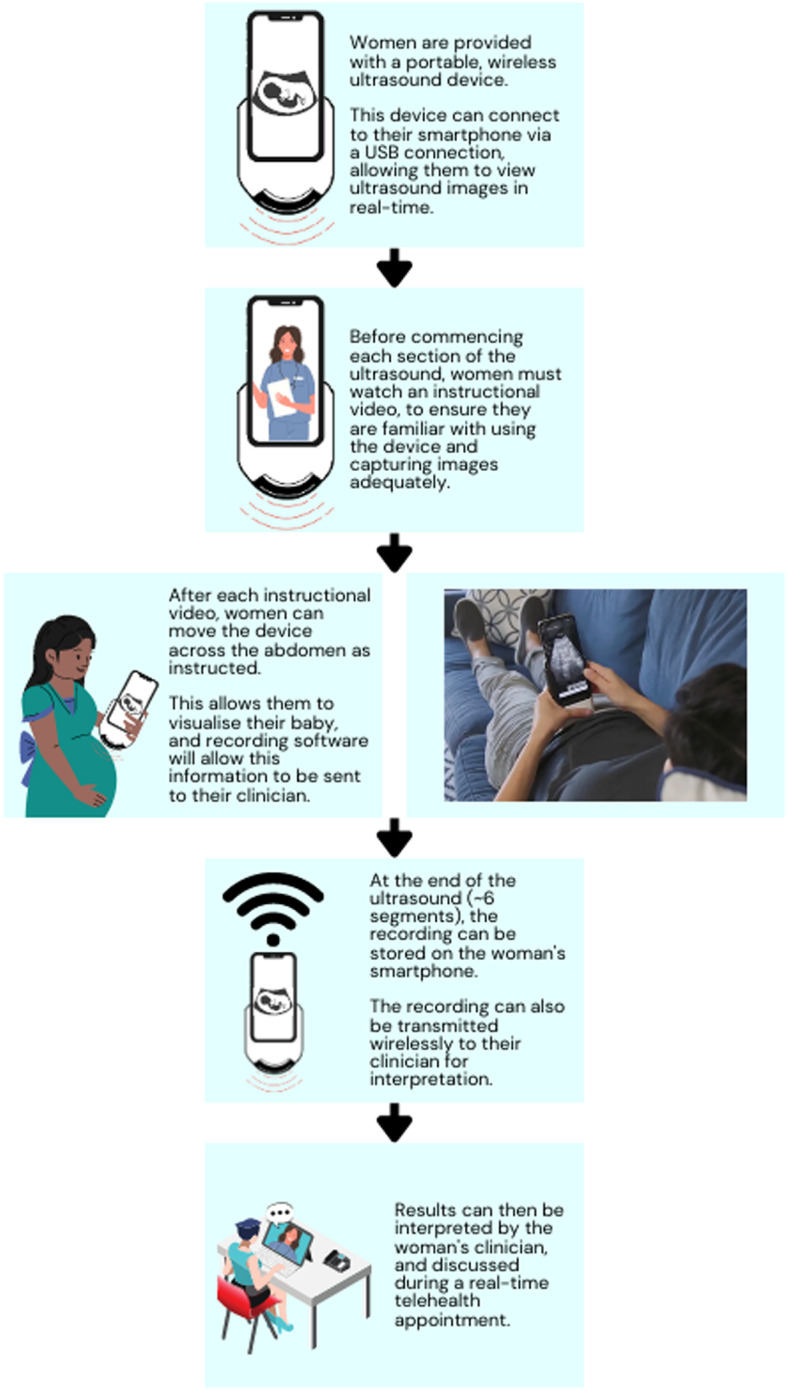
Main body: We conducted a narrative review examining the impact of telehealth on obstetric care. Two broad types of telehealth are used in antenatal care. The first is real-time telehealth, where consultations are done virtually instead of face-to-face. The second is remote monitoring, where in-clinic physical examinations are replaced with at-home alternatives. These can include blood pressure monitoring, fetal heart rate monitoring, and emerging technologies such as tele-ultrasound. Large cohort studies conducted during the pandemic era have shown that telehealth appears not to have increased adverse clinical outcomes for mothers or babies. However, further studies may be required to confidently conclude rare outcomes are unchanged, such as maternal mortality, serious morbidity, or stillbirth. Health economic studies suggest telehealth has the potential to reduce the financial cost of care provision. Telehealth in antenatal care seems to be acceptable to both pregnant women and healthcare providers.
Conclusion: Adoption of telehealth technologies may improve the antenatal care experience for women and reduce healthcare expenditure without adversely impacting health outcomes for the mother or baby. More studies are warranted to confirm telehealth does not alter the risk of rare outcomes such as maternal or neonatal mortality.
Keywords: Ambulatory blood pressure monitoring; Antenatal care; Consumer satisfaction; Cost-effectiveness; Maternal outcomes; Neonatal outcomes; Obstetrics; Pregnancy; Telehealth.
© 2023. BioMed Central Ltd., part of Springer Nature.
Conflict of interest statement
The authors declare that they have no competing interests.
Figures
References
-
- WHO Guidelines Approved by the Guidelines Review Committee . WHO recommendations on antenatal care for a positive pregnancy experience. Geneva: World Health Organization Copyright © World Health Organization 2016; 2016.
-
- Emias Geltore T, Laloto Anore D. The impact of antenatal care in maternal and perinatal health. In: Empowering Midwives and Obstetric Nurses. Edn 1. Edited by Ray A. Rijeka, Croatia: IntechOpen; 2021.
-
- Hoyert DL, Kochanek KD, Murphy SL. Deaths: final data for 1997. Natl Vital Stat Rep. 1999;47(19):1–104. - PubMed
Publication types
MeSH terms
LinkOut - more resources
Full Text Sources
Medical
