


Metabolomics analysis of visceral leishmaniasis based on urine of golden hamsters
- PMID: 37649093
- PMCID: PMC10469881
- DOI: 10.1186/s13071-023-05881-3
Metabolomics analysis of visceral leishmaniasis based on urine of golden hamsters
Abstract
Background: Leishmaniasis is one of the most neglected tropical diseases and is spread mainly in impoverished regions of the world. Although many studies have focused on the host's response to Leishmania invasion, relatively less is known about the complex processes at the metabolic level, especially the metabolic alterations in the infected hosts.
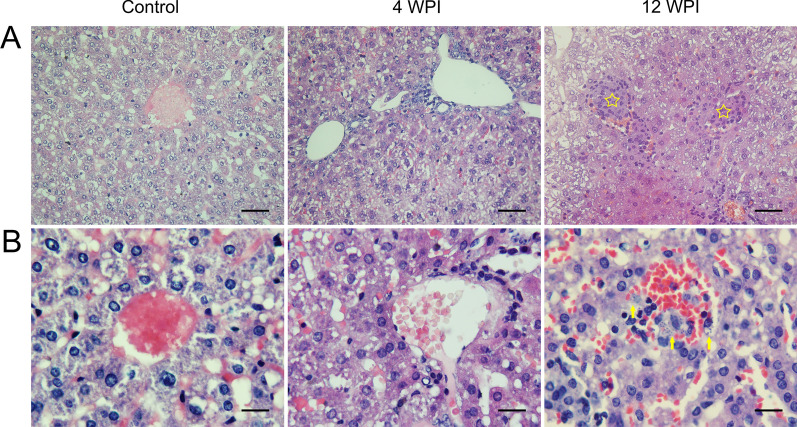
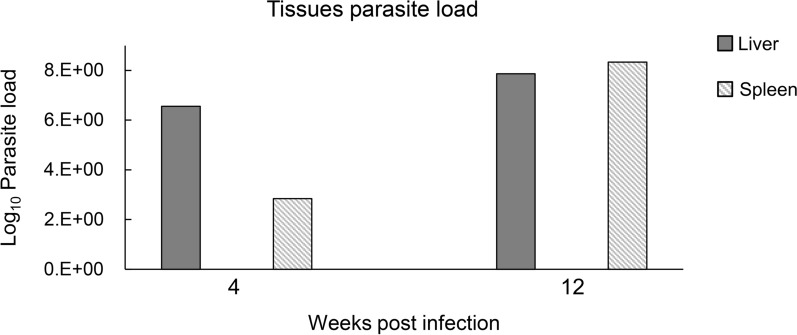
Methods: In this study, we conducted metabolomics analysis on the urine of golden hamsters in the presence or absence of visceral leishmaniasis (VL) using the ultra-performance liquid chromatography (UPLC) system tandem high-resolution mass spectrometer (HRMS). The metabolic characteristics of urine samples, along with the histopathological change and the parasite burden of liver and spleen tissues, were detected at 4 and 12 weeks post infection (WPI), respectively.
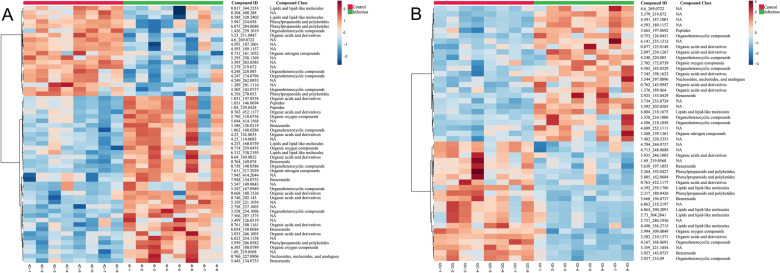
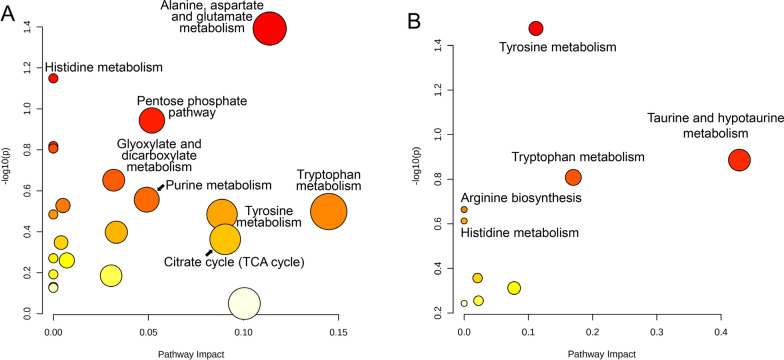
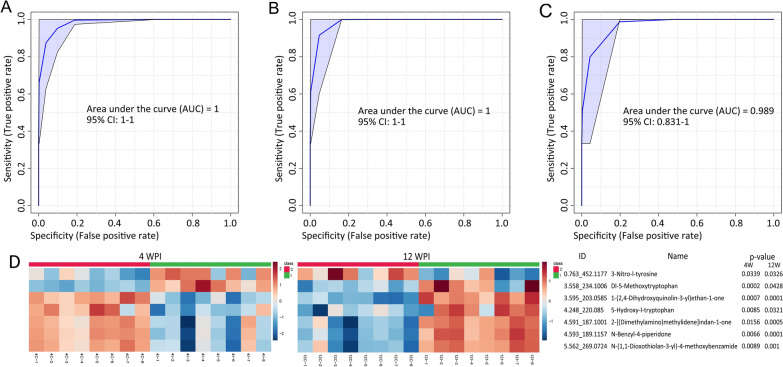
Results: Amino acid metabolism was extensively affected at both stages of VL progression. Meanwhile, there were also distinct metabolic features at different stages. At 4 WPI, the significantly affected metabolic pathways involved alanine, aspartate and glutamate metabolism, the pentose phosphate pathway (PPP), histidine metabolism, tryptophan metabolism and tyrosine metabolism. At 12 WPI, the markedly enriched metabolic pathways were almost concentrated on amino acid metabolism, including tyrosine metabolism, taurine and hypotaurine metabolism and tryptophan metabolism. The dysregulated metabolites and metabolic pathways at 12 WPI were obviously less than those at 4 WPI. In addition, seven metabolites that were dysregulated at both stages through partial least squares-discriminant analysis (PLS-DA) and receiver-operating characteristic (ROC) tests were screened to be of diagnostic potential. The combination of these metabolites as a potential biomarker panel showed satisfactory performance in distinguishing infection groups from control groups as well as among different stages of infection.
Conclusion: Our findings could provide valuable information for further understanding of the host response to Leishmania infection from the aspect of the urine metabolome. The proposed urine biomarker panel could help in the development of a novel approach for the diagnosis and prognosis of VL.
Keywords: Biomarker panel; Leishmania; Metabolomics; Visceral leishmaniasis.
© 2023. BioMed Central Ltd., part of Springer Nature.
Conflict of interest statement
The authors declare that they have no competing interests.
Figures




References
-
- WHO. Global leishmaniasis surveillance, 2017–2018, and first report on 5 additional indicators. WHO Weekly Epidemiological Record, No 25, 2020. Available from: https://www.who.int/publications/i/item/who-wer9525.
-
- Burza S, Croft SL, Boelaert M. Leishmaniasis. Lancet. 2018;392:951–970. - PubMed
-
- Zhou Z, Li Y, Zhang Y, Li S. Prevalence of visceral leishmaniasis in China during 2015–2018. Chin J Parasitol Parasit Dis. 2020;38:339–345.
-
- Yuan D, Qin H, Zhang J, Liao L, Chen Q, Chen D, et al. Phylogenetic analysis of HSP70 and cyt b gene sequences for Chinese isolates and ultrastructural characteristics of Chinese Leishmania sp. Parasitol Res. 2017;116:693–702. - PubMed
MeSH terms
Substances
Grants and funding
LinkOut - more resources
Full Text Sources
