


Differences in selected blood parameters between brachycephalic and non-brachycephalic dogs
- PMID: 37649563
- PMCID: PMC10464621
- DOI: 10.3389/fvets.2023.1166032
Differences in selected blood parameters between brachycephalic and non-brachycephalic dogs
Abstract
Introduction: Cranial and upper-airway anatomy of short-nosed, flat-faced brachycephalic dogs predisposes them to brachycephalic obstructive airway syndrome (BOAS). Periodic apnoea increased inspiratory resistance, and an inability to thermoregulate effectively are characteristic of BOAS, but internationally accepted objective markers of BOAS severity are missing. The objective of this study was to compare the selected blood parameters between non-brachycephalic (NC) and brachycephalic (BC) dogs, exploring the possibility of developing a blood test for BOAS severity grading in the future.
Methods: We evaluated blood biochemistry, complete blood cell counts, red blood cell (RBC) indices, reticulocyte counts, a blood-born marker of intermittent hypoxia (glutathione, NO production), RBC hydration, deformability, and blood markers of metabolic changes and stress between BC (n = 18) and NC (meso- and dolichocephalic, n = 22) dogs.
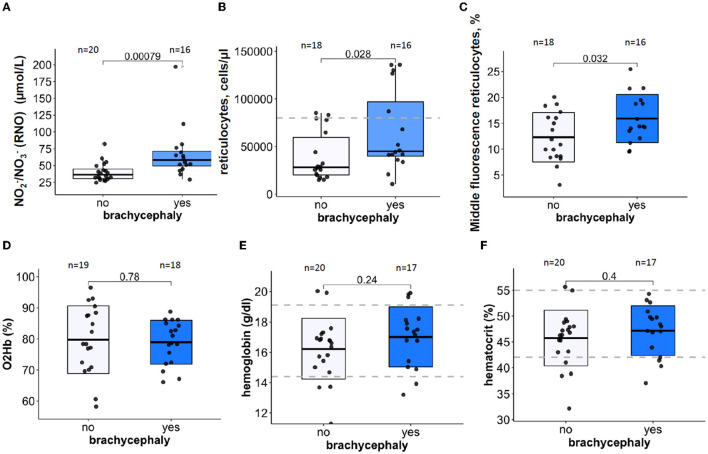
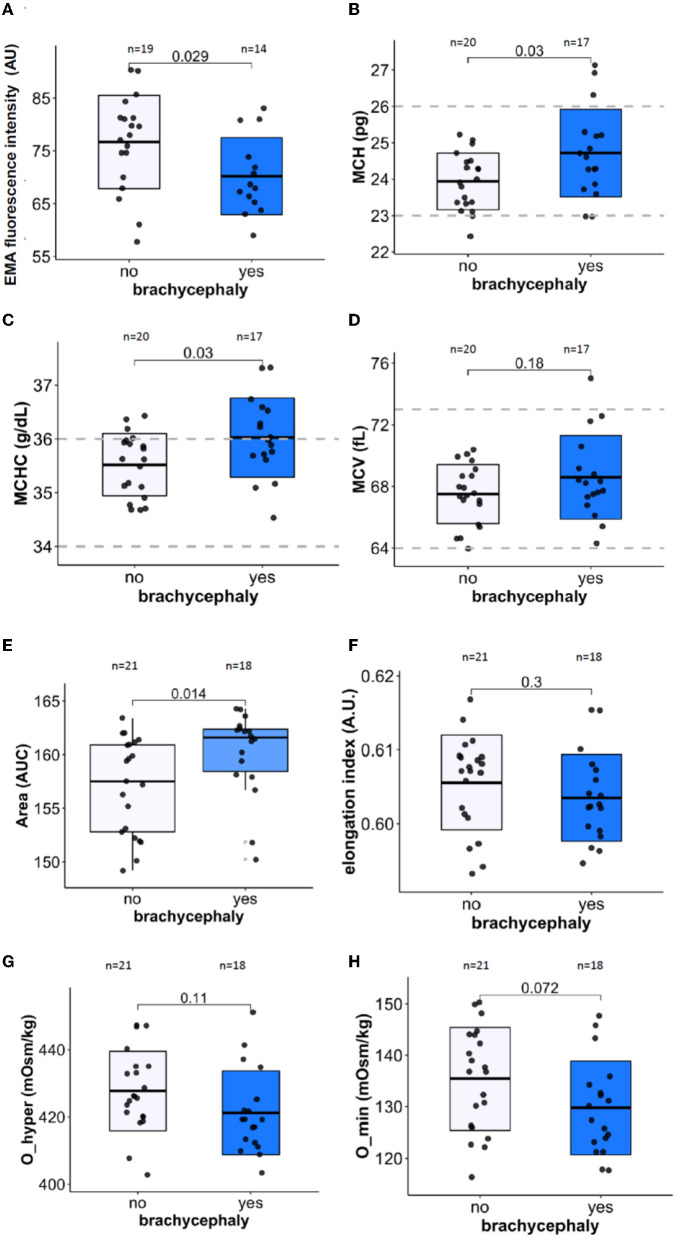
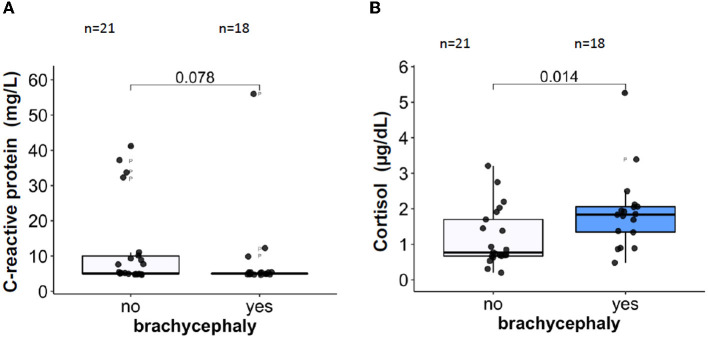
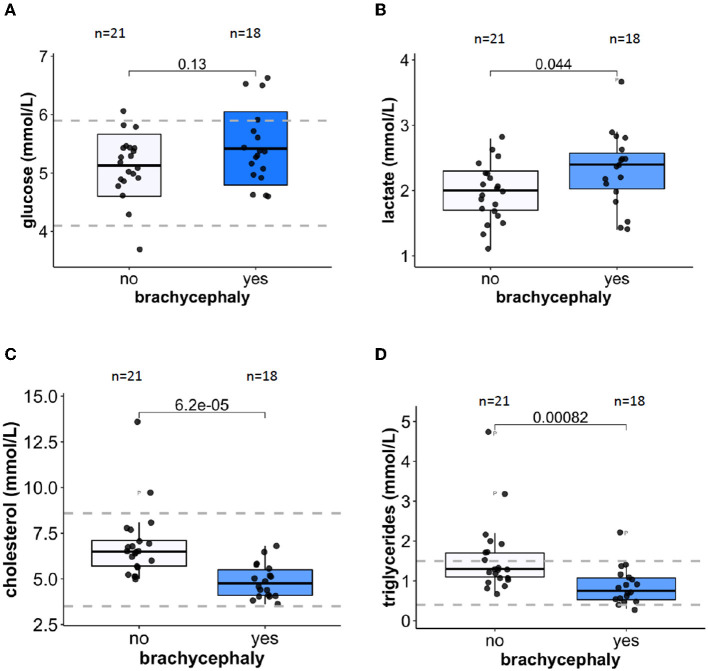
Results: Reticulocyte counts and the abundance of middle-fluorescence immature reticulocytes were significantly (p < 0.05) higher in BC dogs compared to NC dogs. BC dogs had significantly more NO-derived NO/NO in plasma than NC dogs. RBCs of BC dogs were shedding significantly more membrane, as follows from the intensity of eosin maleimide staining, and had a significantly higher mean corpuscular hemoglobin concentration than NC dogs. Intracellular reduced glutathione content in RBCs of BC dogs was significantly lower, while plasma lactate was significantly higher in BC dogs compared to NC dogs. Plasma cholesterol and triglycerides were significantly lower, and cortisol was significantly higher in BC dogs compared to NC dogs. Eosinophil counts were significantly lower and the neutrophil-to-lymphocyte ratio was higher in BC dogs compared to NC dogs.
Discussion: Taken together, our findings suggest that the brachycephalic phenotype in dogs is associated with alterations at the level of blood cells and, systemically, with oxidation and metabolic changes. The parameters identified within this study should be further investigated for their potential as objective indicators for BOAS.
Keywords: blood markers; brachycephalic obstructive airway syndrome; brachycephaly; dog; hypoxia; red blood cells; stress.
Copyright © 2023 Kämpf, Fenk, Van Cromvoirt, Bogdanov, Hartnack, Stirn, Hofmann-Lehmann, Reichler and Bogdanova.
Conflict of interest statement
The authors declare that the research was conducted in the absence of any commercial or financial relationships that could be construed as a potential conflict of interest.
Figures



References
-
- Club A. K. Lab Most Popular Breed for 30th Straight Year; Frenchie Jumps to No. 2. (2021). Available online at: https://www.akc.org/expert-advice/dog-breeds/labrador-retriever-popular-... (accessed July 27, 2023).
-
- The The American Kennel Club I . Most Popular Dog Breeds. (2022). Available online at: https://www.akc.org/most-popular-breeds/
-
- Lorenz K. Studies in Animal and Human Behaviour Volume II. 2, 115–195. Cambridge, MA: Harvard University Press. (1971). 10.4159/harvard.9780674430426 - DOI
-
- Ashley S . The Best Low-Maintenance Dogs for People with Super-Hectic Lives. PureWow.com. (2022). Available online at: https://www.purewow.com/family/low-maintenance-dog-breeds (accessed July 27, 2023).
LinkOut - more resources
Full Text Sources
