


Wide variation of heterozygotic genotypes of recent fasciolid hybrids from livestock in Bangladesh assessed by rDNA internal transcribed spacer region sequencing and cloning
- PMID: 37649708
- PMCID: PMC10462839
- DOI: 10.1016/j.onehlt.2023.100614
Wide variation of heterozygotic genotypes of recent fasciolid hybrids from livestock in Bangladesh assessed by rDNA internal transcribed spacer region sequencing and cloning
Abstract
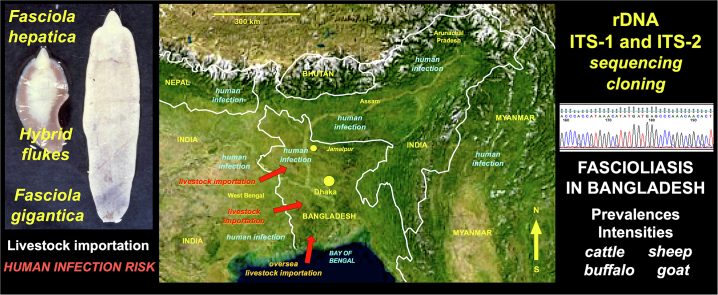
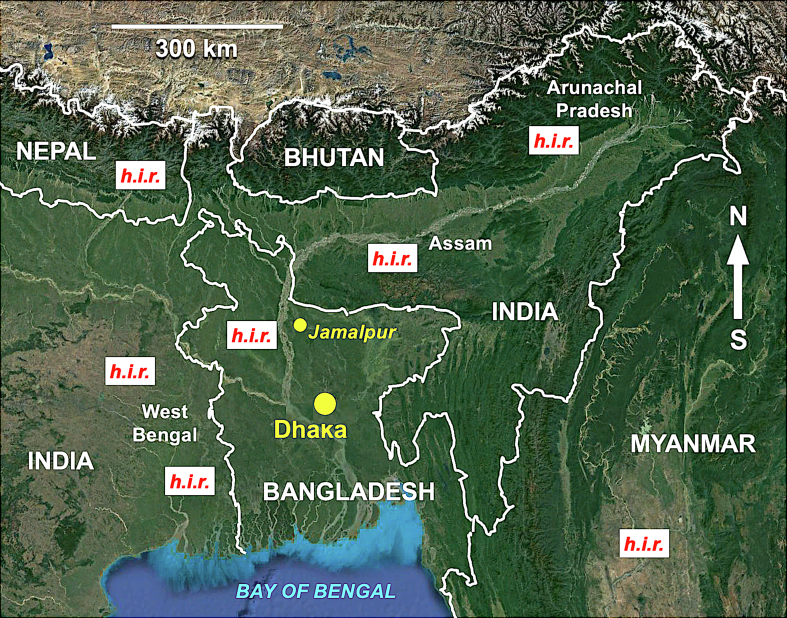
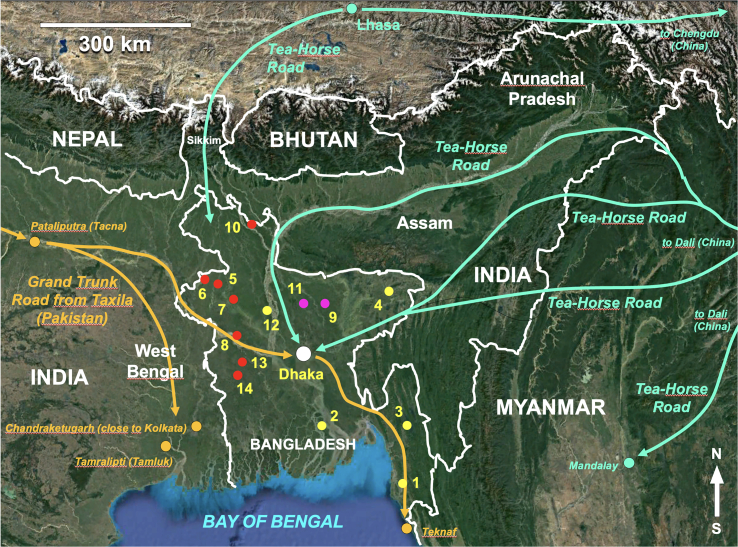
Fascioliasis causes high economic losses in livestock and underlies public health problems in rural areas, mainly of low-income countries. The increasing animal infection rates in Bangladesh were assessed, by focusing on host species, different parts of the country, and rDNA sequences. Fasciolid flukes were collected from buffaloes, cattle, goats and sheep from many localities to assess prevalences and intensities of infection. The nuclear rDNA internal transcribed spacer (ITS) region including ITS-1 and ITS-2 spacers was analyzed by direct sequencing and cloning, given the detection of intermediate phenotypic forms in Bangladesh. The 35.4% prevalence in goats and 55.5% in buffaloes are the highest recorded in these animals in Bangladesh. In cattle (29.3%) and sheep (26.8%) prevalences are also high for these species. These prevalences are very high when compared to lowlands at similar latitudes in neighboring India. The high prevalences and intensities appear in western Bangladesh where cross-border importation of animals from India occur. The combined haplotype CH3A of Fasciola gigantica widely found in all livestock species throughout Bangladesh fits its historical connections with the western Grand Trunk Road and the eastern Tea-Horse Road. The "pure" F. hepatica sequences only in clones from specimens showing heterozygotic positions indicate recent hybridization events with local "pure" F. gigantica, since concerted evolution did not yet have sufficient time to homogenize the rDNA operon. The detection of up to six different sequences coexisting in the cloned specimens evidences crossbreeding between hybrid parents, indicating repeated, superimposed and rapidly evolving hybridization events. The high proportion of hybrids highlights an increasing animal infection trend and human infection risk, and the need for control measures, mainly concerning goats in household farming management. ITS-1 and ITS-2 markers prove to be useful for detecting recent hybrid fasciolids. The introduction of a Fasciola species with imported livestock into a highly prevalent area of the other Fasciola species may lead to a high nucleotide variation in the species-differing positions in the extremely conserved fasciolid spacers. Results suggest that, in ancient times, frequent crossbreeding inside the same Fasciola species gave rise to the very peculiar characteristics of the present-day nuclear genome of both fasciolids.
Keywords: Animal importation; Bangladesh; Crossbreeding hybrids; Fasciola gigantica and F. hepatica; Heterozygotic sequence complexity; ITS-1 and ITS-2; Livestock; Nuclear rDNA internal transcribed spacer region; Prevalences and intensities; Sequencing and cloning.
© 2023 The Authors. Published by Elsevier B.V.
Conflict of interest statement
The authors declare that the research was conducted in the absence of any commercial or financial relationships that could be construed as a potential conflict of interest.
Figures
References
-
- Hayward A.D., Skuce P.J., McNeilly T.N. The influence of liver fluke infection on production in sheep and cattle: a meta-analysis. Int. J. Parasitol. 2021;51:913–924. - PubMed
-
- World Health Organization . Department of Control of Neglected Tropical Diseases, World Health Organization, WHO Headquarters; Geneva: 2013. Sustaining the Drive to Overcome the Global Impact of Neglected Tropical Diseases; pp. 1–128.
-
- World Health Organization . World Health Organization; Geneva: 2020. Ending the Neglect to Attain the Sustainable Development Goals. A Road Map for Neglected Tropical Diseases 2021–2030; pp. 1–47.https://www.who.int/neglected_diseases/Ending-the-neglect-to-attain-the-... Available online. (accessed on 23 July 2020)
-
- Mas-Coma S., Agramunt V.H., Valero M.A. Neurological and ocular fascioliasis in humans. Adv. Parasitol. 2014;84:27–149. - PubMed
LinkOut - more resources
Full Text Sources
