


Histopathologic and Molecular Features of Cutaneous Melanoma in a Moroccan Population
- PMID: 37649946
- PMCID: PMC10465115
- DOI: 10.7759/cureus.42691
Histopathologic and Molecular Features of Cutaneous Melanoma in a Moroccan Population
Abstract
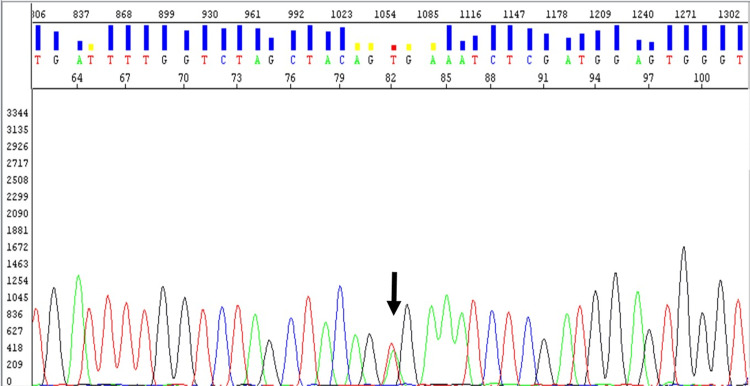
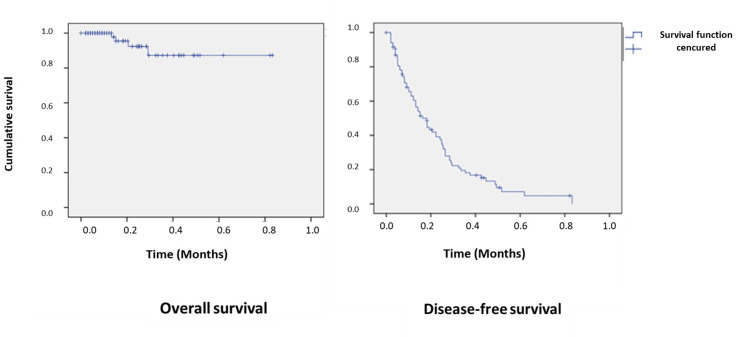
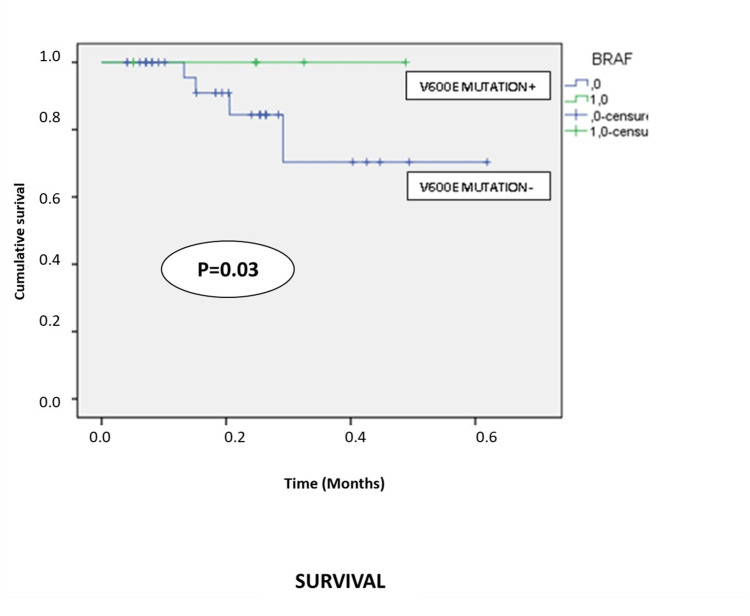
Background Cutaneous cancer is the most common malignancy type, among which melanomas are considered the most aggressive and lethal. In Morocco, skin melanoma is the 25th most common cancer. To our knowledge, this is the first and largest Moroccan study specifically describing cutaneous melanoma. Materials and methods We obtained data for 100 patients diagnosed with cutaneous melanoma in the Department of Pathology of Hassan II University Hospital, Morocco. Clinical, histopathological, molecular, and follow-up data were recorded from pathology request forms and the patient's medical records. Results The mean age of our patients was 65 years old. Histologically, the most prevalent were the nodular (48%) and acro-lentiginous (38%) melanoma subtypes. A total of 66% of the patients had a Breslow thickness of >4 mm. The presence of ulceration was noted in 46% of cases. The average mitoses was 9/1 mm². A total of 44% of patients had metastatic melanoma at the time of diagnosis. The BRAF V600E mutation was found in six cases, and the C-KIT mutation in five cases. The five-year overall survival and metastasis-free survival were 85% and 15%, respectively. There was a significant correlation between Breslow thickness and Clark's level (p<0.001), histologic subtype (p=0.012), and presence of metastasis (p=0.002). There was a significant difference between the head and neck melanomas and those of the feet, particularly in the histological subtype and the presence of ulceration. BRAF V600E mutation was found in six cases of metastatic melanomas of the head and neck, of which three cases were positive for this mutation, as compared with the 23 cases of acral melanomas, which tested negative for the same mutation. Conclusion The results of our study showed that cutaneous melanomas were characterized by advanced age at diagnosis and late-stage diagnosis with a high Breslow index. The lower limbs were the most affected sites, especially in the plantar region. The acral lentiginous subtype was the most common. The presence of BRAF V600E mutation was associated with a better prognosis.
Keywords: acral lentiginous; braf v600e mutation; c-kit; skin melanoma; survival rate.
Copyright © 2023, Tahiri Elousrouti et al.
Conflict of interest statement
The authors have declared that no competing interests exist.
Figures
References
-
- Elder DE, Massi D, Scolyer RA, Willemze R. WHO. Lyon, France: IARC Press; 2018. WHO Classification of Skin Tumours.
-
- Global Cancer Statistics 2020: GLOBOCAN estimates of incidence and mortality worldwide for 36 cancers in 185 countries. Sung H, Ferlay J, Siegel RL, Laversanne M, Soerjomataram I, Jemal A, Bray F. CA Cancer J Clin. 2021;71:209–249. - PubMed
-
- 3] Morocco. Morocco: Globocon 2020. 2020. https://gco.iarc.fr/today/data/factsheets/populations/504-morocco-fact-s... https://gco.iarc.fr/today/data/factsheets/populations/504-morocco-fact-s...
-
- Ultraviolet radiation-mediated development of cutaneous melanoma: an update. Emri G, Paragh G, Tósaki Á, et al. J Photochem Photobiol B. 2018;185:169–175. - PubMed
-
- Melanoma staging: American Joint Committee on Cancer (AJCC) 8th edition and beyond. Gershenwald JE, Scolyer RA. Ann Surg Oncol. 2018;25:2105–2110. - PubMed
LinkOut - more resources
Full Text Sources
Research Materials