


Goldilocks Energy Minimum: Peptide-Based Reversible Aggregation and Biosensing
- PMID: 37651748
- PMCID: PMC10619458
- DOI: 10.1021/acsami.3c09627
Goldilocks Energy Minimum: Peptide-Based Reversible Aggregation and Biosensing
Erratum in
-
Correction to "Goldilocks Energy Minimum: Peptide-Based Reversible Aggregation and Biosensing".ACS Appl Mater Interfaces. 2023 Oct 18;15(41):48838. doi: 10.1021/acsami.3c13967. Epub 2023 Oct 3. ACS Appl Mater Interfaces. 2023. PMID: 37787714 No abstract available.
Abstract
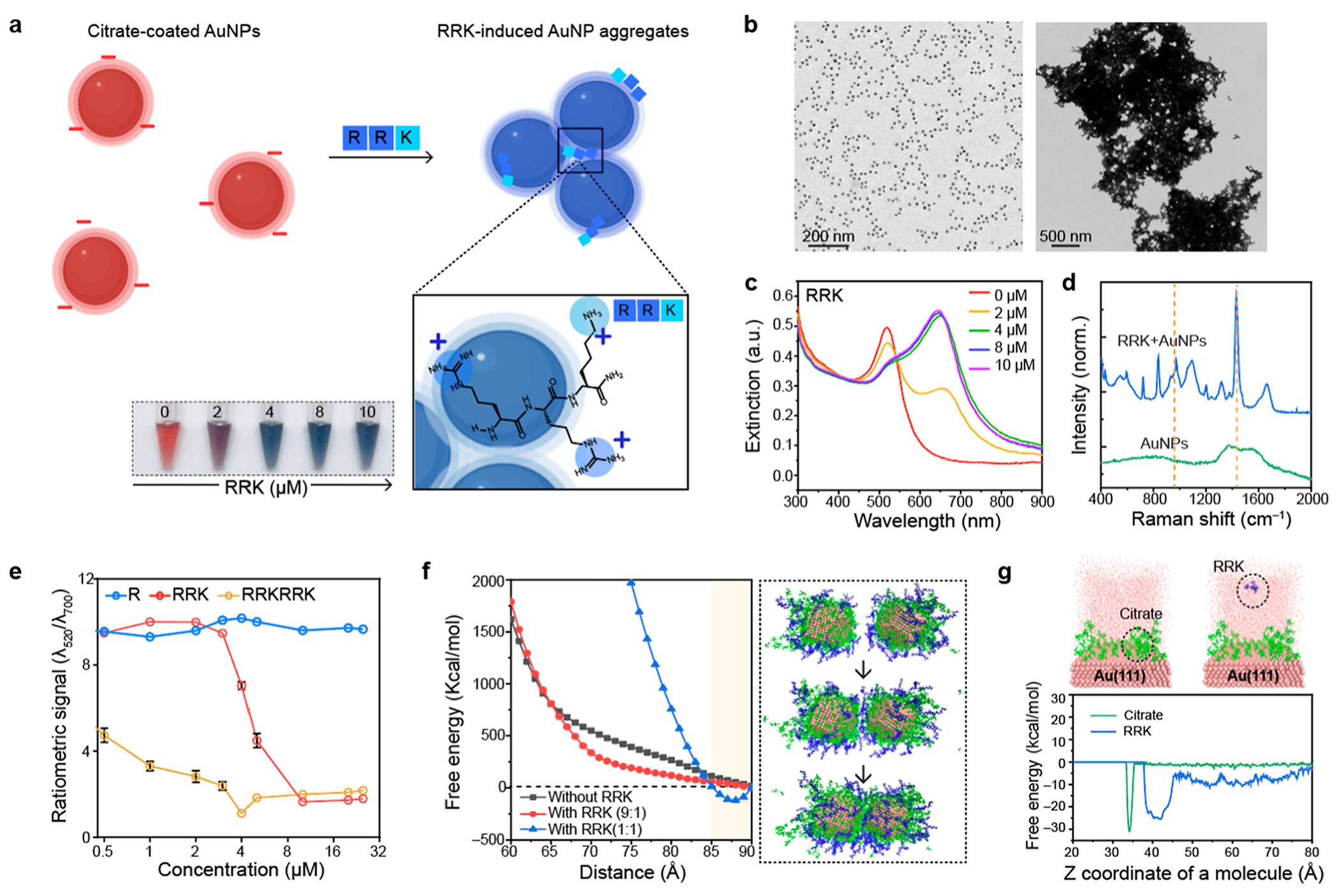
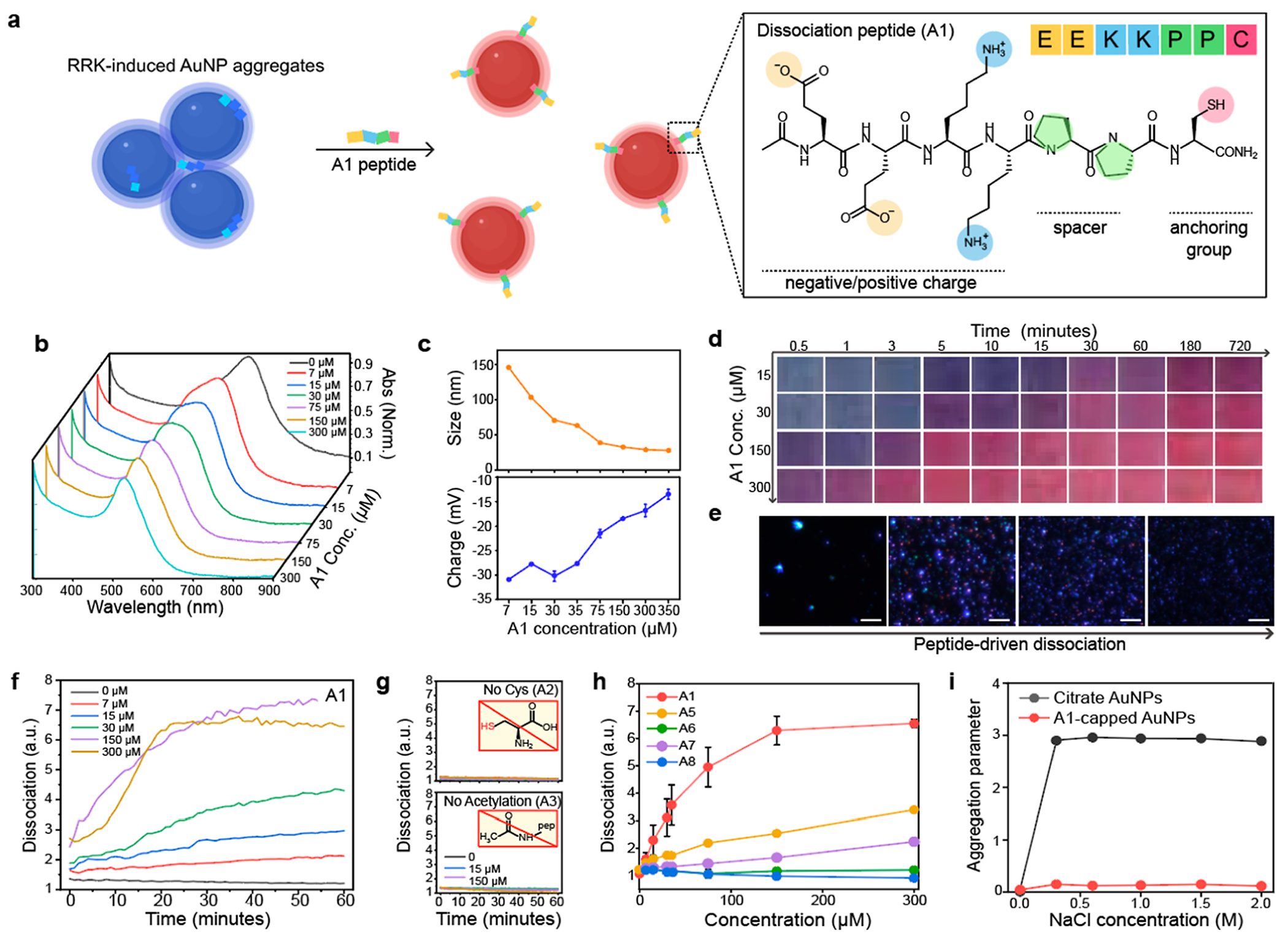
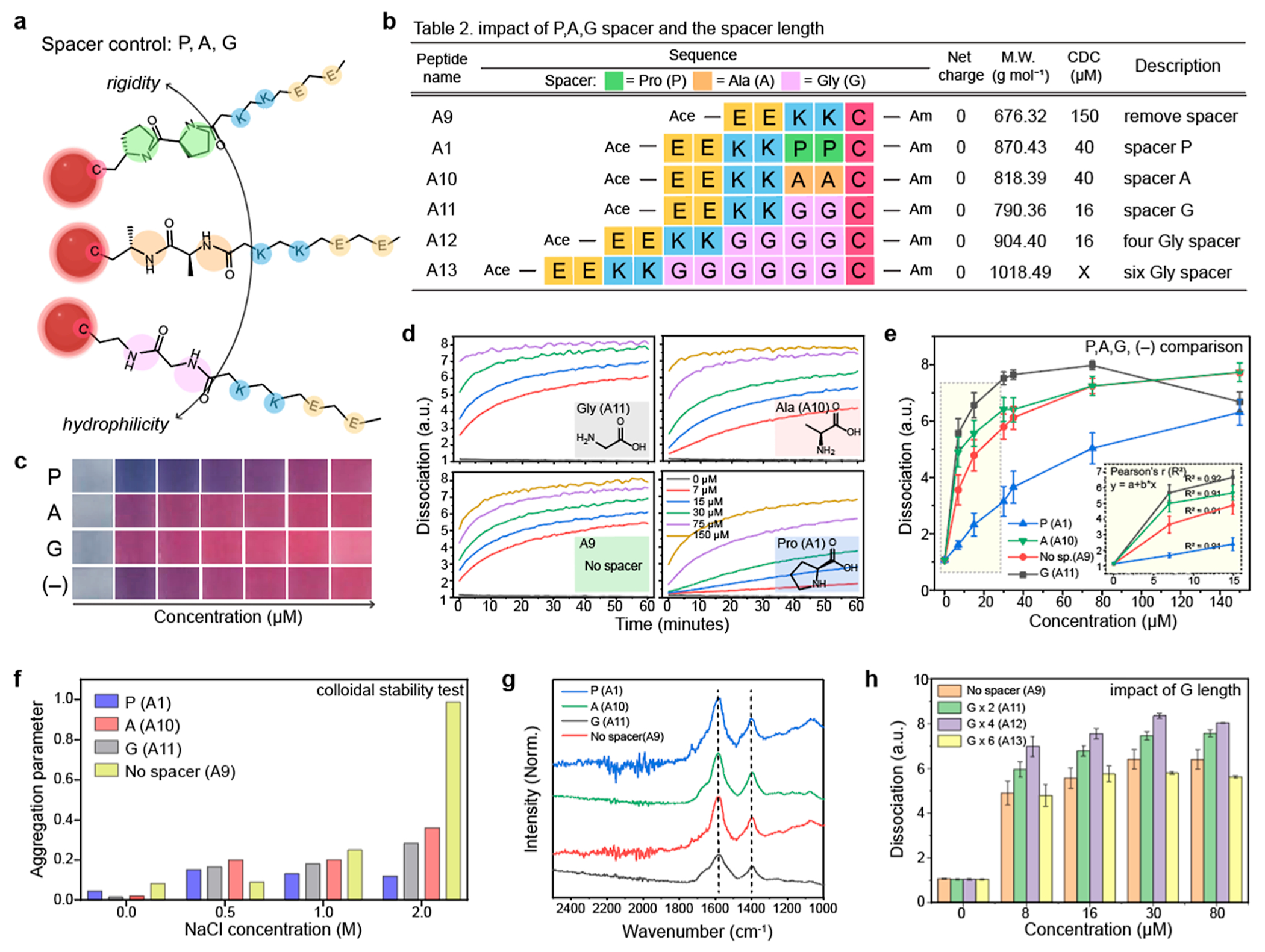
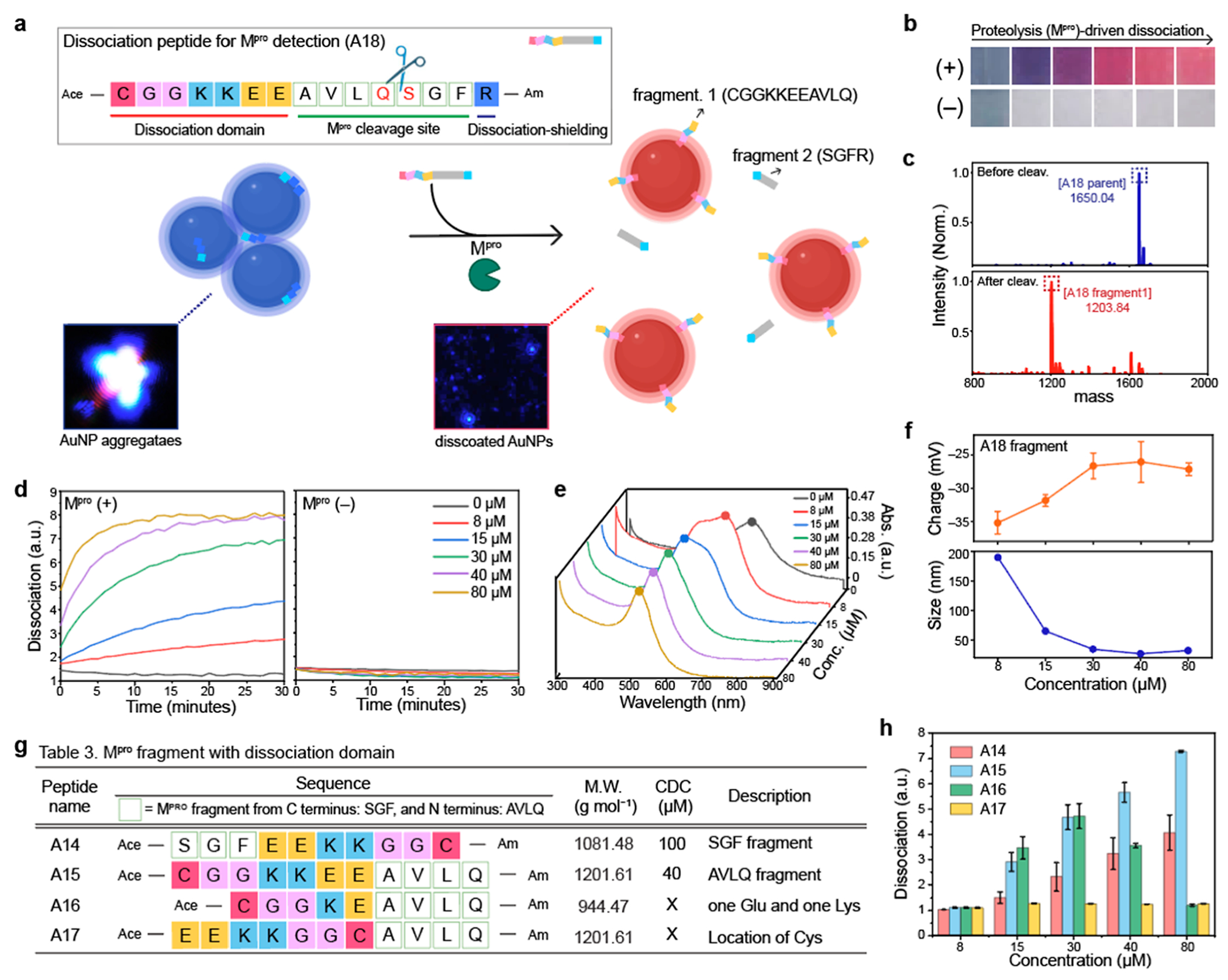
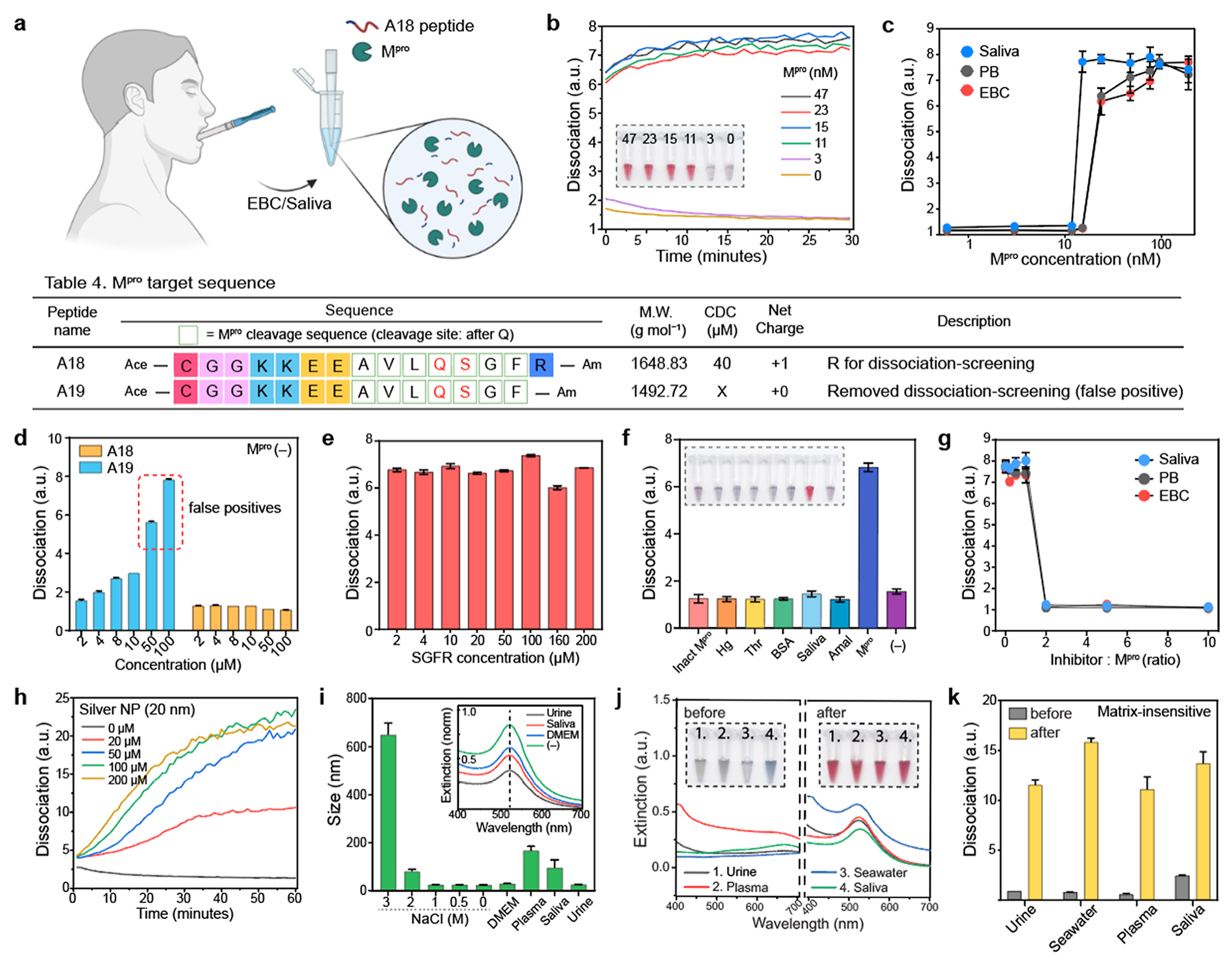
Colorimetric biosensors based on gold nanoparticle (AuNP) aggregation are often challenged by matrix interference in biofluids, poor specificity, and limited utility with clinical samples. Here, we propose a peptide-driven nanoscale disassembly approach, where AuNP aggregates induced by electrostatic attractions are dissociated in response to proteolytic cleavage. Initially, citrate-coated AuNPs were assembled via a short cationic peptide (RRK) and characterized by experiments and simulations. The dissociation peptides were then used to reversibly dissociate the AuNP aggregates as a function of target protease detection, i.e., main protease (Mpro), a biomarker for severe acute respiratory syndrome coronavirus 2. The dissociation propensity depends on peptide length, hydrophilicity, charge, and ligand architecture. Finally, our dissociation strategy provides a rapid and distinct optical signal through Mpro cleavage with a detection limit of 12.3 nM in saliva. Our dissociation peptide effectively dissociates plasmonic assemblies in diverse matrices including 100% human saliva, urine, plasma, and seawater, as well as other types of plasmonic nanoparticles such as silver. Our peptide-enabled dissociation platform provides a simple, matrix-insensitive, and versatile method for protease sensing.
Keywords: DLVO theory; SARS-CoV-19; colorimetric biosensor; dissociation peptide; matrix-insensitive; reversible aggregation.
Conflict of interest statement
The authors declare no competing financial interest.
Figures
References
-
- Liu J; Lu Y A Colorimetric Lead Biosensor Using DNAzyme-Directed Assembly of Gold Nanoparticles. J. Am. Chem. Soc 2003, 125, 6642–6643. - PubMed
-
- Guo L; Xu Y; Ferhan AR; Chen G; Kim D-H Oriented Gold Nanoparticle Aggregation for Colorimetric Sensors with Surprisingly High Analytical Figures of Merit. J. Am. Chem. Soc. 2013, 135, 12338–12345. - PubMed
-
- Liu J; Lu Y Accelerated Color Change of Gold Nanoparticles Assembled by DNAzymes for Simple and Fast Colorimetric Pb2+ Detection. J. Am. Chem. Soc 2004, 126, 12298–12305. - PubMed
-
- Ghosh SK; Pal T Interparticle Coupling Effect on the Surface Plasmon Resonance of Gold Nanoparticles: from Theory to Applications. Chem. Rev 2007, 107, 4797–4862. - PubMed
MeSH terms
Substances
Grants and funding
LinkOut - more resources
Full Text Sources
Medical
Miscellaneous
