


Antimicrobial overproduction sustains intestinal inflammation by inhibiting Enterococcus colonization
- PMID: 37652008
- PMCID: PMC10502928
- DOI: 10.1016/j.chom.2023.08.002
Antimicrobial overproduction sustains intestinal inflammation by inhibiting Enterococcus colonization
Abstract
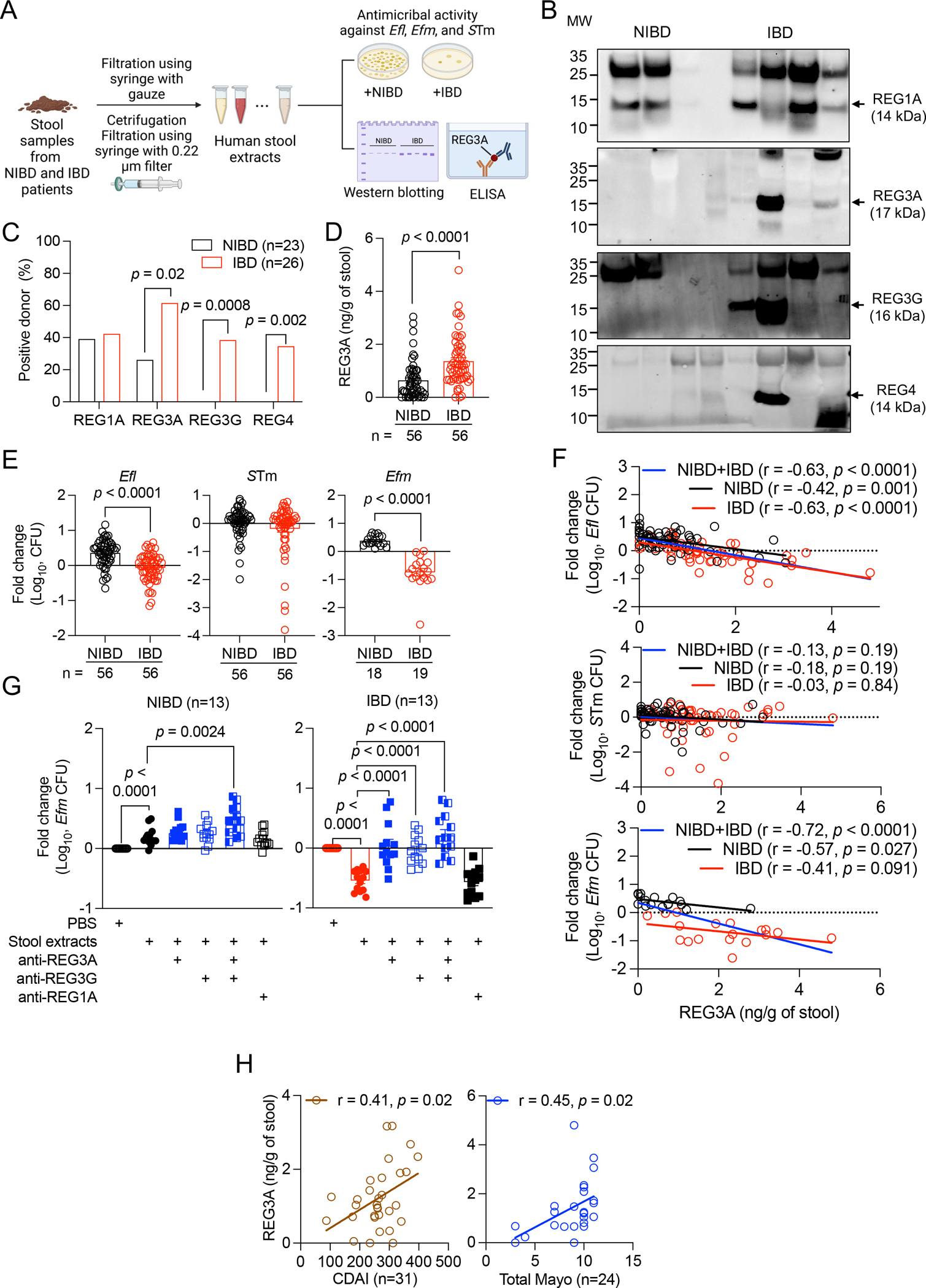
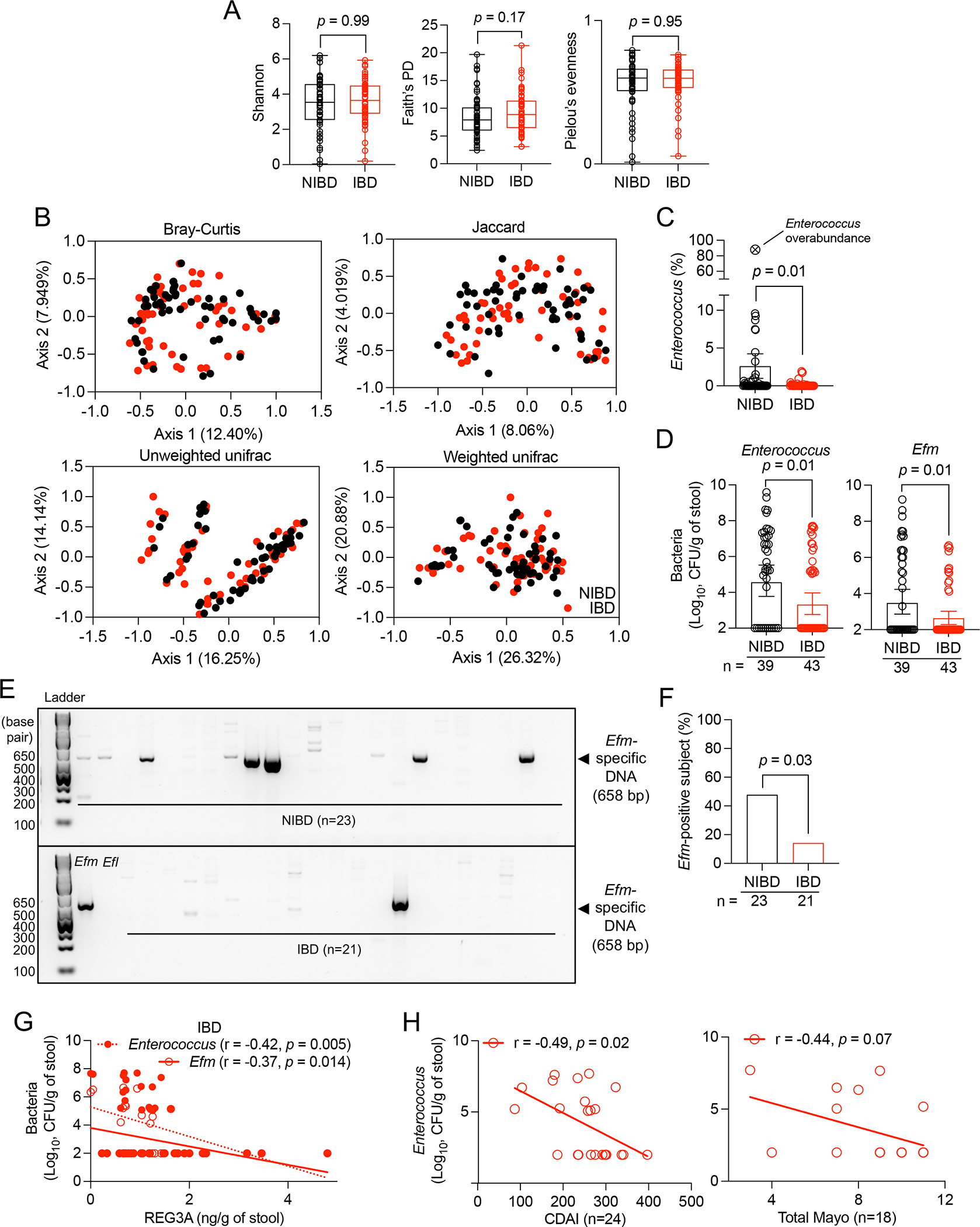
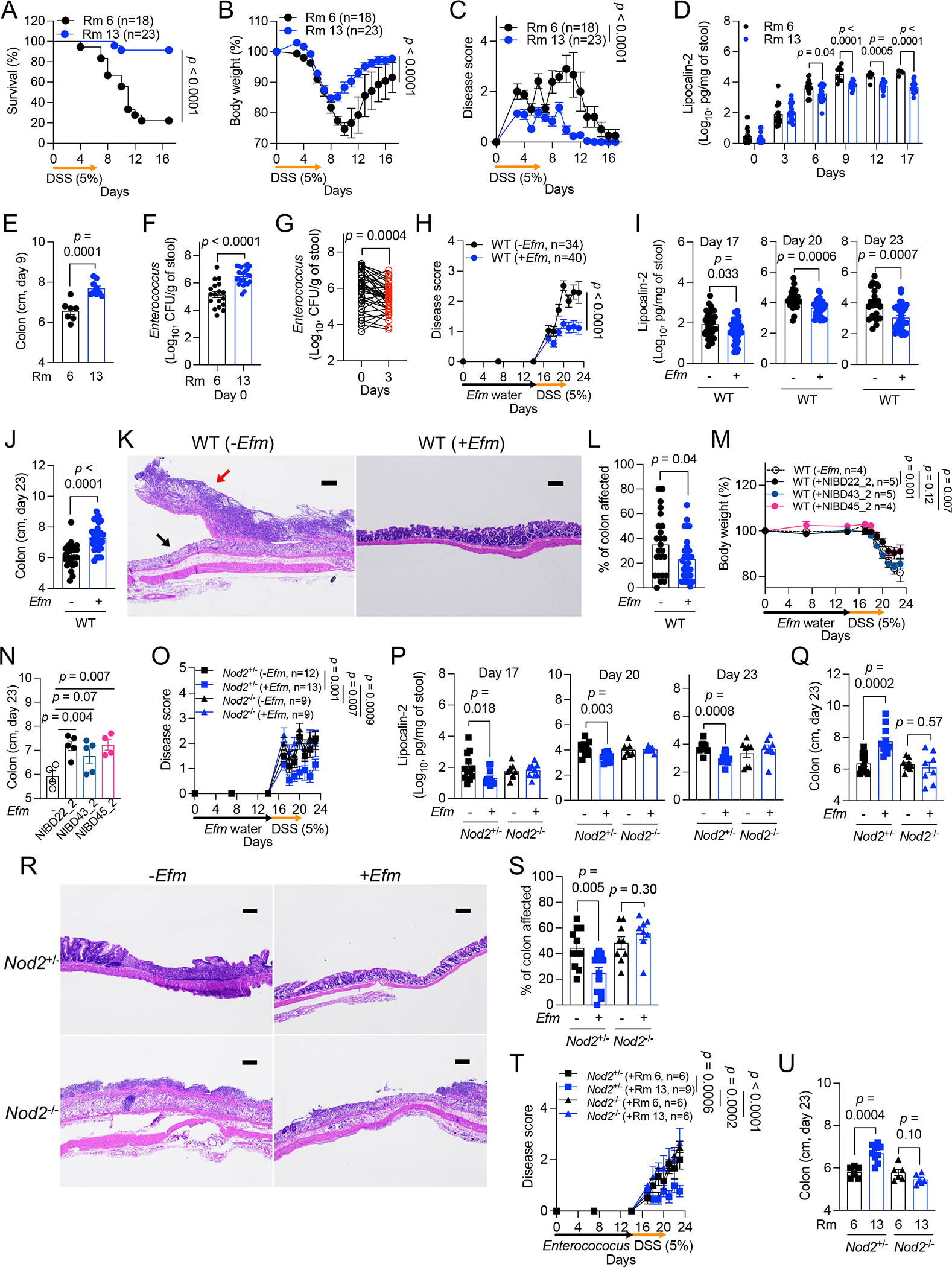
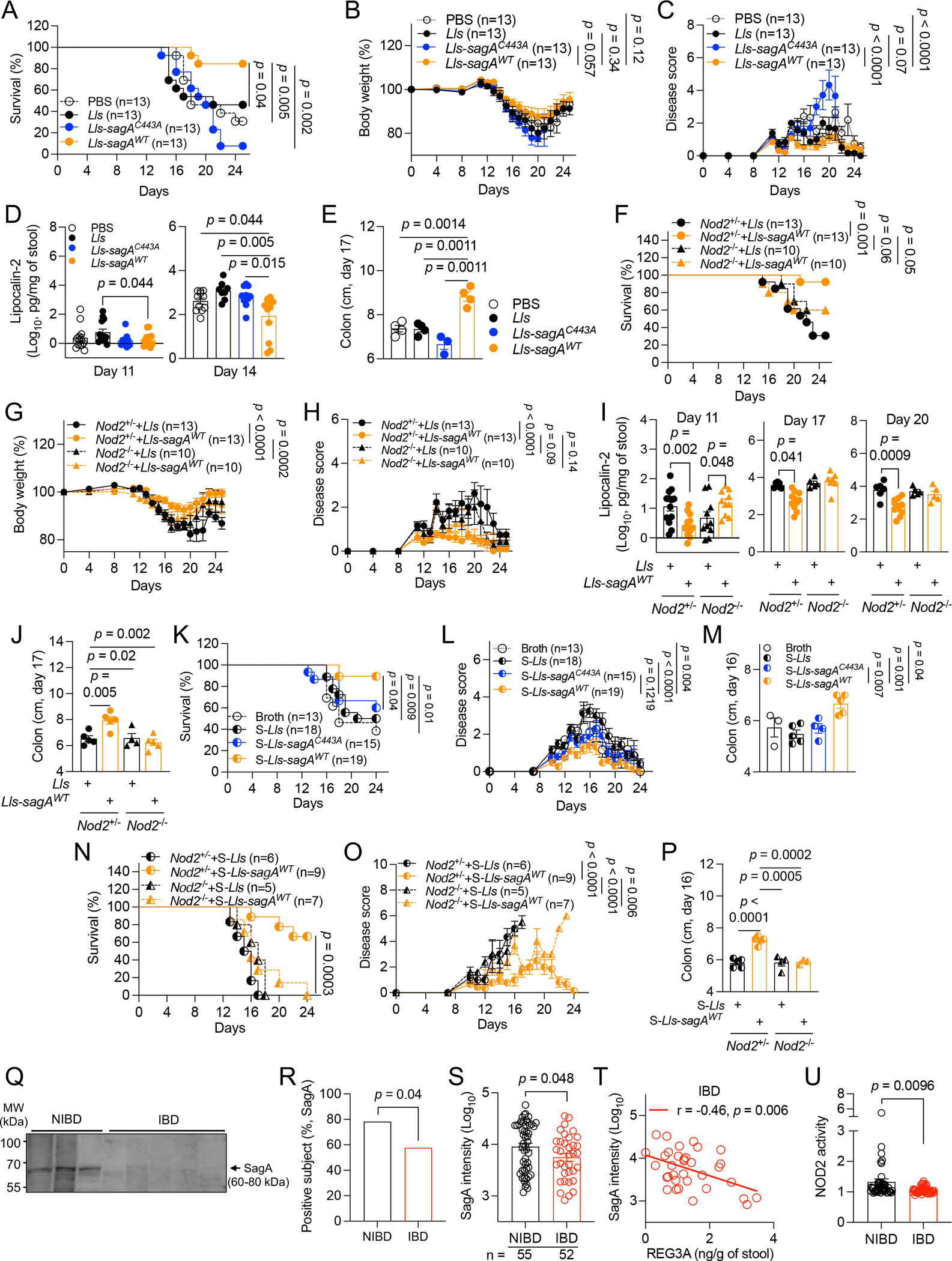
Loss of antimicrobial proteins such as REG3 family members compromises the integrity of the intestinal barrier. Here, we demonstrate that overproduction of REG3 proteins can also be detrimental by reducing a protective species in the microbiota. Patients with inflammatory bowel disease (IBD) experiencing flares displayed heightened levels of secreted REG3 proteins that mediated depletion of Enterococcus faecium (Efm) from the gut microbiota. Efm inoculation of mice ameliorated intestinal inflammation through activation of the innate immune receptor NOD2, which was associated with the bacterial DL-endopeptidase SagA that generates NOD2-stimulating muropeptides. NOD2 activation in myeloid cells induced interleukin-1β (IL-1β) secretion to increase the proportion of IL-22-producing CD4+ T helper cells and innate lymphoid cells that promote tissue repair. Finally, Efm was unable to protect mice carrying a NOD2 gene variant commonly found in IBD patients. Our findings demonstrate that inflammation self-perpetuates by causing aberrant antimicrobial activity that disrupts symbiotic relationships with gut microbes.
Keywords: NOD2; REG3; antimicrobial proteins; enterococci; inflammatory bowel disease.
Copyright © 2023 Elsevier Inc. All rights reserved.
Conflict of interest statement
Declaration of interests K.C. has received research support from Pfizer, Takeda, Pacific Biosciences, Genentech, and Abbvie. K.C. has consulted for or received an honoraria from Puretech Health, Genentech, and Abbvie. K.C. is an inventor on U.S. patent 10,722,600 and provisional patent 62/935,035 and 63/157,225. H.C.H. has received research support from Rise Therapeutics and LISCure Biosciences. U.S. patents PCT/US16/28836 (H.C.H.) and PCT/US2020/019038 (H.C.H. and M.E.G.) were obtained for the commercial use of SagA-engineered bacteria. Rise Therapeutics has licensed these patents to develop SagA-probiotics as therapeutics. J.A. reports consultancy fees, honoraria, or advisory board fees from Abbvie, Adiso, Bristol Myers Squibb, Janssen, Pfizer, Fresnius, and BioFire Diagnostics.
Figures
Update of
-
Antimicrobial overproduction sustains intestinal inflammation by inhibiting Enterococcus colonization.bioRxiv [Preprint]. 2023 Feb 1:2023.01.29.526128. doi: 10.1101/2023.01.29.526128. bioRxiv. 2023. Update in: Cell Host Microbe. 2023 Sep 13;31(9):1450-1468.e8. doi: 10.1016/j.chom.2023.08.002. PMID: 36778381 Free PMC article. Updated. Preprint.
References
MeSH terms
Substances
Grants and funding
- F32 DK132908/DK/NIDDK NIH HHS/United States
- P30 CA016087/CA/NCI NIH HHS/United States
- F30 DK122698/DK/NIDDK NIH HHS/United States
- R01 DK093668/DK/NIDDK NIH HHS/United States
- S10 OD018338/OD/NIH HHS/United States
- R01 AI140754/AI/NIAID NIH HHS/United States
- R01 AI130945/AI/NIAID NIH HHS/United States
- R01 DK124336/DK/NIDDK NIH HHS/United States
- R01 AI121244/AI/NIAID NIH HHS/United States
- R21 AI164154/AI/NIAID NIH HHS/United States
- R01 AI137336/AI/NIAID NIH HHS/United States
- R01 AI173121/AI/NIAID NIH HHS/United States
- R01 HL123340/HL/NHLBI NIH HHS/United States
LinkOut - more resources
Full Text Sources
Other Literature Sources
Molecular Biology Databases
Research Materials
