


Evidence of correlations between human partners based on systematic reviews and meta-analyses of 22 traits and UK Biobank analysis of 133 traits
- PMID: 37653148
- PMCID: PMC10967253
- DOI: 10.1038/s41562-023-01672-z
Evidence of correlations between human partners based on systematic reviews and meta-analyses of 22 traits and UK Biobank analysis of 133 traits
Abstract
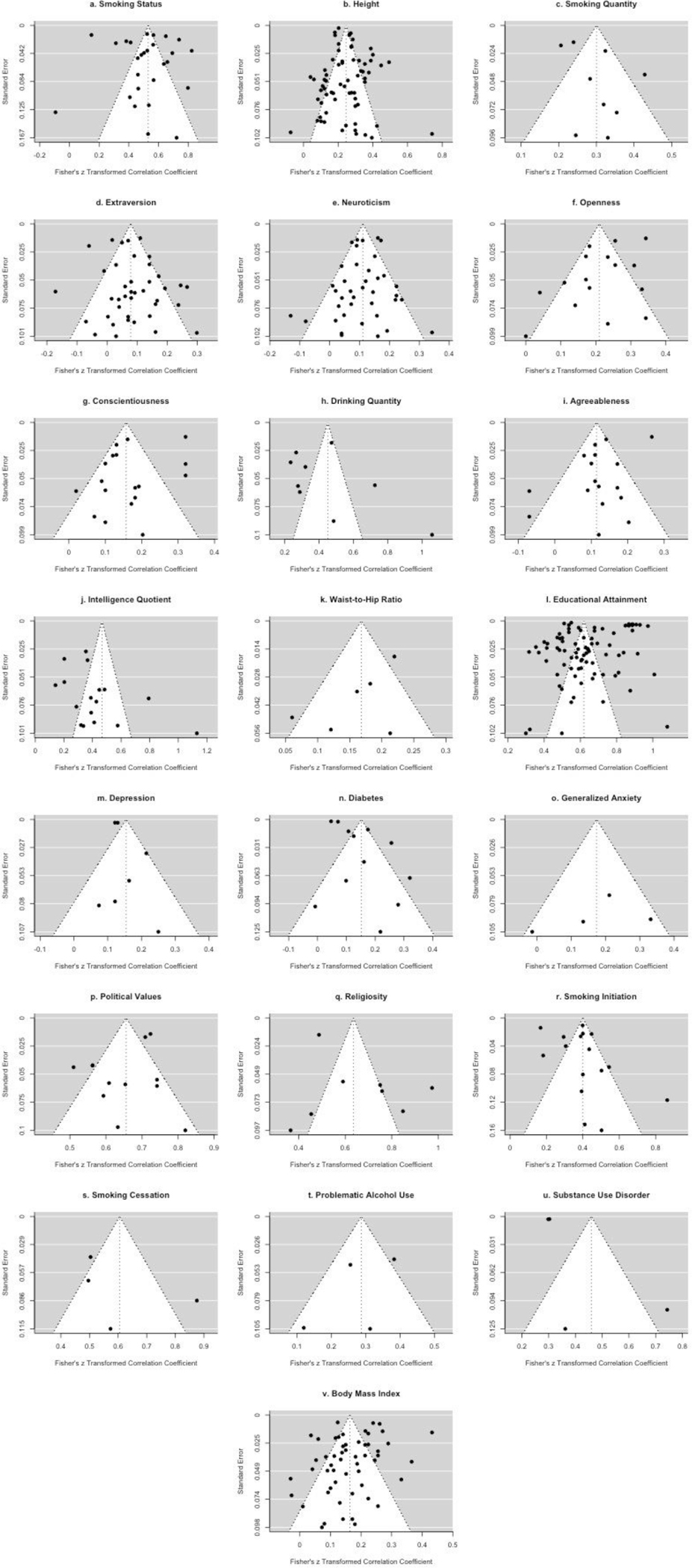
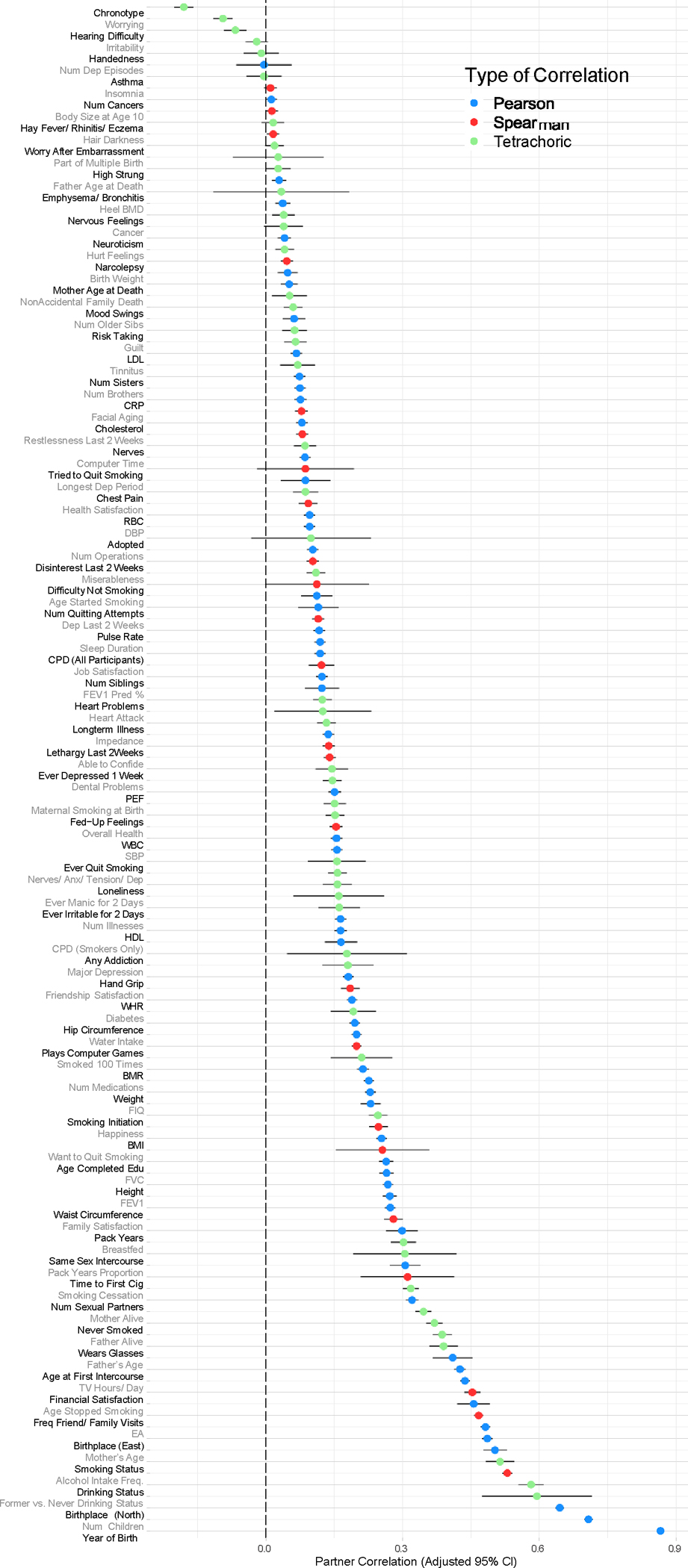
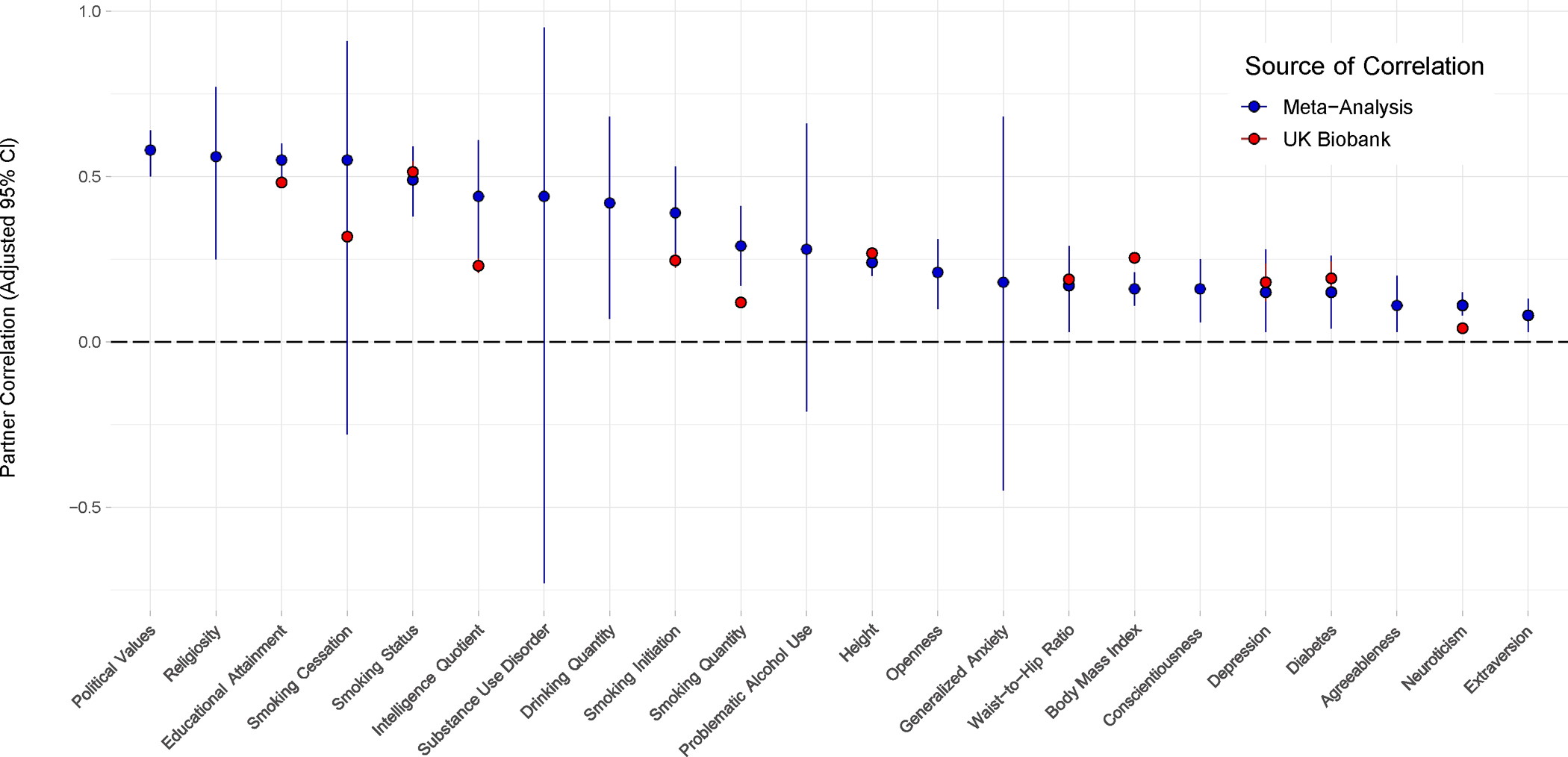
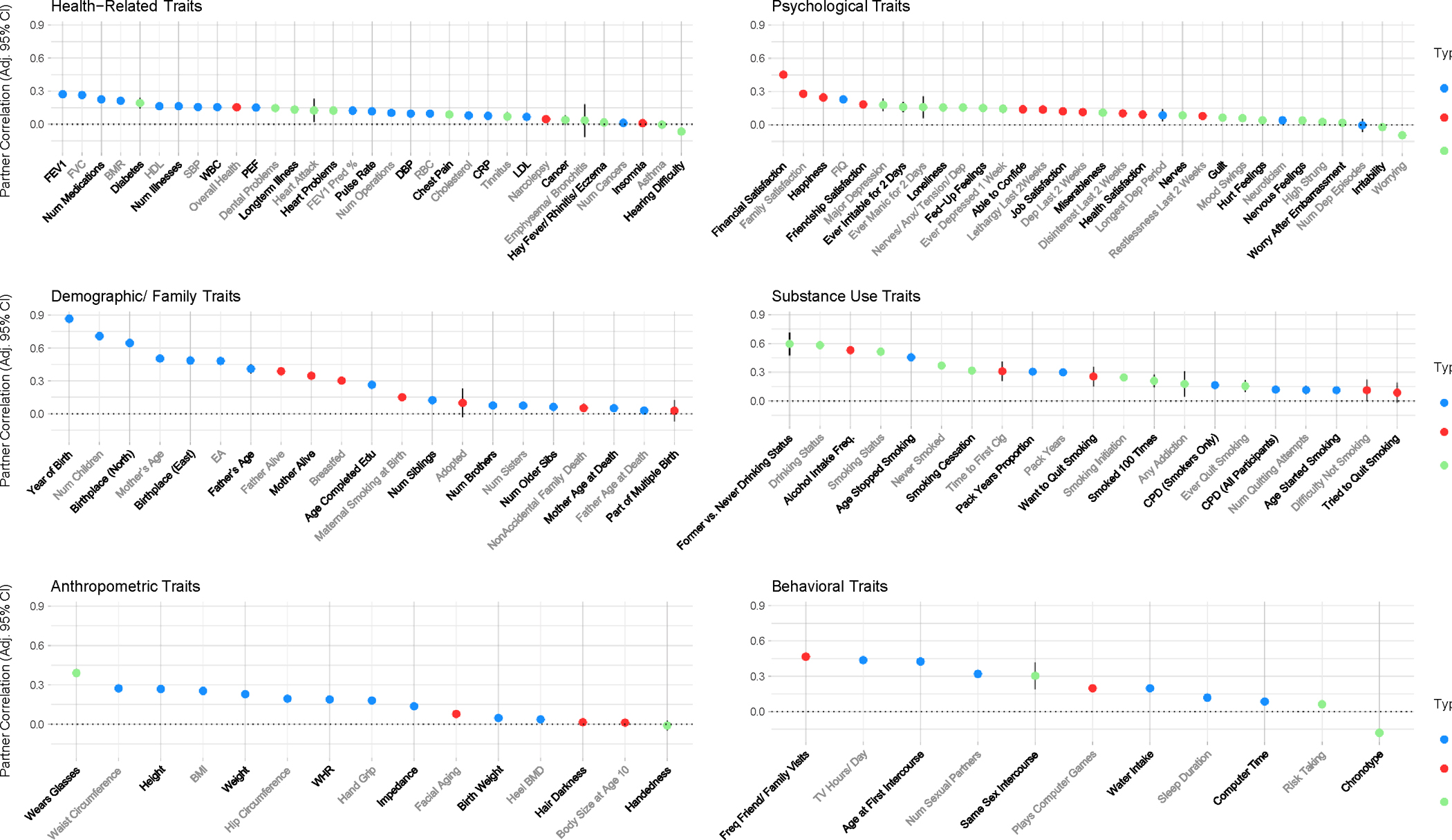
Positive correlations between mates can increase trait variation and prevalence, as well as bias estimates from genetically informed study designs. While past studies of similarity between human mating partners have largely found evidence of positive correlations, to our knowledge, no formal meta-analysis has examined human partner correlations across multiple categories of traits. Thus, we conducted systematic reviews and random-effects meta-analyses of human male-female partner correlations across 22 traits commonly studied by psychologists, economists, sociologists, anthropologists, epidemiologists and geneticists. Using ScienceDirect, PubMed and Google Scholar, we incorporated 480 partner correlations from 199 peer-reviewed studies of co-parents, engaged pairs, married pairs and/or cohabitating pairs that were published on or before 16 August 2022. We also calculated 133 trait correlations using up to 79,074 male-female couples in the UK Biobank (UKB). Estimates of the 22 mean meta-analysed correlations ranged from rmeta = 0.08 (adjusted 95% CI = 0.03, 0.13) for extraversion to rmeta = 0.58 (adjusted 95% CI = 0.50, 0.64) for political values, with funnel plots showing little evidence of publication bias across traits. The 133 UKB correlations ranged from rUKB = -0.18 (adjusted 95% CI = -0.20, -0.16) for chronotype (being a 'morning' or 'evening' person) to rUKB = 0.87 (adjusted 95% CI = 0.86, 0.87) for birth year. Across analyses, political and religious attitudes, educational attainment and some substance use traits showed the highest correlations, while psychological (that is, psychiatric/personality) and anthropometric traits generally yielded lower but positive correlations. We observed high levels of between-sample heterogeneity for most meta-analysed traits, probably because of both systematic differences between samples and true differences in partner correlations across populations.
© 2023. The Author(s), under exclusive licence to Springer Nature Limited.
Conflict of interest statement
Competing Interests Statement
The authors declare no competing interests.
Figures
References
-
- Fisher RA The Correlation between Relatives on the Supposition of Mendelian Inheritance. Earth Environ. Sci. Trans. R. Soc. Edinb. 52, 399–433 (1919).
-
- Kong A et al. The nature of nurture: Effects of parental genotypes. Science 359, 424–428 (2018). - PubMed
-
- Eaves L The use of twins in the analysis of assortative mating. Heredity 43, 399–409 (1979). - PubMed
-
- Lavryashina MB et al. Interethnic Dynamics among the Indigenous Peoples of Southern Siberia (Demographic Aspect)*. Archaeol. Ethnol. Anthropol. Eurasia 41, 131–142 (2013).
Publication types
MeSH terms
Grants and funding
LinkOut - more resources
Full Text Sources
Miscellaneous
